You can have a beautiful table, comfortable chairs, and a nice rug, and the room can still feel a little off. Very often, the problem is the light fixture. It is too small, too bright, too cold, too high, too low, or simply the wrong shape for how you actually use the table. So if you are asking what type of light fixture is best for a dining room table, the most practical answer is this: for most homes, the best choice is a dimmable chandelier or pendant fixture sized to the table, hung at the right height, and paired with warm, comfortable light. A chandelier is usually best when you want a focal point and broader glow, while a pendant or linear pendant is often best when you want cleaner lines or more directed light. Wikipedia’s chandelier overview explains the classic multi-light ceiling-hung form, while Wikipedia’s pendant-light page explains that pendant lights usually hang from a single cord or rod and are commonly used over dining areas. These simple definitions matter because the “best” fixture depends on how you want the room to feel and how your table is shaped. (Sources: Wikipedia chandelier; Wikipedia pendant light)
The good news is that this is not one of those decorating questions where you need perfect taste or expensive design help. Once you know a few sizing rules, a few bulb rules, and a few style rules, the answer becomes much easier. In this guide, you will learn which fixture types work best, how to match them to table shape and ceiling height, what brightness actually feels comfortable during meals, and which common mistakes make even an expensive light look awkward. You will also get two easy formulas, three practical tables, four simple image references, and six useful links you can open right away.
A well-chosen dining room fixture does more than add light; it shapes the mood of the whole table.
So, what type of light fixture is usually best?
If you want the shortest answer first, here it is. A chandelier is usually the best all-around light fixture for a dining room table because it gives you a visual centerpiece, spreads light across the table, and makes the dining area feel intentional rather than temporary. That is why chandeliers have remained so closely tied to dining rooms in both traditional and modern interiors. But that does not mean a chandelier is always the best answer for every table. If your table is long and narrow, a linear chandelier or a row of pendants can often look better and light the surface more evenly. If your room is small, your style is minimal, or you want the fixture to feel lighter and less formal, a single large pendant can be the better choice. This Old House’s recently updated pendant-light guide notes that pendants are especially useful when you want directed light and simpler forms, including in dining rooms. (Source: This Old House, “All About Pendant Lights,” updated last week)
In other words, the best type is not really about what sounds fancy. It is about what matches the table shape, room scale, and feeling you want at dinner. Think of it like choosing shoes. A beautiful pair of boots may be perfect in one situation and awkward in another. The fixture has to fit the job.
Key takeaway: if you want the safest, most versatile answer, start with a dimmable chandelier. If you have a long table or a more modern room, look closely at a linear chandelier or a pendant arrangement.
Why the fixture above your dining table matters so much
Your dining room table is not just another horizontal surface. It is where people look at each other, eat, talk, celebrate, do homework, unwrap packages, and sometimes work on a laptop. That means the light above it has to do more than be pretty. It has to make faces look good, food look appetizing, and the room feel comfortable at different times of day. Houzz’s current 2026 lighting-trend coverage says adjustability in brightness and color temperature is becoming much more standard because people are paying more attention to comfort and atmosphere at home. That is especially relevant in dining rooms, where one setting may need to work for Tuesday leftovers, another for family board games, and another for a birthday dinner. (Source: Houzz, “8 Lighting Trends That Will Be Big in 2026”)
This is why the “best fixture” is not simply the prettiest one you saw in a showroom. The best one helps your table feel balanced, useful, and welcoming. If a fixture is too dim, meals feel gloomy. If it is too harsh, the room feels more like a waiting area than a home. If it is too small, the table looks disconnected from the room. If it is too large, it can feel heavy and crowded. The best fixture quietly makes all those problems disappear.
The 5 main dining-room fixture types and when each one works best
1. Classic chandelier
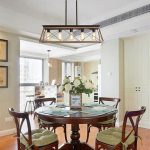
This is the best choice for many homes because it spreads light broadly and gives the table a clear focal point. It works especially well over round, square, and medium-size rectangular tables. If you want the dining space to feel established, warm, and “finished,” a chandelier is hard to beat. Wikipedia’s chandelier page notes that chandeliers are commonly installed in dining rooms as the focus of the room, and that still matches how they are used in everyday homes. (Source: Wikipedia chandelier)
2. Linear chandelier
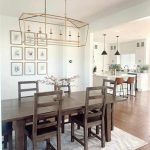
This is often the best fit for a long rectangular table. Instead of looking like a round object floating above a long surface, a linear fixture follows the table’s shape more naturally. It can also spread light more evenly from end to end, which is useful when you host often or seat many people.
3. Single large pendant
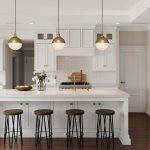
This is a great choice if you like a cleaner, less formal look. It works best over round tables, smaller square tables, or compact dining nooks. This Old House’s pendant-light guide explains that pendant lights provide directed light and are commonly used in dining rooms, which is exactly why they work so well in smaller or more modern spaces. (Source: This Old House pendant guide)
4. Two or three pendants in a row
This can be the best answer for a modern rectangular table when you want rhythm and symmetry. The look is especially useful if you prefer a more architectural style instead of one central decorative piece. But spacing matters. When the pendants are too small or too far apart, the arrangement can feel broken instead of elegant.
5. Drum or shaded fixture
If you want softer light and less glare, a shaded fixture can be the best option. It is especially useful in homes where dining tables are also used for family conversation, reading, or lingering after meals. A shade can make the room feel gentler and more forgiving.
| Fixture type | Best table shape | Main strength | Best for |
| Classic chandelier | Round, square, medium rectangle | Focal point + broad glow | Most dining rooms |
| Linear chandelier | Long rectangle | Shape match + even spread | Long tables and open-plan homes |
| Large pendant | Round, small square | Clean look + directed light | Modern or compact spaces |
| Multiple pendants | Rectangle | Modern rhythm | Minimal and architectural rooms |
Formula 1: the easiest way to size a fixture over a dining table
The most useful sizing rule is also the simplest one: the fixture width should be about one-half to two-thirds of the table width. This rule appears in multiple current and recent consumer guides, including current 2026 dining-table chandelier guides and older expert summaries from The Spruce. It remains one of the most practical rules because it keeps the fixture large enough to feel intentional but small enough to avoid crowding the table. (Sources: Bohemia Lighting, published March 20, 2026; The Spruce expert summary)
Formula 1:
Fixture width = table width × 0.5 to 0.67
Here is what that means in real life:
- If your table is 36 inches wide, your fixture should usually be about 18 to 24 inches
- If your table is 42 inches wide, your fixture should usually be about 21 to 28 inches
- If your table is 48 inches wide, your fixture should usually be about 24 to 32 inches
Example: if you have a 42-inch-wide rectangular dining table, a chandelier around 24 to 28 inches wide is usually a very comfortable choice. That size will feel present, not tiny, but still give the table some breathing room around the edges. That “breathing room” is important because a fixture that nearly spans the whole width of the table often feels heavy and awkward.
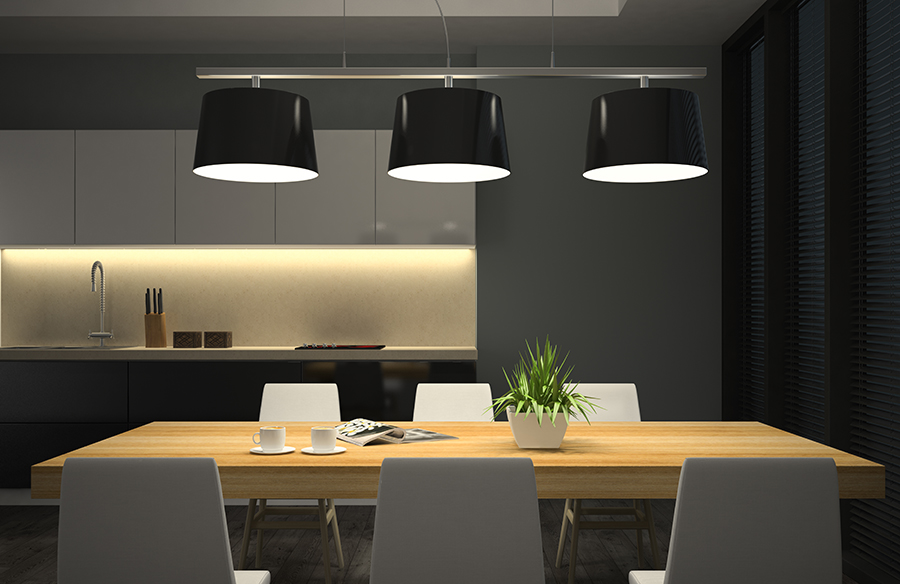
Long rectangular tables often look more natural with a linear fixture than with a round one.
Formula 2: the hanging height rule that saves you from a common mistake
The second rule is about height, and it may be even more important than size. A fixture can be beautiful and still look wrong if it hangs too high or too low. A long-standing rule used by designers and consumer guides is to hang a dining-room chandelier about 30 to 36 inches above the tabletop in a room with an 8-foot ceiling. If the ceiling is taller, add roughly 3 inches for each extra foot of ceiling height. This expert guideline is reflected in The Spruce’s dining chandelier advice and echoed in current 2026 consumer chandelier guides. (Sources: The Spruce; Bohemia Lighting, March 2026)
Formula 2:
Hanging height above table = 30 to 36 inches + 3 inches for each foot above an 8-foot ceiling
Example 1: your ceiling is 8 feet high. Hang the fixture so the bottom sits about 30 to 36 inches above the table.
Example 2: your ceiling is 10 feet high. Add 6 inches. Now the bottom of the fixture should sit about 36 to 42 inches above the table.
This rule works because it keeps the fixture low enough to feel connected to the table and high enough to protect sightlines. If the light is too high, the table and fixture feel unrelated. If it is too low, people notice the fixture more than the meal.
What brightness actually feels good over a dining table?
This is one of the most overlooked parts of the question. People shop by fixture shape and completely forget the light quality. ENERGY STAR’s brightness guide reminds consumers to choose bulbs by lumens, not just watts. Their chart says a traditional 40-watt bulb is about 450 lumens, 60 watts is about 800 lumens, 75 watts is about 1,100 lumens, and 100 watts is about 1,600 lumens. That matters because the dining light should be bright enough to see food and faces clearly, but soft enough that people want to stay at the table. (Source: ENERGY STAR, “Learn About Brightness”)
For most dining rooms, a fixture that can deliver a comfortable amount of light and also dim down is the best answer. That is one reason dimmable chandeliers and pendants are so consistently practical. Houzz’s 2026 trend coverage says brightness and color-temperature control are becoming more standard, and dining rooms are exactly where that flexibility feels most useful. (Source: Houzz 2026 lighting trends)
Think about the difference between these three everyday situations:
- Weeknight dinner: you want enough light to eat comfortably and clean up after, but not harsh overhead glare.
- Holiday meal: you want the table to sparkle a little and feel festive.
- Homework or laptop time at the table: you need brighter, more useful light.
This is why the best fixture is rarely “the brightest one.” It is the one that can adjust.
| Dining situation | Best light feel | Why it works | Fixture feature to look for |
| Everyday meals | Warm, medium brightness | Comfortable for faces and food | Dimmable chandelier or pendant |
| Entertaining | Soft to medium | Better atmosphere, less glare | Dimmer compatibility |
| Homework or tasks | Medium to brighter | More useful surface lighting | Higher lumen bulbs, still dimmable |
How table shape changes the best fixture choice
Round table: a round chandelier or a single larger pendant is usually best. It mirrors the shape of the table and keeps the whole setup feeling balanced.
Square table: a compact chandelier, lantern-style fixture, or centered pendant often works very well. The key is a fixture with enough visual weight to anchor the table without overwhelming it.
Rectangular table: this is where the question becomes more interesting. A classic chandelier can still work, especially on a medium-length table, but a linear chandelier or a row of pendants often becomes the better fit as the table gets longer. This Old House’s pendant guide and multiple consumer chandelier sizing guides support this practical distinction: long surfaces usually benefit from fixtures that visually follow their length. (Sources: This Old House; Bohemia Lighting, March 2026)
Oval table: a softer linear chandelier or an elongated pendant often feels best because it follows the length without looking too rigid.
Round tables usually pair best with one centered round or softly shaped fixture.
3 real-life dining room situations and the best fixture for each one
Situation 1: You have a small dining nook and want it to feel bigger. In this case, the best fixture is often a single pendant or a lighter chandelier with an open shape. Why? Because a very dense, heavy fixture can make a small dining area feel crowded. A cleaner form keeps the room open while still giving the table a center.
Situation 2: You have a long rectangular table that seats six to eight. Here, the best fixture is often a linear chandelier or two to three pendants in a row. This works because the fixture shape supports the table shape instead of fighting it. The light also spreads more evenly across the whole eating surface.
Situation 3: Your dining table is used for dinner, crafts, homework, and laptop time. In this case, the best fixture is usually a dimmable chandelier or pendant with practical brightness and easy bulb replacement. Houzz’s current trend coverage on adjustability is especially relevant here, because a one-mode dining light is much less useful in real homes than in styled photos. (Source: Houzz 2026)
Common mistake #1: picking a fixture for the room instead of the table
This is probably the biggest decorating mistake people make. They stand in the room, look up, and choose a fixture based on ceiling space rather than table size. But over a dining table, the fixture should relate first to the table. Current chandelier sizing guides are very clear on this point: fixture size should correspond to the size of the dining table, not the whole room. (Source: Bohemia Lighting, March 20, 2026)
Think of it this way: the light and the table are partners. If the fixture belongs to the room but not to the table, the whole arrangement feels disconnected.
Common mistake #2: hanging the fixture too high
People often do this because they are afraid the light will feel intrusive. Ironically, hanging it too high usually makes the room feel less finished, not more elegant. A dining fixture should visually “sit with” the table. That is why the 30-to-36-inch rule is so helpful. It protects that connection. The longer the table and the more decorative the fixture, the more this connection matters. (Sources: The Spruce; Bohemia Lighting)
Common mistake #3: using light that is too cool or too harsh
You can have a beautiful chandelier and still hate the room at dinner if the light feels like a break room. This is why dimming matters so much, and why choosing bulbs by brightness instead of habit matters too. ENERGY STAR’s guide is useful here because it makes brightness easier to compare across bulb types. The practical lesson is simple: dining spaces usually look and feel better with warm, adjustable light than with fixed, stark brightness. (Source: ENERGY STAR brightness guide)
| Common mistake | Why it fails | Simple fix | Likely result |
| Fixture too small | Looks lost over the table | Use the 1/2 to 2/3 width rule | More balanced table area |
| Fixture hung too high | Disconnects light from table | Use the 30–36 inch hanging rule | Stronger visual focus |
| Harsh light | Makes meals feel cold | Choose dimmable warm lighting | Better comfort and mood |
Safety is not the exciting part, but it matters
A dining-room ceiling fixture is not just décor. It is a wired overhead object above people’s heads. The U.S. Consumer Product Safety Commission’s current home electrical safety guidance is a useful reminder to take electrical installations seriously, and its recall pages show that ceiling-mounted fixtures can fail or detach in certain conditions. For example, CPSC posted a 2026 chandelier recall involving canopy hardware failure on angled mounting conditions, and a 2025 recall involving fixtures that could fall unexpectedly. This does not mean chandeliers are dangerous in general. It means that proper installation, correct hardware, and attention to product safety are part of what makes a fixture truly “best” for your table. (Sources: CPSC Home Electrical Safety Checklist; CPSC chandelier recall, 2026; CPSC light fixture recall, 2025)
UL Solutions also explains that luminaire safety evaluation focuses on hazards such as fire, electric shock, and heat in final installation conditions. In plain language, that means the fixture is not just being judged on style. Safe construction and proper installation are part of the whole picture. (Source: UL Solutions general coverage program for luminaires)
Key takeaway: the best dining-room fixture is not only the right size and shape. It is also securely installed, appropriately rated, and compatible with the bulbs and dimmer you plan to use.
Dimming is one of the easiest ways to make one fixture work for everyday meals and special occasions.
What is best for different decorating styles?
If your home is traditional: a classic chandelier, lantern-style fixture, or shaded chandelier is usually best. These forms feel stable and timeless over a dining table.
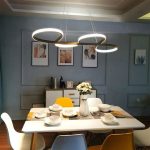
If your home is modern: a linear chandelier, geometric pendant, or multiple-pendant arrangement is often best. Cleaner lines usually match the furniture better and keep the room from feeling overly formal.
If your home is farmhouse or rustic: wood-and-metal chandeliers, simpler lanterns, or fixtures with visible texture can work well. But scale still matters more than theme. A “rustic” fixture that is the wrong size will still look wrong.
If your home is transitional: this is where you have the most flexibility. A fixture with a classic silhouette and cleaner lines can bridge old and new beautifully.
Recent Houzz trend coverage also points to adjustability, antique-inspired forms, and more personalized lighting choices in 2026, which means a fixture can look current without chasing gimmicks. In everyday terms, that means the best dining fixture in 2026 is often one that feels stylish but still adaptable, especially with dimming and a comfortable color tone. (Source: Houzz 2026 lighting trends)
6 practical links worth opening before you buy
- ENERGY STAR brightness guide — a simple, government-backed page that helps you choose bulb brightness by lumens instead of guessing by watts. It is useful when your fixture is fine but the light feels wrong.
- This Old House pendant-light guide — a recently updated practical guide that helps you decide whether a pendant is a better fit than a chandelier for your table.
- Wikipedia’s chandelier page — a quick definition and overview if you want to understand what technically separates a chandelier from other ceiling fixtures.
- Wikipedia’s pendant-light page — helpful for understanding how pendant lights differ from chandeliers and why they often suit dining spaces.
- CPSC home electrical safety checklist — a practical safety reference to review if you are replacing or installing an overhead dining fixture.
- Houzz 2026 lighting trends — a useful design reference if you want your dining fixture to feel current without following short-lived fads.
So, what should you buy for your dining room table?
If you want the strongest all-around recommendation, buy a dimmable chandelier if your table is round, square, or a standard-size rectangle, and buy a linear chandelier or thoughtful pendant arrangement if your table is long and rectangular. Size it to about one-half to two-thirds of the table width. Hang it about 30 to 36 inches above the tabletop in a room with an 8-foot ceiling, adding about 3 inches per extra foot of ceiling height. Choose bulbs by lumens, not just watts, and make sure the fixture can shift from useful brightness to a softer dinner mood. That combination is what makes a fixture feel “best” in real life, not just in a product photo. (Sources: Bohemia Lighting, March 2026; The Spruce; ENERGY STAR)
The simplest way to remember it is this: the best dining-room light fixture should fit the table, flatter the meal, and feel good long after the plates are down. If it does those three things, you are very likely choosing the right one.