Concrete is widely regarded as one of the most durable building materials available; however, it is not immune to the forces of nature. For homeowners in Pittsburgh, the combination of rugged terrain, clay-heavy soil, and a climate that fluctuates wildly creates a perfect storm for concrete deterioration. While a few hairline fractures are often cosmetic and normal, significant cracking can indicate underlying structural issues that threaten the longevity of driveways, patios, and walkways. Understanding why these cracks form is the first step in prevention and repair. By recognizing the specific environmental stressors present in Western Pennsylvania, property owners can take proactive measures to protect their hardscaping investments.
The Role of Freeze-Thaw Cycles in Western Pennsylvania
The most persistent enemy of concrete in this region is the freeze-thaw cycle. Pittsburgh winters are characterized by frequent fluctuations where temperatures dip below freezing at night and rise above it during the day. Concrete is a porous material that naturally absorbs moisture from rain, snowmelt, and humidity. When the temperature drops, the water trapped within the microscopic capillaries of the slab turns to ice. As water freezes, it expands by approximately nine percent. This expansion exerts tremendous internal pressure on the concrete matrix.
When the ice melts, the water contracts, leaving behind small voids that are often filled with even more water during the next precipitation event. Over the course of a single winter, this cycle can repeat dozens of times. The cumulative stress eventually exceeds the tensile strength of the concrete, causing surface scaling and deep structural cracks. This process is often accelerated on driveways and walkways that do not have adequate drainage, as standing water provides a constant source of moisture for the freeze-thaw mechanism to exploit.
How Salt and Deicers Accelerate Damage
In an effort to keep surfaces safe during icy conditions, many homeowners rely on rock salt and chemical deicers. While effective for safety, these substances are detrimental to the health of concrete. Salt lowers the freezing point of water, which increases the number of freeze-thaw cycles the concrete endures. Furthermore, certain chemicals react aggressively with the cement paste, breaking down the bonds that hold the aggregate together. This chemical attack leads to spalling, where the top surface flakes away, exposing the rough stone beneath and leaving the slab vulnerable to deeper cracking.
Soil Settlement and Subgrade Instability
The topography of Pittsburgh is defined by its rolling hills and valleys, but beneath the surface lies a soil composition that presents significant challenges for construction. Much of the region sits on clay-rich soil that is highly reactive to moisture changes. When this soil is wet, it expands and heaves upward; when it dries out during the summer, it shrinks and pulls away from the concrete. This constant movement creates an unstable subgrade that fails to provide uniform support for the slab above.
If the ground beneath a driveway settles unevenly or washes away due to erosion, the concrete bridges the gap for a time before gravity takes over. Eventually, the slab will crack and sink into the void. These structural cracks are often wide and jagged, posing a serious trip hazard. Addressing subgrade failure is not a simple DIY project; consulting a qualified Concrete Contractor Pittsburgh PA is essential to determine if the slab can be stabilized or if the underlying base needs to be reconstructed to prevent future settling.
Heavy Loads and Improper Curing
Concrete slabs are engineered to support specific loads. A standard residential driveway is designed for passenger vehicles, but it may not be capable of supporting heavy delivery trucks or construction equipment. When a load exceeds the slab’s capacity, the concrete will crack under the pressure. This type of damage often manifests as a web of cracks radiating from the point of impact or load application.
Additionally, cracks can form within days of pouring if the concrete is not cured correctly. Curing is the process of maintaining moisture and temperature to allow the cement to hydrate and gain strength. In the humid Pittsburgh summer, rapid evaporation can cause the surface to dry out too quickly, leading to plastic shrinkage cracks. These are usually shallow, but they can widen over time if water infiltration is allowed to occur.
Tree Root Intrusion and Physical Stress
The mature tree canopies in many Pittsburgh neighborhoods add beauty and shade, but they also pose a threat to concrete surfaces. Tree roots are powerful and naturally seek out moisture. If a tree is planted too close to a walkway or driveway, its roots can grow underneath the slab. As the roots expand in diameter, they exert upward pressure that can lift and crack the heavy concrete. This heaving creates significant tripping hazards and can shatter a slab into multiple pieces.
Thermal expansion is another physical stressor that must be managed. Concrete expands when it gets hot and contracts when it cools. Without properly installed expansion joints, the slab has no room to move during the sweltering summer months. This internal stress builds up until the concrete fractures to relieve the pressure. An experienced Concrete Contractor Pittsburgh PA can suggest root barriers or strategic expansion joint placement to mitigate these physical forces and prolong the life of the installation.
RMK Services: Your Pittsburgh Concrete Experts
Local Experience You Can Trust
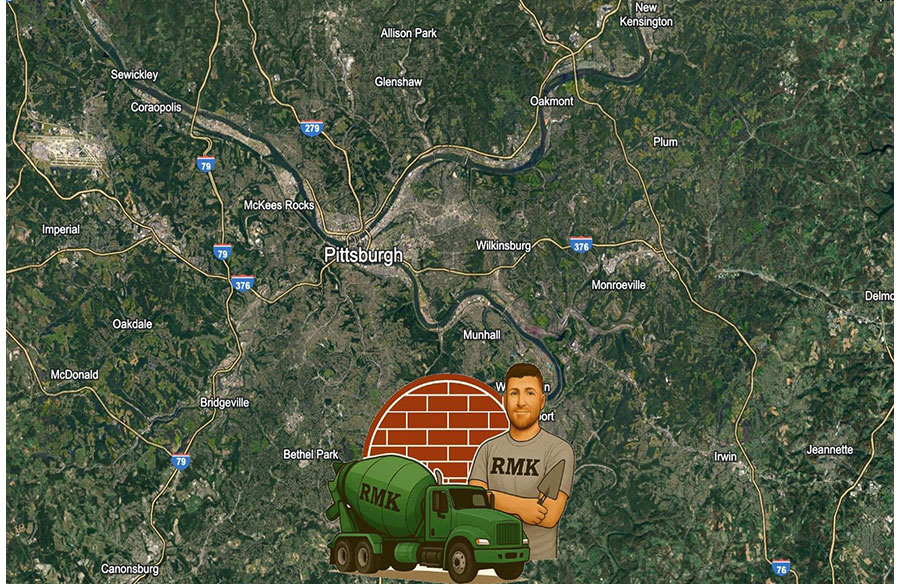
RMK Services is proud to provide top-tier concrete solutions to homeowners throughout Pittsburgh, PA. We understand the unique challenges posed by our local climate and terrain, and we bring that expertise to every job site. Our team is dedicated to delivering durable, high-quality results that enhance the safety and curb appeal of your property. We carefully evaluate soil conditions and drainage patterns to ensure that your new installation is built on a solid foundation.
Comprehensive Concrete Solutions
Whether you need to repair a cracked driveway, install a new decorative patio, or replace a heaving walkway, RMK Services has the skills and equipment to get the job done right. We offer a full range of residential concrete services, prioritizing transparency and customer satisfaction. Our commitment to excellence means we use quality materials and proven techniques to resist cracking and weathering. Contact RMK Services today for a professional assessment and let us help you maintain the integrity of your home’s hardscaping.
Ryan Kelley
RMK Services
512 Carolyn Ave, Pittsburgh, PA 15202
(412) 902-5114
https://rmkconcrete.com/
[email protected]