Something quiet but significant has been happening over the past decade. Millions of people around the world have been turning inward, not toward therapists or religious institutions, but toward charts, calculators, and frameworks that promise structured insight into who they are. Astrology apps have surpassed mainstream news apps in download rankings. Human Design consultants are booked weeks out. Enneagram workshops fill corporate retreat agendas. The question worth asking is not whether these tools work in some provable, scientific sense. It is why so many people are reaching for them right now.
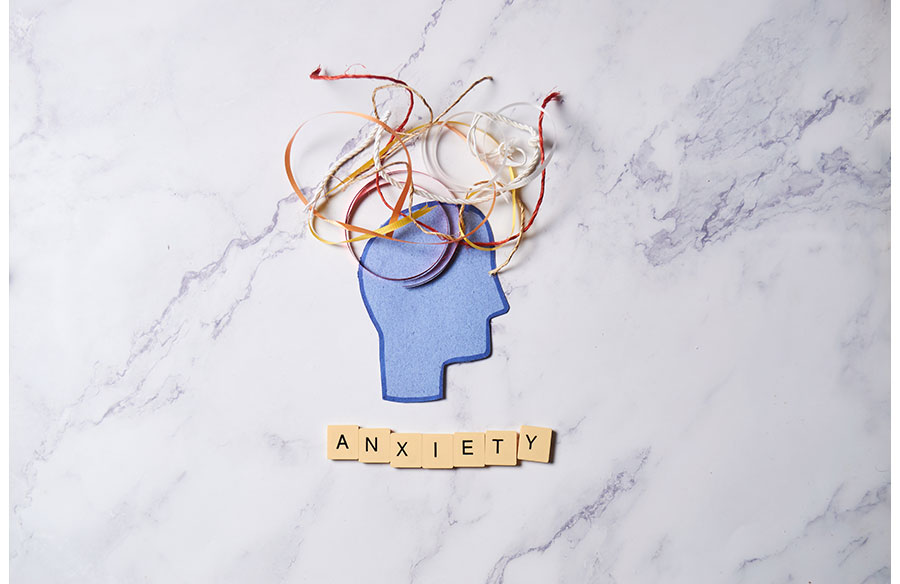
The answer, in large part, is anxiety. And understanding that connection changes how we think about the role of self-knowledge in modern life.
A World That Moved Too Fast
The past two decades delivered an unprecedented acceleration of change across technology, social structures, and the very nature of work and identity. The smartphone collapsed the boundary between public and private life. Social media made comparison a constant, ambient condition. Remote work dissolved the community structures that once told people where they belonged. And through all of it, the cultural expectation was to adapt quickly, perform confidently, and remain resilient.
The result has been a widespread sense of disorientation. According to the American Psychological Association, anxiety disorders now affect roughly 40 million adults in the United States alone, and rates of generalized anxiety have climbed steadily since the early 2000s. The World Health Organization has characterized anxiety and depression as the leading cause of disability worldwide. These are not abstract statistics. They represent a civilizational mood, a collective search for stability.
What people often seek during periods of anxiety is not just comfort. They seek legibility. They want to understand themselves well enough to make sense of their reactions, their patterns, their struggles. Self-discovery tools, in this context, are not a retreat from reality. They are an attempt to build a more stable relationship with it.
The Long History of Structured Self-Knowledge
The desire to understand oneself through structured systems is not new. Ancient cultures developed elaborate frameworks for this purpose: numerology, astrology, the I Ching, Kabbalah, Vedic birth charts. What is striking is not that these systems existed, but that they persisted across centuries and civilizations with remarkable consistency. Each one offered a framework for understanding personality, purpose, challenge, and potential. Each one gave people a shared language for discussing dimensions of experience that resist ordinary description.
Modern psychology developed its own secular versions of these frameworks, including the Myers-Briggs, the Big Five personality model, and the DISC assessment. These tools gained enormous traction in corporate and educational settings, which suggests that the demand for structured self-knowledge was never really about superstition. It was about orientation. People with a clear sense of their own tendencies, strengths, and patterns tend to make more deliberate decisions and maintain more functional relationships.
Today’s most popular self-discovery tools blend the ancient and the modern. Human Design integrates astrology, the I Ching, the Kabbalah, and quantum physics into a system that generates a highly individualized profile based on birth data. The Enneagram, though widely adopted in contemporary contexts, has roots that stretch back centuries. And newer systems, like the Destiny Matrix, draw on the symbolism of the 22 Major Arcana tarot cards to generate personalized charts that attract serious interest from people who want depth and specificity rather than a quick personality quiz.
The Destiny Matrix system uses a person’s date of birth to create a geometric chart that maps energy centers, life purpose, karmic patterns, and relationship dynamics. What appeals to many users is not just the result but the process itself: engaging with a detailed framework that takes their individual data seriously and returns something layered and personal in response.
What Makes a Self-Discovery Tool Genuinely Useful
Not all tools are created equal, and the proliferation of personality quizzes and horoscope generators can make it difficult to distinguish depth from noise. A few characteristics tend to separate genuinely useful frameworks from superficial ones.
The first is specificity. Generic descriptions like “you are creative and sensitive” offer little traction for real self-understanding. The more a tool can produce something that feels uniquely true about a specific person, the more useful it becomes. Systems that generate individualized results from personal data, whether a birth date, questionnaire responses, or behavioral patterns, tend to produce more specific and therefore more actionable outputs.
The second is interpretive depth. A good framework offers multiple layers of meaning rather than a single verdict. It acknowledges tension, complexity, and potential for growth. It does not reduce a person to a fixed type but instead provides a vocabulary for ongoing exploration and self-reflection.
The third is actionability. Self-knowledge that cannot be translated into changed behavior, clearer decisions, or more honest relationships has limited practical value. The best tools connect insight to practice. They give people something concrete to do with what they have learned about themselves.
Why This Matters Beyond the Wellness Conversation
The broader conversation about the future tends to focus on external systems: urban planning, climate infrastructure, artificial intelligence, economic restructuring. These are urgent priorities. But the capacity of individuals to understand themselves, regulate their responses, and act with intention is equally consequential. A population that lacks adequate tools for self-understanding is more vulnerable to manipulation, more prone to reactive decision-making, and less capable of the sustained cooperation that complex futures require.
The rise of self-discovery tools is, in this light, something more than a wellness trend. It reflects a genuine and widespread attempt to develop greater self-awareness in an era that provides very little structural support for that project. Whether the tools people choose are ancient or modern, evidence-based or symbolic, the impulse behind them, to know oneself well enough to live more deliberately, deserves to be taken seriously.
The age of anxiety has produced, among other things, a generation of people who are unusually motivated to understand themselves. That motivation is not a symptom to be treated. It is a resource to be cultivated. The question for designers, educators, technologists, and culture-makers is how to create environments, physical, social, and informational, that support rather than frustrate that process.
The frameworks are already being built. The more interesting question is what people choose to do once they have used them.