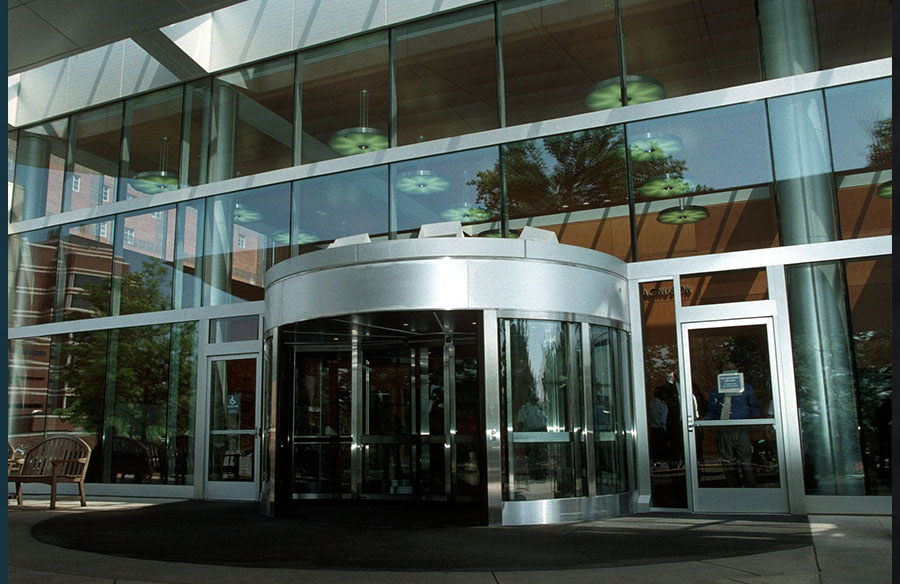
The entrance to a commercial building does far more than separate the inside from the outside. It sets the tone for every interaction that follows, manages the flow of people through a space, and contributes meaningfully to the energy efficiency of the building it serves. Advances made by automatic revolving door manufacturers over the past two decades have transformed what is possible at the entrance level, producing systems that are as functional as they are visually impressive.
Why Revolving Doors Have Become a Mainstream Choice
Revolving doors were once associated primarily with high-end hotels and prestigious office buildings, but they have become far more widespread in recent years. The reasons for this shift are largely functional: a revolving door creates an airlock effect that dramatically reduces the exchange of air between the interior and exterior of a building each time someone enters or exits. For large commercial buildings with significant heating or cooling costs, this translates into meaningful energy savings over time. The combination of energy efficiency, visual impact, and smooth traffic management has made revolving doors a practical choice for a much broader range of building types.
How Automation Has Changed the Experience
The introduction of automated drive systems has removed the physical effort previously associated with revolving doors, making them accessible to a much wider range of users. Modern automatic revolving doors respond to the approach of a user through sensor technology, beginning to rotate in advance of contact and adjusting their speed to suit the pace of the person entering. This responsiveness creates an entrance experience that feels intuitive and seamless. For buildings with high footfall, automation also improves throughput, reducing the bottleneck that can occur at entrance points during busy periods of the working day.
Accessibility and Inclusive Design
Accessibility is a central consideration in modern entrance system design, and revolving doors have adapted significantly to meet current standards. Contemporary automatic revolving door systems are designed to accommodate users of wheelchairs, mobility aids, and pushchairs without requiring them to use a separate access point. Wing sizes can be specified to provide the clearance required for larger mobility equipment, and the rotation speed can be set to allow comfortable transit for users who move more slowly. Paired with secondary swing or sliding door panels, revolving door systems can meet the accessibility requirements of virtually any building type.
The Contribution to Building Energy Performance
As commercial buildings face increasing pressure to demonstrate strong energy performance, the role of the entrance system has come under greater scrutiny. A standard hinged or sliding door allows a significant volume of conditioned air to escape with each opening cycle, requiring the heating or cooling system to work harder to compensate. A revolving door, by maintaining a continuous barrier during the transition of occupants, reduces this loss substantially. For buildings seeking certification under energy performance frameworks, a well-specified revolving door system can contribute meaningfully to the overall energy rating and reduce operational costs over the lifetime of the installation.
Visual Impact and Architectural Integration
Beyond their functional merits, revolving doors make a strong architectural statement. The curved glazing panels, the circular canopy, and the polished frame profiles all contribute to an entrance that commands attention and communicates a level of ambition about the building it serves. Contemporary manufacturers offer a wide range of finishes, frame materials, and canopy configurations, allowing the entrance system to be integrated with the wider architectural language of the building rather than appearing as a standard product. The result is an entrance that feels considered and intentional rather than a generic off-the-shelf installation.
Specifying the Right System for Your Building
Choosing the right revolving door system for a specific building involves a number of variables. The diameter of the door affects throughput: larger diameter units allow faster transit and accommodate more users simultaneously, while compact units suit lower-traffic environments. The choice of wing configuration, whether two-wing, three-wing, or four-wing, affects both the visual appearance of the door and its performance at different occupancy levels. Working with an experienced supplier early in the specification process ensures the system is matched to the building requirements and that installation, maintenance, and servicing are planned appropriately from the outset.