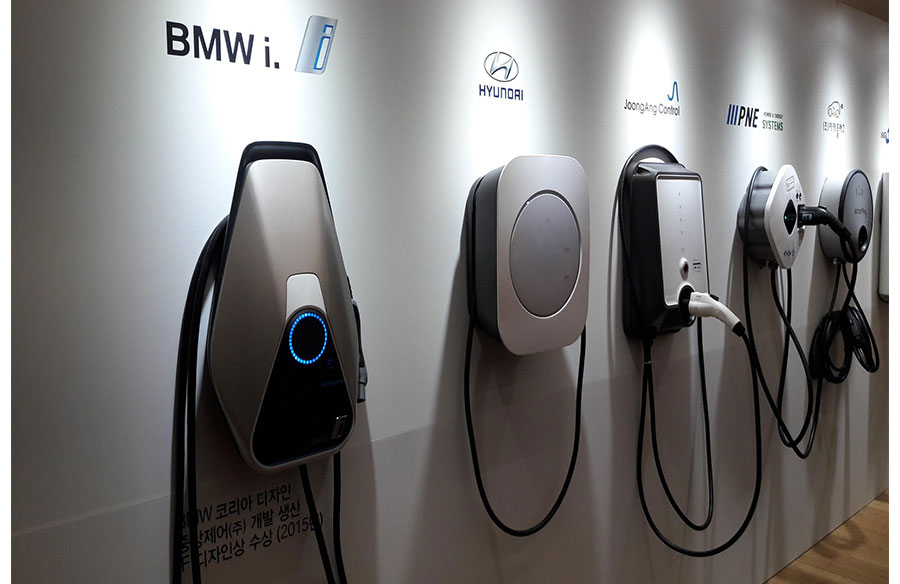
Electric vehicles are no longer a niche purchase in Ottawa. Sales have grown steadily across the city and surrounding communities as more residents weigh the long-term cost savings, environmental benefits, and the growing availability of models that meet everyday driving needs. For most Ottawa households making the switch, the vehicle itself is only part of the transition. The home needs to be ready to charge it, and that readiness often reveals that the electrical system has not kept pace with how modern households actually use power.
Home EV charger installation sits at the intersection of two conversations that Ottawa homeowners increasingly need to have at the same time: how to charge a vehicle conveniently and cost-effectively at home, and whether the home’s current electrical capacity can support the additional load without modifications. Knowing which questions to ask and what the answers mean practically is where qualified electricians in Ottawa provide the most value, guiding homeowners through both the charger installation itself and any panel or service work the installation requires. LB Electric has worked with Ottawa homeowners across these projects for years, bringing the licensed expertise and practical experience that residential electrical upgrades in the Ottawa area demand.
Level 1 vs Level 2 Charging: Why the Difference Matters for Your Home
Most electric vehicles come with a Level 1 charging cable that plugs into a standard household outlet. For some households with short daily commutes and overnight parking access, Level 1 charging is sufficient. For most Ottawa drivers, it is not. A Level 1 charger adds roughly 8 to 12 kilometers of range per hour of charging, which means a vehicle driven 50 kilometers daily needs four to six hours of charging to recover that range. For vehicles with larger batteries, a full charge from a depleted state can take more than 24 hours on Level 1.
Level 2 charging operates on a 240-volt circuit, the same voltage used by electric dryers and ovens, and delivers significantly faster charging speeds. Most Level 2 home chargers add 30 to 50 kilometers of range per hour, which means overnight charging from a meaningful state of discharge is reliably achievable for the vast majority of daily driving scenarios. For Ottawa households with two vehicles or a longer daily commute, Level 2 charging is not a luxury upgrade but a practical necessity for making home charging actually work.
Installing a Level 2 charger requires a dedicated 240-volt circuit run from the electrical panel to the location where the charger will be mounted, typically in a garage or on an exterior wall near the vehicle’s parking position. Whether the existing panel can accommodate that circuit without modification depends on the panel’s current capacity and available breaker slots.
Panel and Service Upgrades: When Your Electrical System Needs to Catch Up
Ottawa homes built before the 1990s were designed around electrical loads that bear very little resemblance to what modern households demand. A 100-amp service panel that was entirely adequate for the appliances and electronics of thirty years ago may be operating at or near its capacity in a home that now has a modern kitchen, home office equipment, a finished basement, and multiple high-draw appliances running simultaneously.
Adding an EV charger circuit to a panel that is already stretched close to its capacity is not simply a matter of finding an available breaker slot. The total load the panel can safely handle is determined by its service rating, and exceeding that rating is a safety and code compliance issue rather than just an inconvenience. An electrical assessment before EV charger installation determines whether the existing panel has the capacity to support the new circuit safely or whether a panel and service upgrade is the necessary first step.
Panel upgrades in Ottawa typically move a home from 100-amp to 200-amp service, which provides the headroom for an EV charger circuit plus the additional capacity that other planned upgrades, such as electric heating, heat pumps, or future electrical additions, will require. Doing the panel upgrade in anticipation of multiple future electrical needs rather than incrementally for each new project is almost always the more cost-effective approach over the medium term.
Hot Tub and Pool Wiring: The Other High-Draw Installation Ottawa Homeowners Plan For
EV charger installations frequently come up in the same planning conversation as hot tub and pool wiring because both involve dedicated high-draw circuits that require the same assessment of panel capacity and service adequacy. An Ottawa homeowner who is adding a hot tub and considering an EV charger in the same year is doing exactly the kind of load planning that benefits from a comprehensive electrical assessment rather than two separate project evaluations.
Hot tub and pool wiring in Ottawa involves specific safety requirements beyond the basic circuit installation. Ground fault circuit interrupter protection, disconnect switch placement, and the distance requirements between the electrical components and the water feature all reflect safety standards designed around the serious risk that electrical faults near water represent. These are requirements that a licensed electrician handles as a matter of standard practice, but that are worth understanding as a homeowner so that the installation meets both code requirements and the manufacturer’s warranty conditions for the hot tub or pool equipment.
Solar and Backup Power: Adding Generation and Storage to the Ottawa Home
The conversation about electrical capacity in Ottawa homes is increasingly not just about how much power the panel can distribute but about whether the home can generate and store some of its own. Solar panel installation paired with battery storage is a combination that has become practically and financially viable for Ottawa homeowners in ways that were not true a decade ago, and the electrical work involved in connecting these systems to the home is work that qualified electricians coordinate alongside the solar installation itself.
Ontario’s electrical grant programs have made solar and backup power installations more accessible by offsetting a portion of the installation cost, and understanding which grants apply to a specific installation is part of the planning conversation that experienced Ottawa electrical contractors support. The combination of grant assistance and the long-term reduction in grid energy consumption makes the financial case for solar and storage worth examining seriously for homeowners whose electrical systems are already being evaluated for other upgrade work.
Battery storage paired with a generator or solar system also addresses a practical concern that Ottawa winters make relevant every year. Extended power outages during ice storms or heavy snow events are a reality that homeowners in this climate plan around, and a backup power system that keeps essential circuits running during an outage provides genuine value that is not available from a standard grid-connected electrical system alone.
What an Electrical Assessment Tells Ottawa Homeowners Before Any Work Begins
Every electrical upgrade project benefits from a professional assessment before any installation decisions are finalized. An electrical assessment in Ottawa evaluates the current state of the panel and service capacity, identifies any existing wiring or safety concerns that should be addressed, and provides the information needed to plan new installations in the context of the home’s actual electrical condition rather than assumptions about what might be there.
For older Ottawa homes, an assessment frequently surfaces aluminum wiring concerns that are worth addressing as part of a broader electrical upgrade project. Aluminum wiring was commonly used in Canadian residential construction during the late 1960s and through the 1970s, and while it is not inherently dangerous, it requires specific connection methods and ongoing attention that copper wiring does not. Identifying its presence early in the planning process allows renovation electricians to incorporate appropriate remediation into the project scope rather than discovering it mid-installation.
LB Electric brings the licensed expertise and honest assessment process that Ottawa homeowners need to approach electrical upgrade projects with accurate information and realistic expectations about both cost and scope from the beginning of the conversation.