Stainless steel. Sounds simple. But honestly, “stainless” covers a range of alloys that behave completely differently under a cutting tool—and picking the wrong grade for a precision machined component is the kind of mistake that shows up later, expensively. Design engineers and technical buyers run into this constantly, specifying 304 because it’s familiar, then wondering why tool life tanked or why the part came back with surface finish issues. The real gap isn’t material knowledge exactly—it’s understanding how alloy composition translates into machinability, corrosion behavior, and dimensional stability under real shop conditions. This article covers 304, 316, and 303 specifically, the three grades that show up most in precision machining shops, with practical numbers and actual guidance on when to use which.
How Alloy Composition Drives Machinability Challenges
The Work-Hardening Problem
Here’s the thing about austenitic stainless—it work-hardens. Fast. Coefficient of work-hardening for 304 runs around 0.45 (strain-hardening exponent), which is basically worse than most carbon steels you’d compare it to. What that means practically: if the cutting tool dwells, rubs, or feeds too slowly, the material hardens ahead of the cut. The result? Accelerated tool wear, chatter, poor surface finish. Not uncommon to see a tool that was cutting fine at the start of a run lose edge integrity by part fifteen.
How Sulfur Changes Everything
303 exists because of this problem, more or less. Adding sulfur—roughly 0.15% minimum per ASTM A582—creates manganese sulfide inclusions that act as chip-breakers within the material matrix itself. The chips break shorter, cutting forces drop, tool temperatures stay lower. Basically, the stuff becomes manageable. 316 went the other direction: molybdenum addition (2–3%, per ASTM A276) for corrosion resistance, but no machinability improvement. You get better chemical resistance, you pay for it in the chip.
Thermal Conductivity as the Actual Limiting Factor
All three grades have low thermal conductivity—roughly 16 W/m·K for 304, give or take. Steel in general conducts heat away from the cut zone; stainless doesn’t do that well. So heat concentrates at the tool tip. And that’s the architectural difference from machining carbon steel—you’re managing a fundamentally hotter cutting environment with a material that wants to harden if you slow down. Basically wrong conditions for timid cuts.
Performance Specifications and Material Constraints
Mechanical Property Ranges
304 runs tensile strength typically around 515–620 MPa in the annealed condition (ASTM A240). Yield strength, roughly 205 MPa. Hardness, about 92 HRB give or take depending on temper and processing history. 316—similar tensile range, 515–620 MPa, but yield climbs a bit, around 205–240 MPa. 303 is actually softer and a bit weaker in tensile—more or less 500–620 MPa—because the sulfur inclusions introduce microstructural discontinuities. Not a problem in most applications, but you should know that bit.
 Material Suitability Matrix
| Grade | Machinability Rating | Corrosion Resistance | Key Alloying Element | ASTM Reference |
| 304 | Moderate (~45% of 1212) | Good (general use) | 18% Cr, 8% Ni | A240 / A276 |
| 316 | Moderate-Poor (~40% of 1212) | Excellent (chlorides) | +2–3% Mo | A240 / A276 |
| 303 | Good (~78% of 1212) | Fair (limited chemical exposure) | 0.15% S min | A582 |
Machinability ratings above are relative to AISI 1212 free-machining steel as 100%. [Important: these numbers shift with cutting conditions—don’t treat them as absolutes.]
Secondary Factor: Coolant and Surface Finish Interaction
Coolant selection matters here—a lot, actually. High-pressure coolant directed at the cutting zone is pretty much non-negotiable for 316 in particular. Running dry, even for short passes, raises tool-tip temperature into the range where built-up edge forms on the insert. That’s the thing that ruins surface finish suddenly mid-run. Flood coolant at minimum 70–100 psi, water-soluble or semi-synthetic, concentration around 8–10%… roughly speaking. Sulfurized cutting oils work well on 303, improve surface finish noticeably.
Geometric and Tolerance Boundaries
Thermal expansion coefficient for all three sits around 17.2 μm/m·°C—actually, scratch that, let me be more specific: 304 is roughly 17.2, 316 is 15.9, 303 is similar to 304. Point is: for tight-tolerance work (±0.005mm or tighter), thermal soak during long machining cycles introduces dimensional drift. The stuff expands. Parts measured warm read differently than parts at 20°C. Not unheard of to see 0.008–0.010mm shift on a 50mm bore after a heavy roughing cycle.
Design Parameters for Production Viability
DFM Guidelines for Stainless
Wall thickness. Don’t go thinner than roughly 0.8mm on 304 or 316 if you want dimensional stability—the material’s rigidity sort of compensates for the cutting forces, and below that you get deflection. Minimum thread engagement: 1.5× diameter for stainless-to-stainless assemblies, because galling. Galling is basically the thing nobody remembers to design against until it costs them a batch of parts. Internal radii should stay above 0.5mm; sharp internal corners in 316 especially tend to work-harden in the corner radius during milling and cause micro-cracking in high-stress applications.
Tolerance and Risk Management
Practically speaking, holding ±0.01mm on 304 in a production environment is achievable with proper fixturing and temperature-controlled inspection. Tighter than that—say, five microns, or 0.005mm—requires in-process gauging and attention to thermal soak. 316 is harder to hold tight tolerances on because cutting forces are higher and tool deflection becomes a factor, especially on long slender features. 303 is actually the most predictable of the three for tight work, sort of counterintuitive given the sulfur additions, but the machinability improvement means more consistent cutting forces and less vibration.
Self-correction here—wait, I should clarify: “consistent” doesn’t mean easy. 303 still work-hardens if the feed rate drops below about 0.05mm/rev on turning operations. The process requires attention throughout. We used higher feeds yesterday on a 303 run, it worked better. It will need rechecking if the stock lot changes.
Economic Thresholds
Material cost: 316 runs roughly 20–30% more than 304 by weight, give or take, depending on market. 303 is similar to 304 in raw cost. The economic threshold where 316’s corrosion resistance justifies the premium in machining cost—longer cycle times, faster tool wear—is pretty much any application involving chloride exposure (marine, food processing, pharmaceutical). Below that threshold, 304 is more or less the sensible default. Don’t use 316 for general structural hardware. The whole deal adds cost without benefit.
Applications Across Medical, Food Processing, and Marine Industries
Medical Device Manufacturing
304 and 316L (the low-carbon variant, per ASTM A312 for tubing) dominate here. 316L specifically for implantable components—molybdenum improves pitting resistance in saline environments, which is essentially what biological fluid is. Compliance: ISO 10993 for biocompatibility testing of materials in contact with tissue. Surgical instruments often use 303 for non-implantable components where machinability matters more than maximum corrosion resistance.
Food Processing Equipment
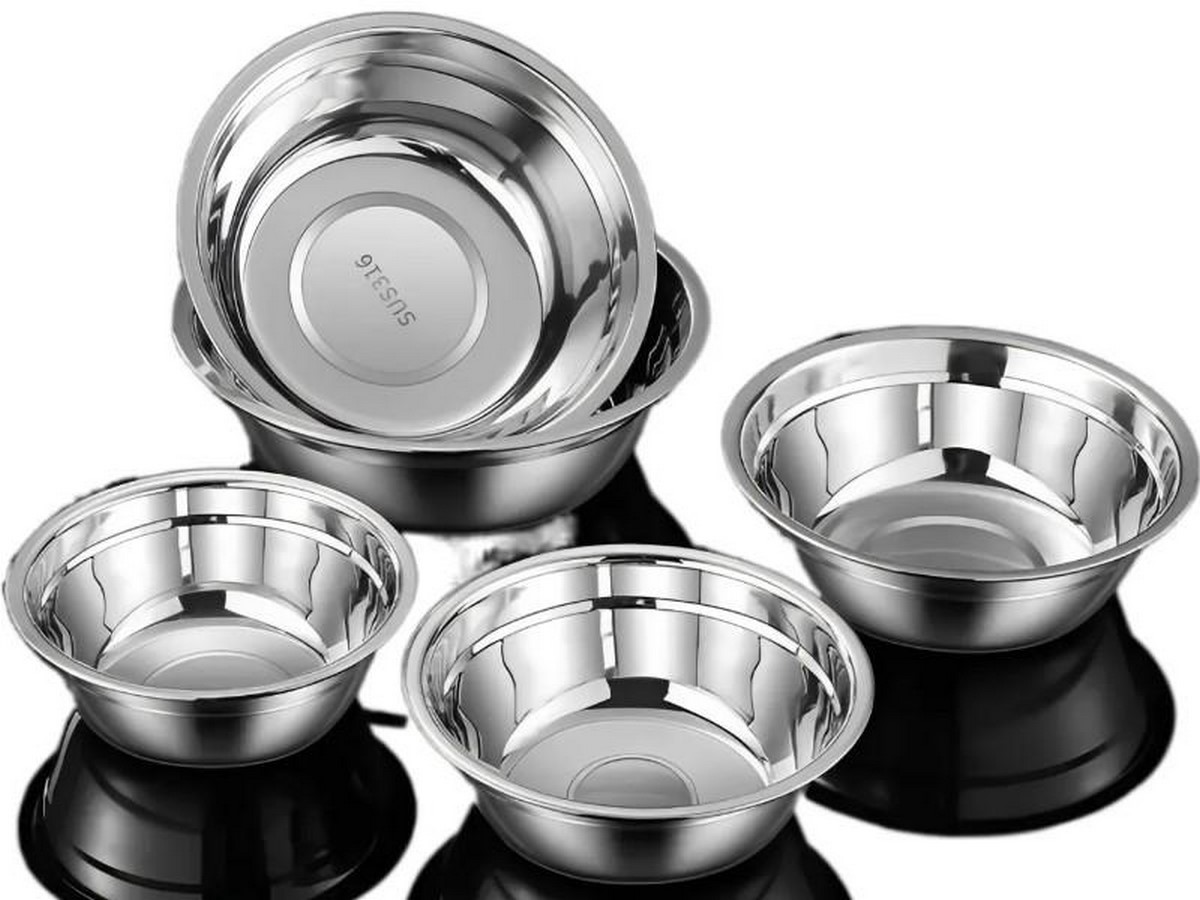
316 is practically the standard grade for direct food-contact surfaces in processing equipment, conveyors, tanks. USDA and FDA guidelines essentially require austenitic stainless with adequate corrosion resistance for sanitary design; 316 satisfies this where acidic food products are involved. 304 is used for non-contact structural components. 303 is generally excluded from food-contact applications—the sulfur inclusions can create surface porosity that traps contamination. Not impossible to use in indirect applications, but uncommon.
 Marine and Offshore Components
316 again. Chloride stress corrosion cracking is the failure mode in marine environments—304 is susceptible, 316 resists it significantly better due to molybdenum. Fasteners, pump components, valve bodies. ASTM A276 grade 316 for bar stock, A193 B8M for bolting. 303 is honestly not a great choice here; the sulfide inclusions that help machinability also slightly reduce pitting resistance in chloride environments.
| Industry | Critical Parameter | Grade Used | Key Standard |
| Medical devices | Biocompatibility, pitting resistance | 316L | ISO 10993, ASTM A312 |
| Food processing | Sanitary cleanability, acid resistance | 316 / 304 | USDA/FDA sanitary guidelines |
| Marine/offshore | Chloride corrosion resistance | 316 | ASTM A276, A193 B8M |
| General industrial | Cost, machinability balance | 304 / 303 | ASTM A240, A582 |
Process Limitations and Alternative Methods
Technical Boundaries
Extremely deep holes—aspect ratios beyond 8:1—become problematic in 316 specifically, because chip evacuation is difficult and the work-hardening builds up at the drill tip. Basically the drill starts rubbing before you know it. Thin-wall turning below 0.5mm wall thickness in 316 often produces chatter that can’t be controlled without specialty fixturing. [Check this] before committing to deep-drilled 316 components at volume.
Application Exclusions
High-temperature applications above roughly 870°C: standard 304 and 303 suffer sensitization—chromium carbide precipitation at grain boundaries, which is the thing that kills corrosion resistance. That’s what heat-affected zones in welded 304 look like under the microscope. 303 is not weldable; sulfur content causes hot cracking. Period. Don’t spec 303 for any component that will see welding in fabrication or repair.
Alternative Approaches
For maximum machinability with stainless-like corrosion resistance, 17-4 PH (precipitation hardening) offers improved cutting characteristics in the annealed condition. For highly corrosive environments beyond 316’s capability, duplex grades (2205) or super-austenitic alloys are the direction to go. Titanium—the medical stuff, not the bike frames you see on Reddit, completely different alloy family—competes with 316L in implantable applications but machines differently and costs more.
Conclusion
Grade selection for stainless machining isn’t complicated once you sort out what actually matters for the application. 303 if you need machinability and corrosion demands are moderate. 304 for general-purpose work where chloride exposure isn’t a factor. 316 when the environment is aggressive—marine, food acids, pharmaceutical. The machining behavior differences are real: work-hardening rates, thermal conductivity, chip formation all shift between grades and they affect your tooling costs and tolerance capability more than most specs acknowledge. Validate your grade choice against the actual service environment before locking in production drawings—a material substitution mid-run is expensive. Engineers working through similar grade-selection decisions can reference the material comparison charts and machinability data for baseline specification comparisons before finalizing design intent.