Running a distribution business in the pool industry comes with risks that most business owners underestimate until something goes wrong.
Pool equipment distributors handle high-value inventory, operate large warehouses, manage fleets, and work with a network of contractors and retailers. When any part of that chain breaks down due to theft, property damage, equipment failure, or liability claims, the financial fallout can be severe.
This article covers the specific risks pool equipment distributors face and how the right protection strategy keeps operations running when the unexpected hits.
Why Pool Equipment Distributors Face Unique Risk Exposure
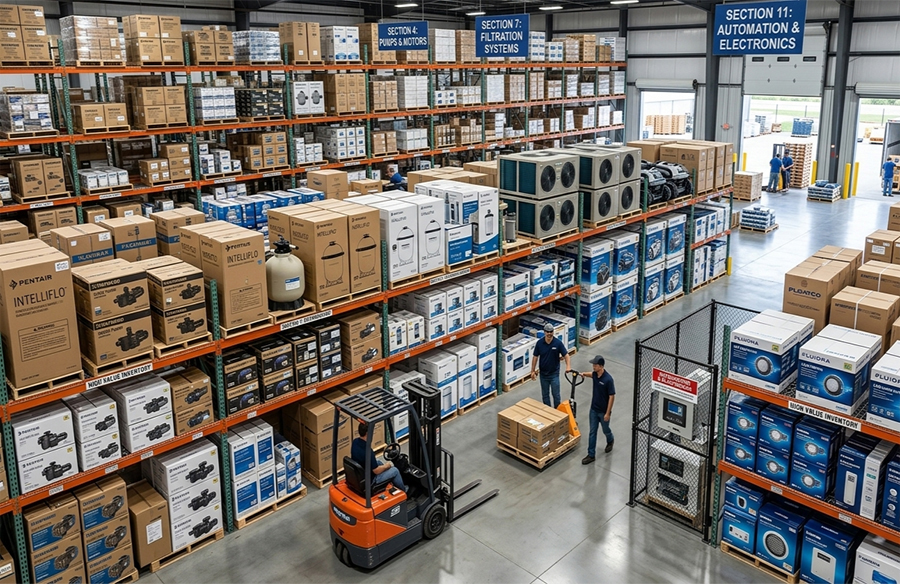
Pool equipment distributors sit at the center of a complex supply chain. You’re not just storing products. You’re moving pumps, filters, chemical dosing systems, and automation equipment worth tens of thousands of dollars at a time.
A single warehouse incident, whether a pipe burst, a fire, or a break-in, can wipe out a significant portion of your inventory overnight. And unlike retail businesses, your losses don’t stop at the damaged goods. Backorders, delayed deliveries to contractors, and broken client relationships follow right behind.
That said, inventory loss is only one piece of the picture.
| In Short: Pool equipment distributors carry higher-than-average risk because their assets include high-value stock, specialized equipment, and contractor-facing operations. A single incident can trigger losses across multiple areas of the business at once. |
The Inventory Risk Problem Most Distributors Overlook
Many distributors insure their inventory at purchase price.
But pool equipment, especially automated systems and variable-speed pumps, depreciates unevenly. Some products hold value; others don’t. If you’re reimbursed at the wrong valuation after a loss, you’re covering the gap out of pocket.
The other issue is seasonal stock fluctuation. Pool equipment distributors tend to load up inventory heading into spring and summer.
That’s also when your exposure peaks. A policy that doesn’t account for seasonal inventory spikes will leave you underinsured exactly when your stock is at its highest.
You need coverage that reflects what you actually have on hand, not a flat estimate from six months ago.
Operational Risks Beyond the Warehouse
Warehouse coverage matters, but pool equipment distributors face risks well beyond four walls.
Fleet and Transit Exposure
Product in transit is vulnerable. Whether you’re shipping pallets to a dealer or moving equipment to a job site for a contractor partner, goods in transit face risks that standard property policies won’t cover. A truck accident, a theft at a rest stop, or a loading dock incident can result in significant losses that fall through the cracks of an inadequately structured policy.
Equipment Breakdown
Distributors rely heavily on material handling equipment: forklifts, pallet jacks, refrigeration units for chemical storage. When that equipment breaks down unexpectedly, it’s not just a repair cost. Operations slow down, shipping timelines slip, and contractors who depend on you start looking elsewhere.
Employer Liability
Warehouse work carries injury risk. Lifting, operating machinery, and working around chemicals creates a consistent exposure to workers’ compensation claims. One serious injury can generate costs that run well into six figures when you factor in medical expenses, lost wages, and legal fees.
| Must Read: Operational risk for pool equipment distributors spans fleet coverage, equipment breakdown, and employer liability. Each category represents a distinct gap that needs to be addressed separately, not bundled into a single catch-all policy. |
What a Strong Protection Plan Actually Looks Like
The right coverage structure for pool equipment distributors isn’t a generic commercial package. It’s built around the specifics of how your business operates.
A well-structured plan typically includes:
- Commercial property coverage that accounts for seasonal inventory peaks, not just average stock levels
- Inland marine / cargo coverage for goods in transit between your warehouse, dealers, and job sites
- Commercial auto coverage for owned and hired vehicles used in distribution
- Equipment breakdown coverage for material handling and storage equipment
- General liability to cover third-party bodily injury or property damage claims at your facility or delivery points
- Workers’ compensation sized for your actual workforce and job classifications
Getting this right requires working with a provider that understands the distribution side of the pool industry, not just pool contractors. The risk profile is different, and a generic policy won’t address the gaps.
For pool equipment distributors looking for coverage built around their actual operations, insurance for pool equipment distributors is a starting point worth reviewing.
FAQs
What types of insurance do pool equipment distributors need?
Pool equipment distributors typically need commercial property, inland marine, general liability, commercial auto, workers’ compensation, and equipment breakdown coverage. Each addresses a distinct area of risk. Bundling them without reviewing individual limits often results in coverage gaps that only become visible after a claim.
Does standard commercial property insurance cover inventory in transit?
No. Standard commercial property coverage protects inventory at a fixed location, typically your warehouse. Goods in transit require inland marine or cargo coverage. Without it, product lost or damaged during shipping is generally not covered under a basic commercial property policy.
How should pool equipment distributors handle seasonal inventory fluctuations?
Work with your insurance provider to build a policy with agreed value or reporting-form coverage. These structures allow your covered inventory value to reflect seasonal peaks rather than a fixed annual estimate. This prevents being underinsured during high-stock periods like spring pre-season.
Can a single incident at a warehouse affect multiple areas of coverage?
Yes. A warehouse fire, for example, can trigger property claims, business interruption losses, workers’ compensation claims if employees are injured, and liability claims if third parties are affected. Distributors need policies structured to address all these exposures, not just one.
_Assigned to [email protected]_