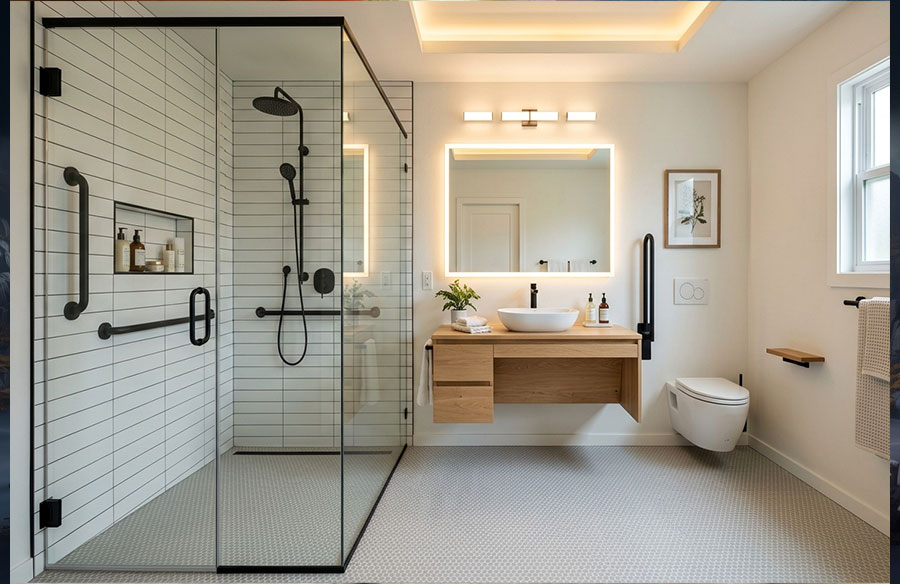
Over 4 million people retire annually, and more want to stay in their own homes than ever before. This massive demographic shift is driving a surge in demand for universal design retrofits that prioritize safety without sacrificing style. Architects and contractors must now find creative ways to implement high-performance accessibility features within the limited square footage of a standard American bathroom.
Most traditional bathrooms are designed for able-bodied users and feature high-walled tubs that are difficult to navigate. Replacing these with zero-threshold entries is the single most effective way to prevent falls and accommodate changing mobility needs. You can create a seamless transition that allows for walker or wheelchair access while maintaining a modern, high-end aesthetic.
Strategic planning is required to ensure the space remains functional for years to come. By addressing structural needs early in the renovation process, homeowners can avoid the high cost of emergency modifications later. These proactive steps ensure that the bathroom remains a safe, private sanctuary rather than a source of daily physical stress.
Strategic Layouts For Tight Footprints
A functional aging-in-place bathroom requires a clear floor area of at least 60 inches in diameter to allow for a full wheelchair turning radius. In a small retrofit, this often means switching to a wall-hung vanity or a pedestal sink to reclaim precious floor space. These adjustments ensure that the room remains navigable and open even if the user requires assistive devices in the future.
Doorways are another common bottleneck in older homes where standard 30-inch doors are the norm. Expanding a doorway to a 34-inch or 36-inch opening is essential for accessibility and ease of entry. While this may require moving light switches or minor plumbing lines, the long-term benefit for the homeowner far outweighs the initial construction headache.
The experts at bathsolutions.ca note that “Converting a standard tub into a walk-in shower is often the most impactful change a homeowner can make for long-term safety.” This modification eliminates the need to step over a high ledge, where most bathroom slips occur. Such upgrades provide a practical pathway to curbless access with minimal disruption to the existing footprint.
Critical Safety Specifications
Slip resistance is non-negotiable when selecting new flooring materials for a wet environment. Architects should specify tiles with a high Dynamic Coefficient of Friction (DCOF) rating to ensure maximum stability underfoot. Smaller tiles are often preferred in showers because the increased frequency of grout lines provides additional natural traction and grip.
Before closing the walls, it is vital to install heavy-duty wood blocking for grab bars. This provides a secure, structural anchor point that can support the full weight of a person during a sudden slip or fall, while also being sustainable. Placing these supports near the toilet and inside the shower area covers the highest-risk zones where balance is most frequently compromised.
Effective lighting significantly reduces the risk of accidents for those with declining vision. Consider these specific lighting upgrades:
- Motion-activated toe-kick lights for safe nighttime navigation
- Recessed LED cans to eliminate dark shadows in the shower area
- Backlit mirrors to provide even illumination for daily grooming
Engineering For Lasting Home Comfort
Universal design is not just about meeting a code; it is about extending the period of time a person can live with dignity in their own home. When a bathroom is designed with foresight, it serves every member of the family regardless of their age or physical ability. Investing in quality materials and proper specifications today prevents the need for a second, more expensive renovation down the road.
As you plan your retrofit, remember that small details often make the biggest difference in daily use. From lever-style door handles that are easier for arthritic hands to operate to recessed niches that keep the floor clear of clutter, every choice matters.
These thoughtful touches combine to create a space that feels intentional, safe, and truly welcoming for everyone. More advice on all things architectural can be found right here on our site, so stick around.