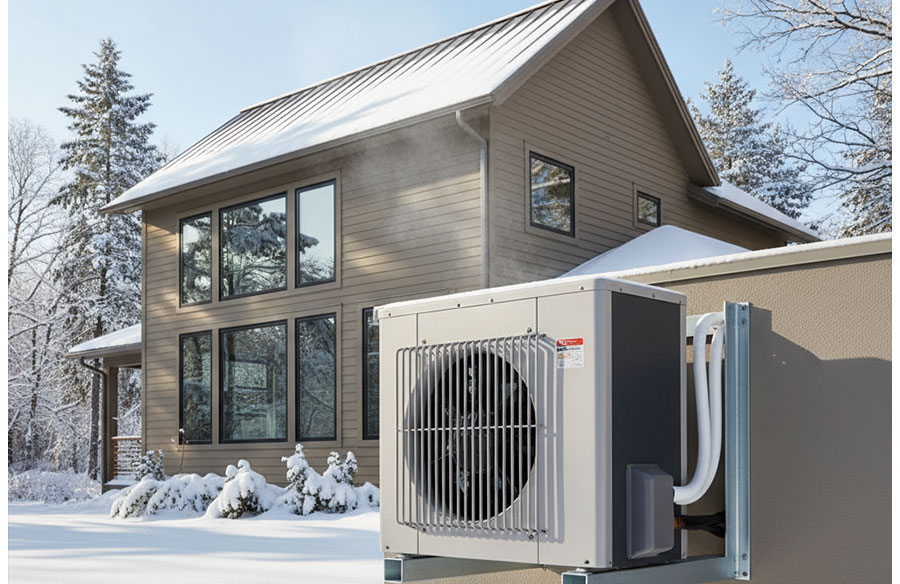
The dream of a fossil fuel-free winter is no longer a distant aspiration for homeowners in northern latitudes. Modern cold-climate heat pumps have undergone a massive transformation, moving from supplementary heaters to primary residential systems, even when temperatures plummet well below freezing.
More than 600 million heat pumps are expected to be installed worldwide by 2030, and more advanced variable-speed units are arriving across high-altitude regions every single day. This rapid adoption proves that high-performance equipment, combined with precise sizing, can handle extreme mountain winters without missing a beat.
The Basics
Achieving comfort and energy efficiency in snowy, sub-zero environments requires more than just buying a high-end unit. It demands an envelope-first approach that prioritizes sealing drafts and adding insulation before resizing your HVAC equipment. When your home loses less heat, the heat pump operates in its sweet spot, modulating output to match the actual demand of the house rather than blasting at full capacity.
Kelly Lund, President of K Lund Mechanical said that success in these climates relies on pairing high-COP (coefficient of performance) machines with a building shell that actually keeps the generated warmth inside. Expert installers can assess these requirements and provide the right guidance, whether you’re responsible for designing the premises or living in it.
Solving The Snow Drift Problem
Placement remains the most overlooked factor in the success of northern installations. Placing an outdoor unit on a ground-level rack in heavy snow country often leads to ice buildup, blocked airflow, and premature defrost cycles. Elevating the unit onto a wall mount or a high-stand ensures the intake remains clear of drifts, keeping the coils breathing through the deepest storms.
Defrost management in 2026 has become far more intelligent than older systems that relied on simple timers. Today’s inverter-driven units monitor coil temperature and ambient moisture, initiating a cycle only when frost actually impedes efficiency. You should consider these critical installation adjustments:
- Mount the condenser at least 24 inches above the anticipated snow line
- Ensure the drain pan has integrated heat tape to prevent refreezing
- Orient the unit away from prevailing winds to minimize frost accumulation
Managing The Refrigerant Transition
The HVAC industry is currently navigating a major shift toward lower global warming potential refrigerants. These updated systems offer greater efficiency at lower temperatures than models sold just two years ago.
Most manufacturers have optimized their compressor logic to extract heat from ambient air even at -15 degrees Fahrenheit, which was once considered the breaking point for air-source technology. With temperatures now more prone to rapid swings, you can’t settle for less than the cutting edge.
Understanding how your specific model handles these extreme lows lets you anticipate when your system might need backup support. Most modern setups now utilize integrated smart controls to engage auxiliary heat strips or existing furnace connections only during the coldest hours of the year. This hybrid approach ensures you never sacrifice comfort while maintaining the lowest possible carbon footprint throughout the season.
Optimizing Your Winter HVAC Strategy
When planning a system upgrade for a high-altitude home, the primary goal is maximizing the duration of the heat pump’s primary heating mode. By focusing on site-specific factors like wind protection and proper elevation, you extract every bit of value from the latest compressor technology.
Always remember that an efficient system is the sum of its parts, ranging from the quality of your home insulation to the strategic placement of your outdoor hardware. Focusing on these details provides a reliable, cost-effective way to stay warm when the mercury drops.
Our site covers a wide range of architectural topics, including more posts on HVAC setups and energy efficiency, so keep reading if you still have questions.