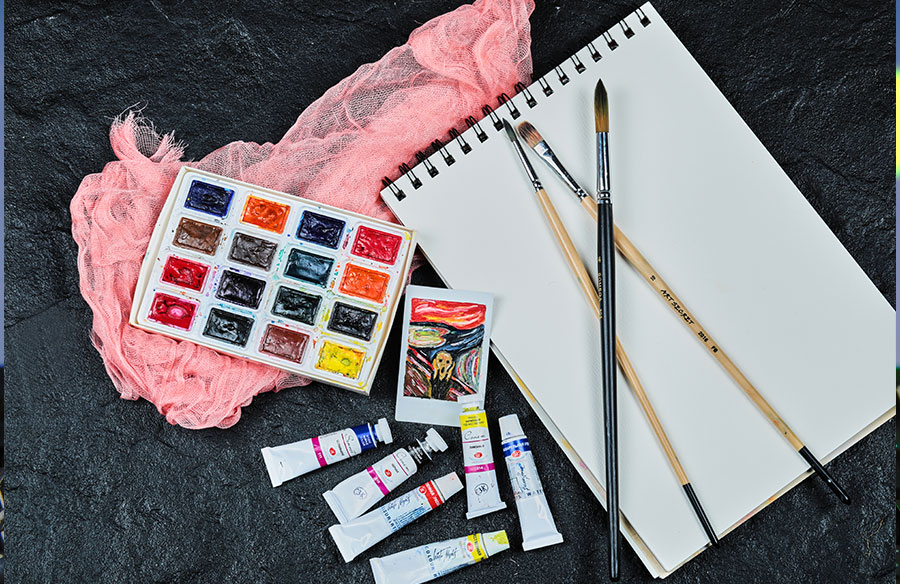
Picking the best paints can mean a marked difference in the quality and feel of your work. With so many choices, one can easily become confused as to what products really have the ability to support style and skill level. So you can confidently and easily shop, here are the key features to take notice of when purchasing artist paints.
Quality Pigment Load
One of the first things to look at is your pigment load, as that will determine how vibrant your colours will be. That means in general, the artist-grade paints have more pigment and less filler, which can mean more coverage and smoother blending. This enables you to get professional-looking results as you are still learning.
Pigment-heavy paints also mean you can use less product for a bolder colour payoff. Which you’ll find is more cost-effective in the long run, especially if you paint on the regs.
Lightfastness Ratings
Lightfastness is how resistant a paint colour is to fading in light. A strong lightfastness value provides results with your work clearly showing its colours for years. Most paint labels have a rating system, so you can easily compare various products.
Choosing paints that have high lightfast ratings will also ensure that you have peace of mind if you are making a piece for display or gifting. It’s a tiny quirk that has cumulative consequences for the long-term quality of your work.
Smooth Consistency and Easy Application
The consistency of your paint directly impacts how it goes onto the surface and how much control you have over this placement. With a smooth, creamy texture that is perfect for blending and covers large areas easily and smoothly. This feature is great for newbies because they’re learning the brush strokes.
Paints For Art won’t leave you feeling annoyed that your ideas just can’t be recognised without those streaks and other marks on the canvas that simply aren’t to your liking. Whether thin washes or dense texture, good brushwork forms the foundation of your art, and it makes painting more fun, too.
Colour Range
You don’t have to own every colour there is, but having a nice balance of primary colours, earth tones and accent shades opens up so many creative options. This means you can combine rich hues to match your style.
As you get better, you might want to broaden the palette of knives and colours, but a nice, selected range keeps things straightforward. You’ll start to notice which colours you rely on most and which ones provide new inspiration.
Compatibility With Your Preferred Surfaces
Not every medium is suitable for every surface, so be sure to match your pigment to your canvas, paper or board. Acrylics, for instance, adhere really well to canvas and wood, while watercolours will lead to a predictable disaster unless used on special paper—if you don’t want it all wrinkled.
Ensuring compatibility maintains the quality and functionality of your work. The final appearance of the work is also improved by the right cake pairing.
Safe, User-Friendly Formulas
A good thing to note is that most of the paint brands are currently going non-toxic. Safety alternatives are a much safer paint option than generic brands because they are harmless to human, plant, and animal life and are even destroyers of the Ozone layer.
You can easily determine whether a product meets safety standards when purchasing, as it serves as a helpful comparison tool. While painting using safe materials, you will worry less about your health and have more time to be creative.
Your Ideal Paints Await
The best artist paints are also about paying attention to pigmentation quality, texture, safety, and how suitable they are for your style. Once you’ve learned what to look for, picking and choosing is a breeze and part of your creative prep.