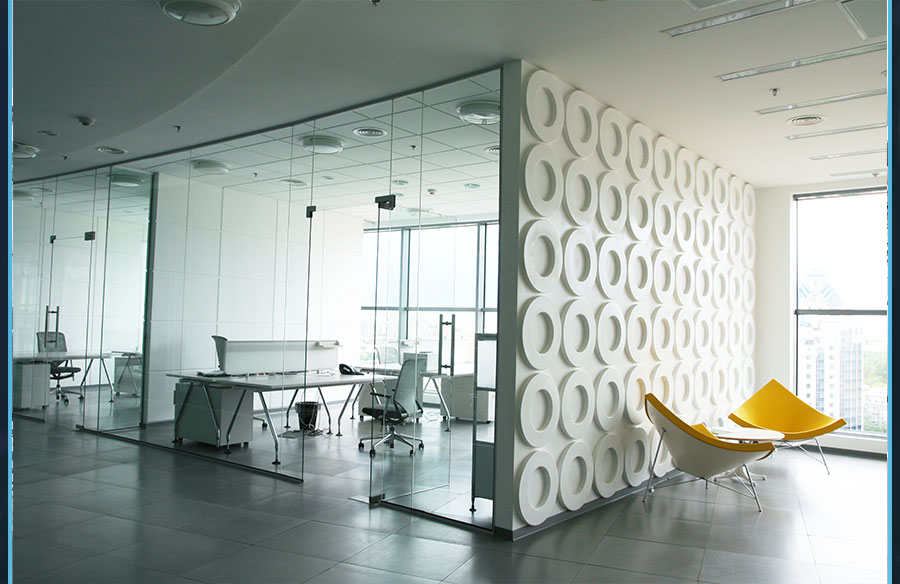
Office noise is not only distracting, but it can also affect call clarity and the privacy of everyday conversations. When meeting rooms sit beside open-plan desks, even normal speech can travel further than expected, especially in hard-surfaced interiors. Sound control, therefore, becomes part of functional workplace design, not a finishing touch.
This blog explains why standard glass struggles with office noise, how acoustic glass is made to reduce sound, and where these partitions are most effective in day-to-day office planning.
Why Standard Glass Fails At Office Sound Control
Standard glass is usually installed to support visibility and daylight, so it is not optimised for managing sound. In many offices, basic glazing has limited thickness and does not create a strong barrier against speech. The bigger issue is often the perimeter, where frames, joints, and door edges can leave small gaps.
Sound can pass through these weak points even when the glass panel looks substantial. As a result, enclosed rooms may still feel connected to nearby activity through audible leakage.
How Acoustic Glass Is Engineered for Sound Reduction
Acoustic glass is typically made using two or more layers of glass bonded with a specialised interlayer. This build-up is designed to reduce the energy of sound waves as they attempt to pass through the panel, which can support improved separation between active and quiet zones.
An acoustic glass partition also depends on the full system performing well, including the framing, seals, and installation accuracy. If edges are not sealed properly, sound may bypass the glass and travel through joints.
Mechanisms Through Which Acoustic Glass Partitions Control Noise
Sound control works best when the glass, frame, and sealing are planned together. The following mechanisms are commonly used to manage noise in office interiors.
- Sound Insulation: Layered construction helps slow direct sound transfer across the partition.
- Vibration Damping: The interlayer reduces how much sound energy moves through the glass as vibration.
- Frequency Control: Different sound ranges, including speech tones, are managed more effectively with the right build-up.
Measurable Sound Control Outcomes in Office Spaces
Acoustic outcomes are usually assessed against workplace needs such as speech privacy and reduced disturbance. While results depend on specification and fit, these are common targets for performance planning.
- Improved speech separation between enclosed rooms and open areas
- Reduced sound spill from discussion spaces into nearby work zones
- Better call conditions inside enclosed rooms by limiting outside noise intrusion
- Lower distraction levels for teams seated close to collaboration areas
Office Areas Where Acoustic Glass Partitions Are Most Effective
Placement matters because sound issues tend to be concentrated in specific parts of an office. In many glass partitions for commercial spaces, acoustic upgrades are prioritised in zones where conversation is frequent, and privacy expectations are higher.
- Meeting rooms and boardrooms where confidentiality and clarity are important
- Manager cabins where focused work and private discussions happen regularly
- Call zones and video rooms that need lower background disturbance
- Reception and waiting areas where voices and movement often carry into work floors
Conclusion
Acoustic glass partitions support better sound control by reducing how easily office noise moves between zones. Their effectiveness is shaped by glass build, framing, seals, and installation quality, working as one system. When aligned with how each area is used, these partitions can help maintain a bright, open interior while supporting clearer communication and improved privacy where it matters most.