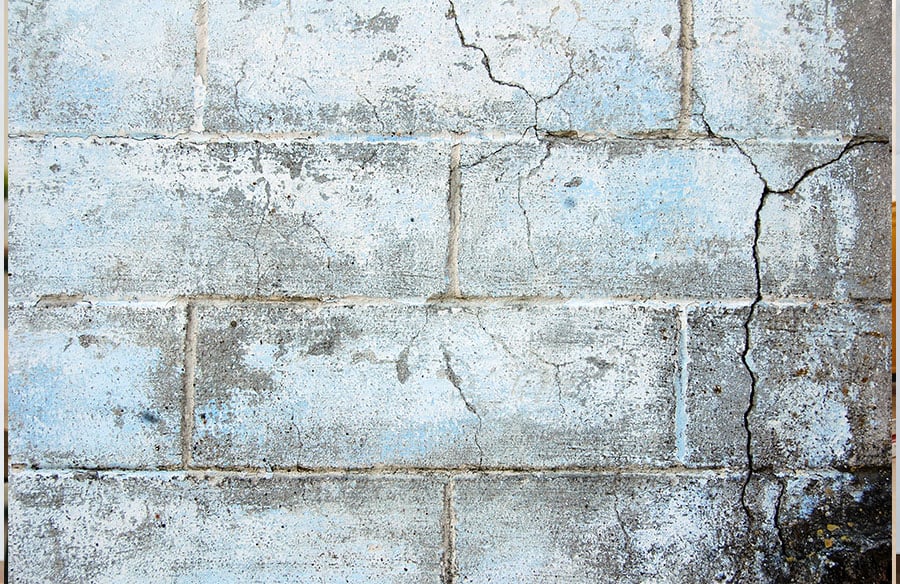
Your home’s foundation is literally the bedrock of your investment. When it remains stable, you rarely think about it. But when things start to shift (literally) it can become a homeowner’s biggest source of anxiety.
Whether you are noticing new cracks in your drywall or your doors just won’t latch properly, understanding foundation repair is critical. Ignoring these early warning signs can turn a minor $500 maintenance job into a $20,000 structural nightmare. This guide breaks down the critical signs of damage, the most effective repair methods, and what you can expect to pay in the current market.
Top Signs Your Foundation Needs Repair
Not every crack in the wall signals a catastrophe. Concrete cures and shrinks over time, leading to minor hairline fractures. However, knowing the difference between normal settling and structural failure is key.
Look for these signs of foundation problems:
- The “Stair-Step” Crack: If you see cracks in your exterior brickwork or interior drywall that look like a set of stairs, this is a classic sign of uneven settling.
- Sticking Doors and Windows: When a foundation shifts, the frame of the house warps. If doors that used to close easily now stick, jam, or won’t latch, your foundation may be moving.
- Gaps in Molding: Look at your crown molding or baseboards. Are they separating from the wall or ceiling? These gaps often indicate the walls are pulling away due to a sinking foundation.
- Uneven Floors: If you place a marble on the floor and it immediately rolls to one side, or if the floor feels “bouncy” (common in pier and beam homes), you likely have sub-floor or foundation support issues.
- Chimney Separation: An exterior chimney leaning away from the siding is a dangerous and urgent sign of foundation failure.
Common Foundation Repair Methods and Costs
The cost of repair depends heavily on your foundation type (slab vs. crawl space/basement) and the severity of the damage. As of late 2025 and heading into 2026, the national average for foundation repair sits between $5,000 and $8,000, though minor crack fills can be much less.
1. Crack Sealing (Epoxy or Polyurethane)
- Best for: Minor non-structural cracks.
- Estimated Cost: $400 – $900 If the damage is cosmetic or minor, a professional can inject epoxy or polyurethane foam into the crack. This seals out moisture and allows for slight expansion without breaking the seal.
2. Slabjacking (Mudjacking or Polyjacking)
- Best for: Sinking concrete slabs (driveways, garage floors, interior slab foundations).
- Estimated Cost: $1,000 – $3,000 This process involves pumping a mixture (cement slurry or polyurethane foam) under the sinking slab to lift it back to its original level. It is cost-effective and minimally invasive.
3. Piering (Piling)
- Best for: serious structural shifting and settling.
- Estimated Cost: $1,500 – $3,000 per pier (Total projects often range $10k–$20k+) This is the gold standard for fixing a settling house. Steel piers (helical or push piers) are driven deep into the ground until they hit stable bedrock. Hydraulic jacks then lift the house back to a level position. While expensive, this is often a permanent fix.
Foundation repair plays a critical role in maintaining the structural stability of a home, particularly in regions with expansive soils or seismic activity. Issues such as differential settling, slab cracking, and inadequate foundation anchorage can worsen over time if left unaddressed, leading to more extensive structural concerns. Working with a trusted foundation contractor, such as Sunshine Foundation Repairs, allows homeowners to obtain an accurate assessment of underlying conditions and implement repair methods that align with local building codes and engineering requirements, including solutions like underpinning, slab stabilization, and seismic retrofitting.
DIY vs. Professional: Can I Fix It Myself?
In the age of YouTube tutorials, many homeowners ask if they can DIY foundation repair.
What you CAN do:
- Maintenance: You can (and should) extend downspouts away from the home and clean gutters to prevent water accumulation.
- Soil Moisture: Soaker hoses can be used during droughts to prevent clay soil from shrinking and pulling away from the foundation.
- Cosmetic Patches: Hairline cracks in a basement floor can be sealed with DIY epoxy kits.
What you MUST leave to pros:
- Structural Lifting: Never attempt to jack up a house yourself. It is dangerous and can cause catastrophic structural failure (e.g., pipes bursting, walls collapsing).
- Underpinning: Installing piers requires heavy machinery and engineering oversight.
- Insurance Risks: Most home insurers will not cover secondary damage (like a burst pipe) if it resulted from unpermitted DIY foundation work.
Does Insurance Cover Foundation Repair?
This is the most common question homeowners ask. Unfortunately, the answer is usually no. Standard homeowner insurance policies generally exclude “earth movement,” “settling,” and normal wear and tear.
The Exceptions:
- If the foundation damage was caused by a sudden, covered peril, such as a burst plumbing pipe that washed away the soil, coverage might apply.
- Earthquake or flood damage is only covered if you have specific riders or separate policies for those events.
Summary
Addressing foundation concerns early helps limit structural movement and prevents minor issues from developing into larger, more complex repairs. The effectiveness of any foundation repair depends on accurately identifying the underlying cause, whether related to soil conditions, drainage, seismic forces, or construction methods. Repair strategies should be selected based on site-specific factors and engineering guidance to ensure long-term performance, code compliance, and overall structural stability of the building.