Sound shapes how people experience a space just as much as light or layout. When acoustics are ignored, even beautiful interiors feel uncomfortable and tiring. Choosing the right architectural materials helps control noise, improve clarity, and create spaces that function effectively. From busy offices to calm homes, smart acoustic choices support focus, privacy, and comfort without sacrificing design. Understanding these materials makes it easier to plan spaces that sound as good as they look.
Acoustic Wall Treatments
Hard, bare walls tend to reflect sound back into a room, which is why conversations often feel sharp or tiring in untreated spaces. Wall-based acoustic solutions help control those reflections and make rooms easier to use. You notice the difference immediately in meeting rooms, classrooms, or even living spaces where voices suddenly sound clearer and less overwhelming.
When designers consider wall treatments, they typically seek materials that absorb sound without overwhelming the room visually. That’s where options like panels, fabric systems, and even PET felt come into play. Used selectively, these materials soften echoes while still blending into modern interiors, which matters a lot in offices and public-facing spaces.
Speech clarity improves significantly once walls no longer reflect sound. People don’t have to raise their voices, and conversations feel more relaxed. This matters in workplaces, restaurants, and healthcare settings, where communication needs to stay clear without adding noise stress to the environment.
Another advantage of acoustic wall treatments is flexibility. You can install them as full wall systems or use them as accents, depending on the space. Designers often combine function and aesthetics here, creating surfaces that look intentional while quietly doing the heavy lifting for sound control.
Ceiling-Based Sound Control Solutions
Ceilings play a bigger role in acoustics than most people realize. Sound travels upward just as easily as it moves sideways, so untreated ceilings often reflect noise straight back into a room. That’s why spaces with high ceilings can feel loud and chaotic, even when wall treatments are already in place.
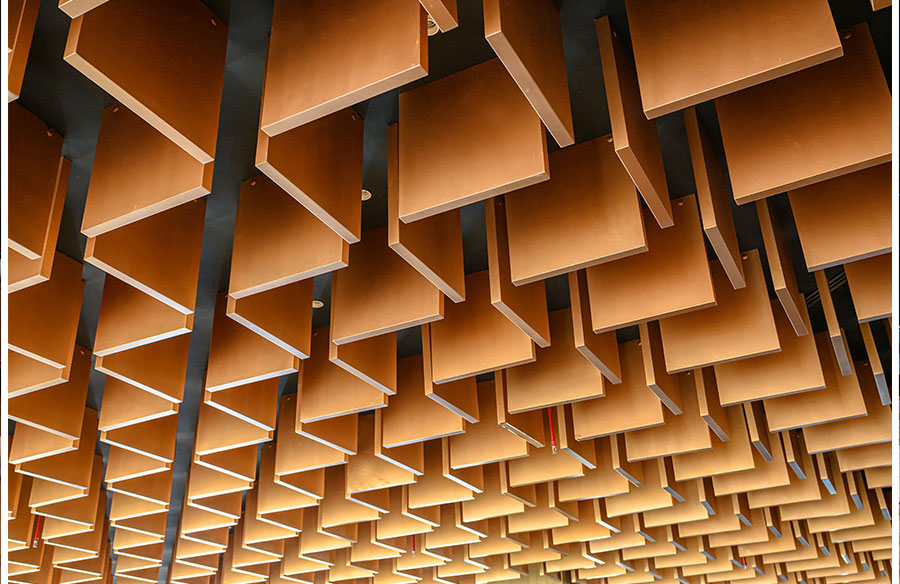
Ceiling-based solutions leverage large surface areas to absorb excess sound. Panels, baffles, and suspended elements reduce reverberation without interfering with movement through the space. In open-plan offices or restaurants, this approach helps keep background noise at a manageable level.
Designers often prefer ceiling treatments because they remain visually discreet. Instead of drawing attention, they blend into lighting layouts and architectural lines. This works especially well in modern interiors where clean visuals matter just as much as performance.
From a practical standpoint, ceiling solutions deliver consistent results across large rooms. They help distribute sound evenly, so no area is louder than another. This creates more comfortable environments for collaboration, dining, or learning, without requiring major structural changes.
Flooring Materials and Impact Noise
Sound control doesn’t stop at walls and ceilings. Flooring plays a key role in reducing noise from footsteps, rolling chairs, and dropped objects. Hard surfaces tend to amplify these sounds, which can quickly become distracting in busy environments.
Softer flooring materials help absorb vibrations before they travel through the structure. Carpets, rubber underlay, and acoustic underlay reduce the sharp, hollow sound often heard in large rooms. This makes spaces feel calmer, even during peak activity.
Comfort also improves when flooring contributes to acoustics. People notice less fatigue when footsteps are muted rather than harsh. This matters in offices, hotels, and residential buildings, where daily foot traffic accumulates over time.
Another benefit is versatility. Acoustic flooring solutions work well in both residential and commercial settings. Designers can choose finishes that visually match the space while still delivering meaningful sound reduction, keeping aesthetics and functionality aligned.
Soft Furnishings and Textiles
Soft furnishings quietly absorb sound, especially higher frequencies that reflect off hard surfaces. Curtains, upholstered furniture, and fabric panels all help reduce echo while making spaces feel warmer and more inviting.
What makes textiles appealing is their ease of integration. You don’t need a full renovation to improve acoustics. Adding rugs, wall hangings, or padded seating can noticeably change a room’s acoustics, which is helpful in homes and flexible workspaces.
Design flexibility matters here as well. Textiles come in countless colors, patterns, and textures, supporting creative freedom. You can refresh a space visually while also improving sound control, which feels like a practical win on both fronts.
Layering is where textiles really shine. Combining multiple soft elements spreads sound absorption across the room. This approach helps avoid dead spots or uneven acoustics, resulting in spaces that sound balanced and feel comfortable to spend time in.
Structural Materials for Sound Isolation
When privacy matters, absorption alone isn’t enough. Structural materials help block sound from traveling between rooms, which is essential in apartments, offices, and hotels. Density and mass play a major role here, limiting how easily sound waves pass through walls and floors.
Materials like concrete, specialized drywall systems, and insulated partitions create strong barriers against noise. These solutions work well when rooms need to be separated, such as conference areas adjacent to open workspaces or bedrooms near living areas.
Long-term performance is another advantage of structural sound control. Once properly installed, these materials continue to perform without maintenance or adjustments. That reliability makes them a smart choice for buildings designed to last.
From a planning perspective, sound isolation supports better use of space. People can focus, rest, or communicate privately without disruption. This improves overall comfort and functionality, ultimately making buildings more enjoyable places to live and work.
Doors, Windows, and Acoustic Sealing
Doors and windows often become weak points in otherwise well-designed acoustic spaces. Even with solid walls, sound easily slips through gaps, thin materials, or poorly fitted frames. You notice this most when voices leak between rooms or street noise creeps indoors, breaking concentration and comfort almost immediately.
Material choice makes a real difference here. Solid-core doors, laminated glass, and multi-pane window systems help block unwanted sound instead of letting it pass through. These upgrades are subtle visually, yet they dramatically improve a space’s quietness and control during everyday use.
Sealing matters just as much as the materials themselves. Gaps around frames allow sound to travel freely, so proper acoustic seals, gaskets, and thresholds play a critical role. Once those small details are handled correctly, rooms feel more contained and intentionally designed for privacy.
From offices to residential buildings, this approach supports better focus and rest. People don’t think about doors and windows until noise becomes a problem. When sound control is handled properly from the start, everything simply feels calmer and more functional without drawing attention to the solution.
Wrap Up
Good acoustics rarely draw attention, yet they shape how spaces feel every day. The right mix of materials reduces noise, improves communication, and supports comfort across different environments. Walls, ceilings, floors, and structural elements all play a role when chosen thoughtfully. When sound control is part of the design process rather than an afterthought, spaces feel calmer, more functional, and easier for everyone to enjoy.