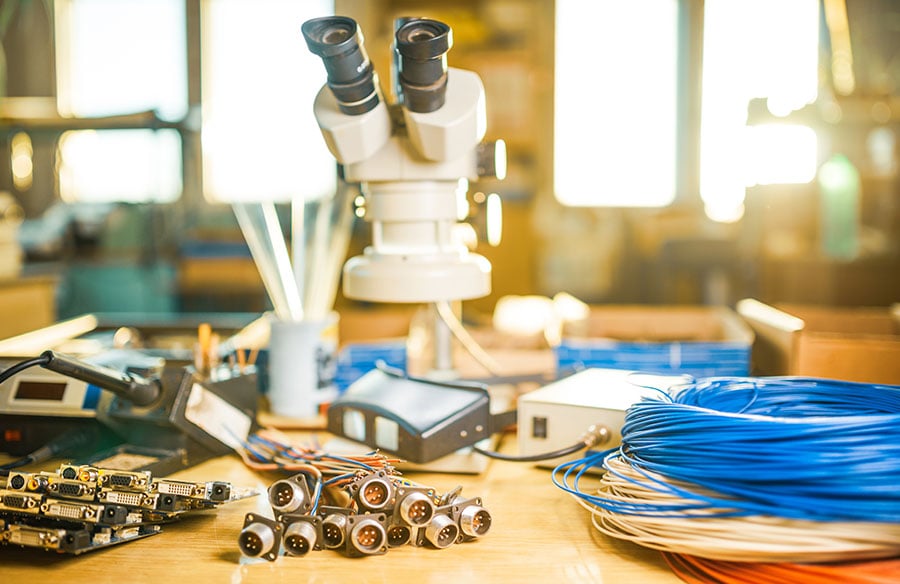
The world of electronics can be both exciting and daunting for beginners. With countless components and complex circuits, it’s easy to feel overwhelmed. However, learning the basics is a crucial step towards understanding and mastering electronics. In this guide, we’ll break down the process into seven simple steps to help you get started on your journey into the world of basic electronic components.
Step 1: Understand the Fundamentals
Before diving into electronic components, it’s essential to grasp some fundamental concepts:
Electricity: Learn about voltage, current, and resistance. Think of electricity as the flow of water in a pipe, where voltage is the pressure, current is the flow rate, and resistance is the pipe’s size.
Circuit Basics: Understand what a circuit is—a closed loop through which electricity flows. Components are connected in circuits to perform specific tasks.
Step 2: Identify Common Electronic Components
Familiarize yourself with basic electronic components:
Resistor: Limits the flow of current. Symbol: Resistor Symbol
Capacitor: Stores and releases electrical energy. Symbol: Capacitor Symbol
LED (Light Emitting Diode): Emits light when current flows through it. Symbol: LED Symbol
Battery: Provides a voltage source. Symbol: Battery Symbol
Switch: Controls the flow of current. Symbol: Switch Symbol
Step 3: Learn How to Read Schematics
Electronic schematics are like maps that show how components are connected. Learn to read schematics to understand how circuits work. Symbols in schematics represent components, and lines indicate connections.
Step 4: Build Simple Circuits
Start with basic circuits to gain hands-on experience. A common beginner’s project is to light an LED using a battery, resistor, and switch. Assemble the components on a breadboard, a tool that allows you to create circuits without soldering.
Connect a resistor to the longer leg (anode) of the LED.
Connect the other end of the resistor to the positive terminal of the battery.
Connect the shorter leg (cathode) of the LED to the negative terminal of the battery.
Add a switch to control the LED.
Experiment with different resistor values to see how they affect the LED’s brightness.
Step 5: Study Component Datasheets
Datasheets provide detailed information about electronic components. They include specifications, pin configurations, and recommended operating conditions. Learning to read datasheets will help you choose the right components from your preferred electronic components distributor and use them effectively.
Step 6: Explore Online Resources
Take advantage of online resources and tutorials. Websites, forums, and YouTube channels offer a wealth of information and project ideas for beginners. Joining electronics communities can also provide valuable insights and guidance.
Step 7: Tinker and Experiment
The best way to learn electronics is by doing. Tinker with circuits, modify projects, and experiment with different components. Don’t be afraid to make mistakes; they often lead to valuable learning experiences. As you gain confidence, try more complex projects.
Remember that learning electronics is a journey, and it’s okay to start small. Each step you take brings you closer to understanding the fascinating world of electronics. Whether you’re interested in building gadgets, designing circuits, or simply gaining a better understanding of the technology that surrounds us, mastering the basics of electronic components is an essential first step.
In conclusion, while electronics may seem complex at first, breaking it down into manageable steps can make the learning process enjoyable and rewarding. By understanding the fundamentals, identifying common components, reading schematics, building circuits, studying datasheets, exploring online resources, and experimenting, you’ll be well on your way to becoming a proficient electronics enthusiast. So, roll up your sleeves, gather some components, and start your journey into the exciting world of basic electronic components.