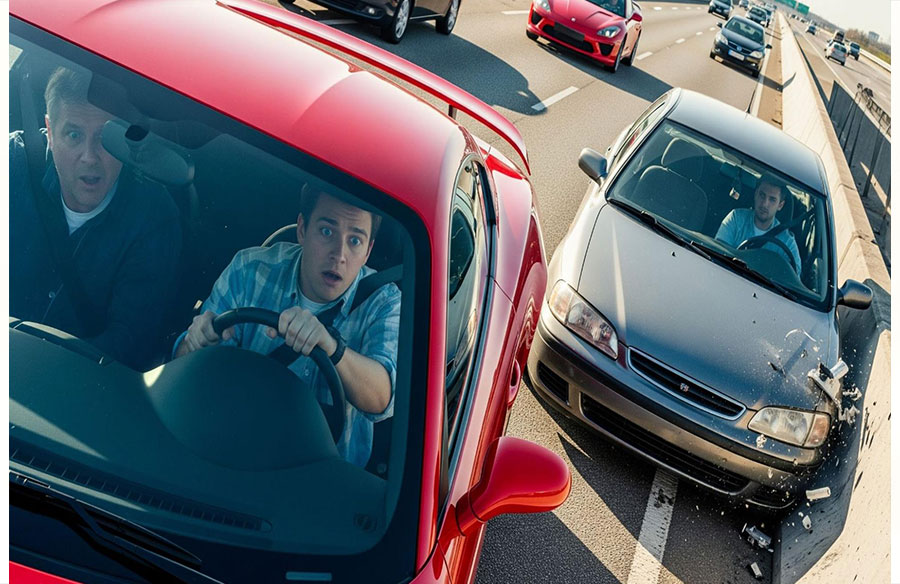
The swerving driver who caused the whole mess doesn’t stop and drives away without a scratch on their vehicle. You’re left dealing with injuries, vehicle damage, and wondering if you have any legal recourse since no actual contact occurred between the vehicles. This type of accident, known as a no-contact or phantom vehicle accident, happens more frequently than most people realize. The legal and insurance implications can be complex and confusing, especially when the other driver doesn’t stick around to take responsibility.
Understanding what happens if a swerving driver causes you to crash without hitting you is important for protecting your rights and securing the compensation you deserve.
Why Are No-Contact Accidents So Difficult to Prove?
The biggest challenge in a no-contact accident case is proving that the other driver, often called a “phantom driver,” even exists and that their actions were the direct cause of your crash. Without the physical evidence of a collision, like dented panels and scraped paint, it can feel like your word against theirs, or your word against no one if the other driver fled the scene.
Successfully handling a claim like this requires a very thorough investigation. This is where witness testimony, traffic camera footage, and accident reconstruction become critically important. In South Carolina, handling these UM claims has specific procedural requirements. A South Carolina personal injury attorney from Stewart Law Offices is familiar with the complexities of these cases. He will need to gather evidence showing that the other driver’s actions were the direct cause of your need to take evasive action, which resulted in your crash.
Who Is Responsible in a Swerving Driver Accident?
In South Carolina, fault is based on negligence. That means if a driver acts carelessly and causes someone else to crash, they can be held responsible, even if they didn’t hit the other car. Examples of negligent driving include:
- Swerving into your lane
- Failing to signal
- Speeding or driving aggressively
- Distracted driving (like texting)
To win a no-contact accident case, you must prove that the other driver was negligent in their driving and that this negligence caused your accident. This might involve showing that they were speeding, driving while distracted, under the influence, or violating other traffic laws.
Police reports can be valuable in establishing negligence, especially if the officer cited the other driver for traffic violations or noted evidence of impaired driving. However, many no-contact accidents involve hit-and-run situations where the negligent driver leaves the scene before police arrive.
How Can Uninsured Motorist Coverage Help in a No-Contact Accident?
South Carolina requires drivers to carry uninsured motorist (UM) coverage unless they reject it in writing. This coverage can help if the swerving driver can’t be identified or doesn’t have insurance. To use UM coverage, you’ll need to show:
- Another driver caused your crash
- You made a reasonable effort to identify them
- You have evidence to support your claim
Your insurance company will investigate the incident. If they accept your claim, they may pay for your damages and try to recover costs from the at-fault driver later.
South Carolina follows a modified comparative negligence rule. If you’re less than 51% at fault, you can still recover damages, but your compensation will be reduced by your percentage of fault. For example, if you’re 20% at fault and your damages total $50,000, you may receive $40,000. If you’re 51% or more at fault, you cannot recover compensation. This makes it important to clearly show that the swerving driver caused your crash.
What Challenges Might You Face with Insurance Companies?
Here are the common challenges and responses related to insurance company denials in no-contact accident cases:
Common Insurance Claim Denials
Insurance companies often try to deny claims in no-contact accident cases, arguing that there’s insufficient evidence to prove the other driver caused the accident. They may claim that you were driving too fast, following too closely, or that your reaction was unreasonable under the circumstances.
Insurers might also argue that you could have avoided the accident through different actions, essentially trying to shift the blame to you for the crash. They may question whether the other driver existed or whether you lost control due to mechanical failure or your driving error.
Fighting Back Against Unfair Denials
Successfully challenging insurance claim denials in no-contact cases requires thorough documentation and skilled legal representation. This includes gathering witness statements, obtaining any available video footage, and working with accident reconstruction specialists to demonstrate how the crash occurred.
Your attorney, such as Brent P. Stewart from Stewart Law Offices, will present compelling evidence that establishes the sequence of events leading to your accident and demonstrates that the other driver’s negligence was the proximate cause of your crash and injuries.=
How Can You Prevent or Minimize No-Contact Accidents?
Prevention and awareness are key to avoiding no-contact accidents. Recognize dangerous situations by watching for distracted, intoxicated, or aggressive drivers and maintaining safe following distances. Practice defensive driving techniques like being aware of your surroundings and keeping escape routes in mind.
While defensive driving can’t prevent all accidents, it can minimize their severity. If an accident occurs due to another’s negligence, you have the right to seek compensation for your injuries and losses.
Conclusion
A no-contact accident is a deeply frustrating and difficult experience. It is natural to feel like you have no options when the driver who caused your crash did not even leave a scratch on your car. However, South Carolina law does provide a path to justice.
By acting quickly, gathering evidence, and working with a legal team that understands the complexities of these unique cases, you can hold the negligent driver accountable and get the compensation you need to rebuild your life.
FAQs
What if the swerving driver leaves the scene?
You can still file a claim using your uninsured motorist coverage. You’ll need evidence to show the other driver caused your crash.
How do I prove fault in a no-contact accident?
Use witness statements, dashcam footage, police reports, and photos of the scene to support your claim.
What damages can I recover?
You may recover medical expenses, lost wages, property damage, pain and suffering, and other losses related to the crash.