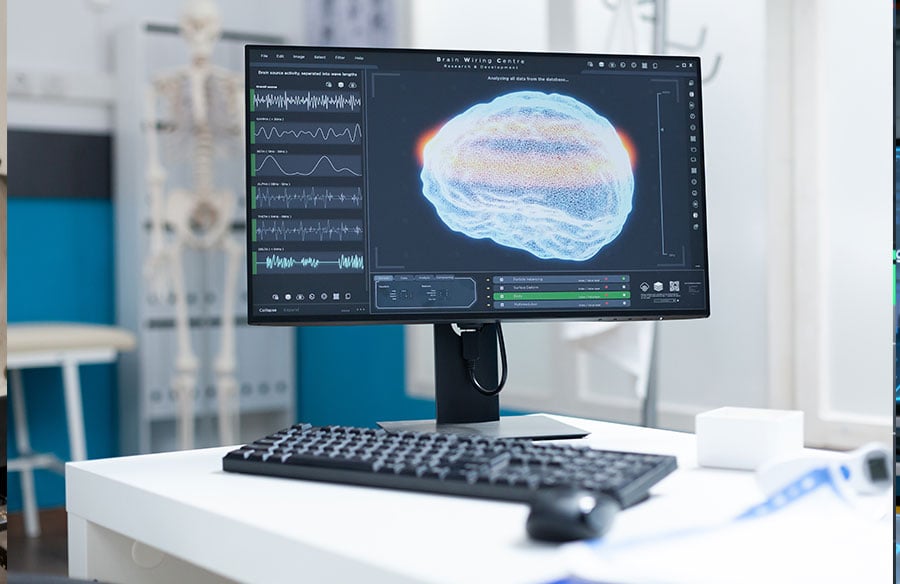
Over the last five years, artificial intelligence (AI) has transitioned from an experimental concept to a core pillar of modern medical imaging software development. Radiology, diagnostics, and clinical decision support systems have undergone a fundamental transformation as AI-driven image analysis tools now deliver faster, more accurate, and more scalable outcomes for healthcare providers worldwide.
This evolution has been driven by advances in deep learning, cloud computing, data availability, and regulatory maturity. Today, medical image analysis software is no longer just a viewer—it is an intelligent system capable of assisting clinicians throughout the diagnostic lifecycle.
The Shift from Rule-Based Systems to Deep Learning
Five years ago, most medical imaging software relied heavily on rule-based algorithms and traditional computer vision techniques. These systems required manual feature engineering and struggled with variability across imaging modalities, patient demographics, and hardware vendors.
The introduction of deep learning, particularly convolutional neural networks (CNNs), marked a turning point.
Key improvements enabled by deep learning include:
- Automated feature extraction from raw imaging data
- Improved accuracy in detecting anomalies such as tumors, fractures, and lesions
- Better performance across CT, MRI, X-ray, ultrasound, and PET scans
- Reduced dependency on handcrafted rules
Modern AI-powered platforms now achieve performance levels comparable to, and in some cases exceeding, human radiologists in narrow diagnostic tasks.
Explosion of Data and Better Training Pipelines
Another major evolution has been the availability of large-scale, high-quality medical imaging datasets. Over the past five years, hospitals and research institutions have digitized massive volumes of imaging data, enabling more robust AI model training.
At the same time, software development practices have matured.
Modern image analysis pipelines now include:
- Data normalization and anonymization for regulatory compliance
- Federated learning to train models without moving sensitive patient data
- Continuous model retraining using real-world clinical feedback
- Bias detection and performance validation across populations
This shift has allowed AI models to generalize better and gain trust among healthcare providers.
Integration with Cloud-Based Architectures
Earlier generations of imaging software were predominantly on-premise, creating scalability and maintenance challenges. Today, AI image analysis is increasingly built on cloud-native architectures.
Cloud-based development has enabled:
- Elastic compute power for AI model inference
- Faster deployment of software updates and model improvements
- Seamless integration with PACS, RIS, and EHR systems
- Multi-site access for hospitals and diagnostic networks
Healthcare technology companies such as Darly Solutions are at the forefront of developing scalable, secure, and AI-driven medical imaging solutions that align with modern cloud and compliance standards.
For a deeper understanding of this transition, readers may explore our related article on cloud-based medical image management systems and their impact on healthcare scalability.
Regulatory Progress and Clinical Adoption
Five years ago, regulatory uncertainty was a significant barrier to AI adoption in medical imaging. Since then, global regulators have made substantial progress.
Notable developments include:
- Clearer FDA and CE approval pathways for AI-based diagnostic tools
- Introduction of post-market surveillance requirements for adaptive algorithms
- Emphasis on explainability and auditability of AI decisions
As a result, AI image analysis software has moved beyond pilot projects into routine clinical use, supporting radiologists with triage, prioritization, and second-read capabilities rather than replacing them.
From Standalone Tools to End-to-End Clinical Platforms
Earlier AI imaging tools were often standalone applications focused on a single use case. Over the last five years, development has shifted toward end-to-end platforms.
Modern systems now support:
- Intelligent image ingestion and classification
- Automated measurements and annotations
- Workflow prioritization for critical cases
- Structured reporting and decision support
- Integration with hospital analytics and population health tools
This platform-based approach significantly improves clinical efficiency and reduces diagnostic turnaround time. For further insight, see our internal guide on building next-generation medical imaging analysis platforms.
The Role of MLOps and Continuous Improvement
A critical but often overlooked evolution is the adoption of MLOps (Machine Learning Operations) in healthcare software development.
Today’s image analysis solutions incorporate:
- Version control for AI models
- Continuous monitoring of model drift
- Automated rollback mechanisms for underperforming models
- Secure audit logs for compliance and transparency
These practices ensure that AI systems remain reliable, safe, and compliant throughout their lifecycle—an essential requirement in regulated healthcare environments.
Looking Ahead: What This Evolution Means for Providers
The rapid evolution of AI in medical imaging over the past five years has reshaped expectations. Healthcare providers now demand software that is not only accurate but also interoperable, scalable, and workflow-centric.
As AI continues to mature, future development will focus on:
- Multi-modal data fusion (imaging + genomics + clinical data)
- Greater explainability for clinical trust
- Real-time decision support at the point of care
Organizations investing in modern image analysis software today are positioning themselves for improved diagnostic accuracy, operational efficiency, and long-term competitiveness.
Conclusion
The last five years have marked a decisive shift in medical image analysis software development—from static tools to intelligent, AI-driven clinical platforms. With advances in deep learning, cloud infrastructure, regulatory clarity, and operational maturity, AI is now a foundational component of modern medical imaging.
Technology partners like Darly Solutions play a critical role in helping healthcare organizations design, develop, and scale these next-generation solutions—ensuring that innovation translates into real clinical value.