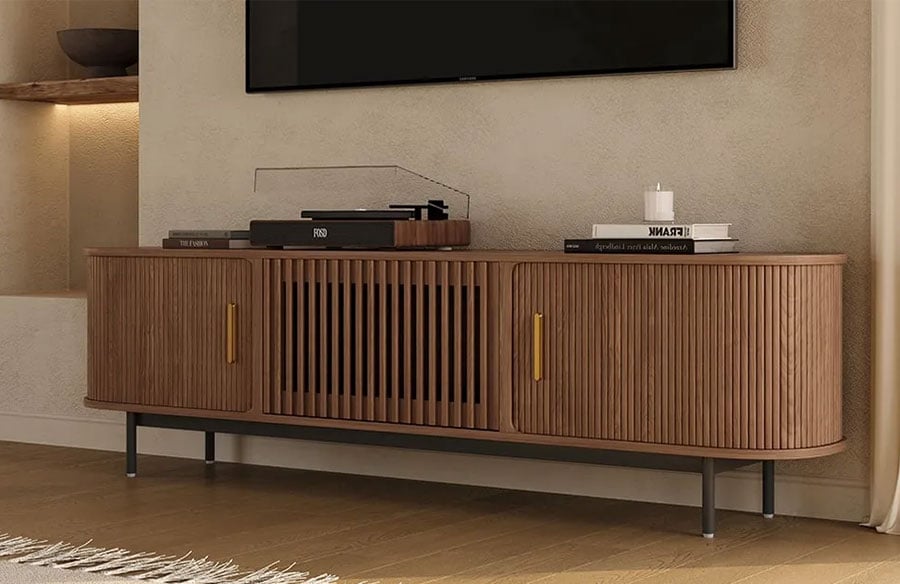
The television console is the centerpiece of the modern living room, yet when it comes time to choose, homeowners face a fundamental design decision: Should the unit be a traditional freestanding piece, or should it float elegantly on the wall?
Both wall-mounted and freestanding TV consoles offer distinct advantages, transforming the aesthetic, function, and feel of a space in dramatically different ways. The right choice depends entirely on your home’s architecture, your personal style, and, most importantly, your lifestyle and storage needs. Before making your final choice and investing in a new media unit, it is crucial to assess the quality of the console and the delivery experience. For many homeowners seeking convenience and uncompromising structural integrity right out of the box, exploring fully assembled options is the starting point. You can begin that process by simply Click Here.
Here is a detailed breakdown to help you decide which console type is the perfect match for your media wall based on practical and aesthetic considerations.
1. The Freestanding Console: Stability, Storage, and Classic Appeal
The freestanding TV console is the classic choice for a reason. Resting securely on the floor, these units are characterized by their solidity, versatility, and generous storage capacity.
Advantages of Freestanding Consoles:
- Maximum Storage: Freestanding units typically offer the largest volume of storage. They utilize the entire space from the floor up, accommodating deep drawers, large cabinets, and open shelving perfect for extensive collections of media, gaming accessories, or large components like AV receivers.
- Ease of Setup and Placement: There is no complex installation required. The unit arrives, is placed where desired, and is immediately ready to use. This makes it an ideal choice for renters or those who frequently rearrange their furniture.
- Structural Versatility: Since they bear their own weight (and the weight of the TV and components) directly to the floor, freestanding consoles are not limited by wall studs or material. This allows for pieces made of heavier, more substantial materials like solid wood and stone tops.
- Concealment of Wires: The height and depth of a freestanding unit make it easy to hide bulky power strips and bundles of cables behind and within the unit, often leading to a tidier setup with less effort.
Disadvantages of Freestanding Consoles:
- Visual Footprint: They occupy physical floor space, which can make smaller rooms feel cramped or cluttered.
- Less Contemporary Feel: While high-end freestanding pieces can be very stylish, the form factor is inherently more traditional and less aligned with the minimalist, floating aesthetic popular in ultra-modern design.
- Cleaning: The area immediately around and beneath the unit can be difficult to clean, often collecting dust and debris.
2. The Wall-Mounted Console: Modernity, Space, and Clean Lines
The floating or wall-mounted console is the definition of modern minimalism. It creates a sleek, horizontal line that draws the eye and gives the illusion of more space by revealing the floor beneath it.
Advantages of Wall-Mounted Consoles:
- Aesthetic Appeal: They offer an unparalleled contemporary look. By lifting the furniture off the ground, they create an airy, open feeling that is highly sought after in modern and minimalist interiors.
- Optimized Space: Freeing up the floor space beneath the unit is a major advantage, making the room feel larger and more open. This is particularly beneficial in apartments, small living rooms, or open-concept spaces.
- Easier Cleaning: Cleaning the floor beneath a floating console is simple and unrestricted, contributing to a cleaner, more hygienic environment.
- Customizable Height: You have full control over the mounting height, ensuring the console is perfectly positioned relative to your mounted TV and seating arrangement for optimal ergonomics and aesthetics.
Disadvantages of Wall-Mounted Consoles:
- Complex Installation: Installation is more challenging, requiring careful measuring, finding wall studs, and often professional mounting to ensure the unit can safely bear the weight. This is not ideal for renters.
- Limited Storage: To maintain a light and airy appearance, wall-mounted units are typically shallower and less bulky than their freestanding counterparts, limiting internal storage capacity.
- Wire Management is Critical: Since the unit is suspended, any visible cables running down to the floor or up to the TV will immediately ruin the clean aesthetic. Wire channels must be meticulously planned, often involving in-wall wiring to achieve the flawless look.
3. The Deciding Factors: Asking the Right Questions
To determine the best fit for your home, consider these key factors:
| Factor | Choose Freestanding If… | Choose Wall-Mounted If… |
| Space | You have a large living area and need a substantial piece to ground the room. | Your room is small, and you need to maximize the illusion of space and flow. |
| Aesthetics | You prefer a classic, grounded, and substantial look. | You are committed to a sleek, modern, and minimalist design aesthetic. |
| Storage Needs | You have numerous components, media, and accessories that need to be completely hidden. | Your components are minimal, and your storage needs are primarily limited to a few basics. |
| Permanence | You are a renter or move frequently and need flexibility. | You are a long-term homeowner and are prepared for permanent wall installation. |
| Installation | You want a piece that is ready to use the moment it arrives. | You are comfortable with DIY mounting or hiring a professional installation service. |
Choosing the right console is not a minor decision; it is an investment in your home’s design and your daily enjoyment. By prioritizing technical requirements, aligning the console with your aesthetic, and ensuring reliable, frustration-free delivery, your media wall will transition from a simple spot for a screen to a beautifully curated centerpiece of your home.