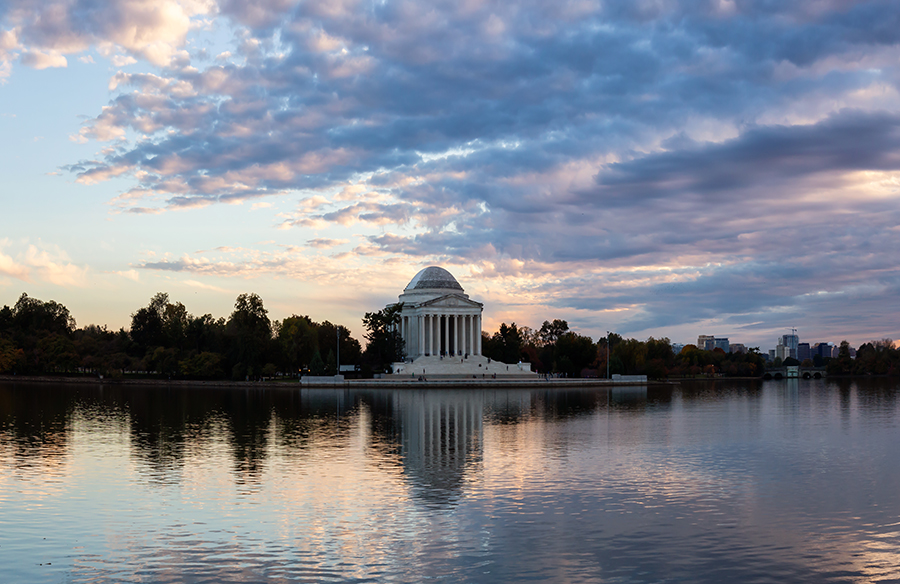
Certain areas and locations are instantly recognisable for their architectural uniqueness. The minute you arrive in the place and start to explore you know exactly where you are. Washington is definitely one of those iconic locations that is truly photogenic and one of a kind.
If you talk to the best realtors in Washington DC, who have an in-depth knowledge of this unique area, they will be able to confirm that one of the reasons why Washington architecture is so different to other locations is down to how it borrows its influences from a diverse range of period and cultural influences.
Incredibly, the architectural examples on display in Washington can be accredited to a truly unique blend of Egyptian, French, Greek, and Roman design influences. What you are witnessing is a fascinating blend of global design styles being used to design iconic properties that tell you you’re in DC straight away.
What you are witnessing in Washington is a veritable melting pot of cultural influences that has resulted in an international blend of architecture that you won’t find anywhere else.
Let’s take a look at some of the most iconic structures in Washington and how they came by their unique design blueprint.
Union Station is grandeur personified
A good starting point in our architectural journey would be to see how a truly unique blend of influences combined to create this landmark building.
The first thing to know is that Union Station in Washington was modeled on recreating the impressive grandeur of buildings that were the epitome of the Roman empire. You only have to look at the huge and iconic columns, the heavy use of gold leaf, and all the marble corridors the building boasts, to see how neoclassical influences have played such a pivotal role in this building’s overall design.
It was the done thing during the great railway expansion period to create major terminals that had a grand entrance with a monumental arch. It was intended to impress as you entered a major city like Washington, and it worked.
In case there was any doubt about the intention to pay homage to the golden age of railway expansion, this thought is quickly dismissed when you set eyes on the six massive statues by Louis St Gaudens at the entrance to Union Station. These statues have been specifically designed to represent railway-inspired themes, using mythical gods.
Washington DC may be far removed from Rome, both in time and distance, but you don’t have to look far when you see how this period inspired the design of Union Station.
The White House wasn’t always a picture of elegance
One of the most famous buildings in the world, let alone Washington, actually started from very humble beginnings. Long before it became such an iconic landmark and the official residence of the President of the United States, the Irish architect James Hoban was simply looking to create a building that resembled a Georgian style estate in Dublin known as Leinster House. When the White House was first constructed back in 1792 it was far more modest and austere than the version we see today.
Of course, history tells us that the British burned the original building back in 1814. That was a pivotal moment for many significant reasons. The end result of this act was that it gave Hoban the opportunity to rebuild the White House on a much grander scale than the original.
Architect Benjamin Latrobe is credited with adding the instantly-recognizable porticoes that we see so often through media events. He did this in 1824, and that was the moment when the White House was transformed from a relatively modest Georgian property to the impressive neoclassical mansion that we all now associate with the seat of power in America.
The Smithsonian Institute Castle carries the stamp of Victorian influence
Not surprisingly, a Victorian architect used his architectural knowledge and skills to design a property that is deeply rooted in British history and culture. James Renwick Jr set out to design a building that could easily be mistaken for a medieval castle, and he definitely succeeded on that score.
The castle was originally designed with the intention of being a home for the secretary of the Smithsonian Institute, but the building has since transcended into a visitor center and administrative offices.
This unique and unmistakable building has naturally become a Washington landmark and is a fine example of gothic revival with its rounded Romanesque arches and distinguishing square towers.
An interesting point about the Smithsonian Institute castle is that the stone was actually lilac gray when it was first finished. It has developed a much redder hue as it has aged and now looks nothing like its original color.
An ancient classical influence is easy to spot with the US Capitol
Those that govern America have gathered under the dome for nearly 200 years, but how many officials will be truly aware of the rich history of this building?
Initially, French engineer Pierre Charles L’Enfant was tasked with planning the capital city that we know as Washington, but his ideas did not align with the commissioners. As a result, he was fired, and the then secretary of state, Thomas Jefferson, came up with the interesting idea of holding a public design competition.
Many of the entrants came up with plans that were inspired by the Renaissance period, but Jefferson was more swayed by plans that were modeled on ancient classical buildings. It is not hard to see how the circular domed rotunda resembles the Roman Pantheon.
The building has subsequently undergone various renovations. One of the most iconic of those updates was the addition of a cast-iron neoclassical dome. This replaced the original version that was made from wood and much smaller.
This building has had different names but remains highly recognisable
Next on the list is the Eisenhower Executive Office Building. That is what it is known as now, with the change of name taking place in 1999 to honor President Eisenhower. This deeply imposing building that sits adjacent to the White House was previously known as the Old Executive Office Building. It has also been known as the State, Navy, and War building at various times in its history.
This landmark building currently operates as federal offices, as well as being the official ceremonial office of the Vice President of the United States. It was primarily designed by Chief Architect Alfred Mullett, who drew his inspiration from the Second Empire style of architecture that was so popular in France during the mid 1800s.
If you wander around Paris, you will see the sort of elaborate facade and unique high mansard roof that the Executive Office proudly displays. Not everyone has been a fan of the design. In fact, Mark Twain infamously described the Executive Office as “The ugliest Building in America”.
It’s fair to say that when the structure was first unveiled, it stood out like a sore thumb when compared to the neoclassical architecture that was in abundance throughout Washington at the time.
Opinions have obviously mellowed over time and there are not many that would describe the Eisenhower building in that tone these days.
The National Museum of the American Indian is truly one of a kind
If you want an example of a building in Washington that looks like no other, anywhere in the world, then the National Museum of American Indian fits the bill.
Interestingly, the design approach was a collaborative one, with many native groups offering their design input. The result was a one-of-a-kind building that spans five stories. The curvilinear design is intended to resemble natural stone formations. It has a highly distinctive Kasota limestone exterior that looks gold in color. The building also incorporates bronze, granite, copper, cedar, maple, and alder, creating a very natural appearance.
A visit to this four-acre site is highly recommended. It not only serves as a shining example of collaborative architecture, but it also tells a fascinating heritage story.
The Washington Monument is actually a scaled-down version of original plans
Another iconic landmark that is so integral to Washington’s DNA is the Washington Monument. Although it is impressive and stands out in the landscape, the original plans for the building were much grander.
It was the original intention of architect Robert Mills to design a monument that honored America’s first president with a pillar that stood 600-feet tall. At the base, the idea was to install an elaborate colonnade of 30 statues of revolutionary war heroes, finished off with an impressive sculpture of George Washington astride a chariot.
The estimated cost at the time was one million dollars, which was deemed to be too much money. The idea was eventually scrapped and replaced with the simple, tapered obelisk that we see today. It is a more modest structure than first intended, but it is no less iconic or impressive.
A point of interest about the Washington Monument is that it was the tallest structure in the world when it was completed. Many modern structures now tower above this height, but it remains the tallest building in Washington, to this day.
The Supreme Court building is steeped in symbolism
Work on this building took place between 1928 and 1935. The inspiration for its design is heavily borrowed from the architecture of ancient Rome, and you can see that architect Cass Gilbert didn’t hold back in using that influence.
The neoclassical style was considered to be a good way of reflecting democratic ideals, but the symbolism doesn’t stop there. Take the sculpted pediments along the top of the building, for instance, which tell stories of justice and mercy.
The Romans held court in this sort of building all of those years ago, and the Supreme Court building serves a similar purpose, and also wouldn’t look that out of place in ancient Rome.
A trip to Paris was the inspiration for the Library of Congress
Not for the first time in Washington’s architectural history, French culture and style played a big part in formulating design plans. The Library of Congress was conceived after seeing the magnificent Beaux Arts Paris Opera House open its doors. When you see how that building was designed, with lots of marble, iron, bronze, and granite, you can see the same result when you visit the Library of Congress.
Take a close look at this incredible Washington landmark and you will see an abundance of impressive sculptures and murals. You will also notice that the dome on top of the building is plated with 23-carat gold.
French style has traveled across the oceans in many ways, and the Library of Congress is one of the finest examples of this hub of architectural influence.
This memorial wall is simple but so striking
Last but not least, the Vietnam Veterans Memorial Wall is a fine example of how architectural designs and influence have evolved. If you want to see a modernist interpretation of a building that is as much a part of the Washington landscape as the historical structures around it, look no further than this haunting memorial. The black granite that has been used creates a striking mirror-like effect. It is designed to capture the reflection of anyone standing in front of it, as well as stirring emotive thoughts about the subject matter.
Not surprisingly, the ultra-modern design generated a fair amount of controversy when it was first unveiled. So much so, that two more traditional memorials were later added in order to bring a balance between the old and the new.
All of the designs and buildings highlighted are considered to be iconic landmarks of Washington DC. As soon as you spend any amount of time in the capital, and look at some of the residential properties available to buy, you can see that you would be buying into an area that is truly unique.
A rich tapestry of architectural and historical influences is there for all to see in Washington. You don’t have to look too hard to see why it is so different.