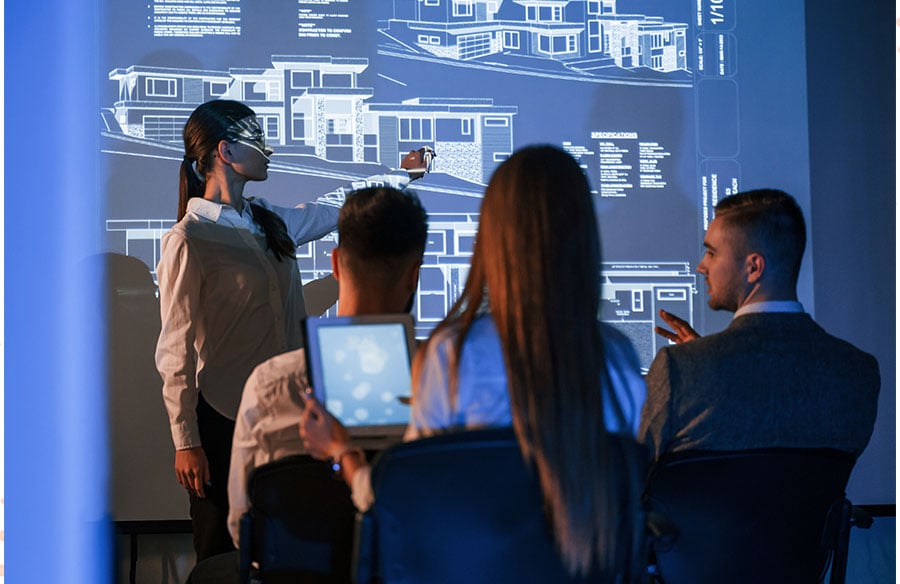
Few businesses rely on collaboration as much as architectural firms do. From concept drawings and three-dimensional models to engineering reviews and client presentations, every project involves myriad discussions and decisions. But with teams getting larger, more specialized, and dispersed, it’s increasingly difficult to keep everyone on track.
Digital tools such as BIM platforms, cloud-based design systems, and virtual walkthroughs have emerged in recent years to ease processes in the architecture industry.
But one thing that has still been woefully ineffective is meetings. You have project meetings, design evaluations, site reviews, and cross-team forums, all of which can create valuable information. But this information is easily lost: people don’t document it well and share it inconsistently.
AI meeting tools are the game-changing solution now emerging to overcome this challenge.
These tools are capable of automatically capturing discussions, summarizing them, and keeping them organized. This improves collaboration by allowing architects and designers to spend their time on creativity rather than taking and maintaining notes.
The Unique Communication Dilemma of Architecture Teams
Communication can be a tough issue for architectural firms. The problems arise from numerous factors.
- Multidisciplinary Project Teams: Architects, interior designers, engineers, contractors, and consultants all have their own languages, workflows, and priorities. That can cause communication problems. One small misunderstanding can set things back.
- High Volume of Iterations: Design is fast-moving. One meeting may encompass information regarding material selection, structural constraints, zoning issues, and client input. And it all needs to be recorded and followed up on.
- Regular Contacts with Clients: Clients often have to attend meetings with architects, and you don’t want to miss recording any of their needs and preferences in order to gain their trust and avoid doing extra work.
- Distributed Collaboration: Hybrid and remote work are the norm, especially for companies or projects that have an international focus or require specialists in other locations. But it can affect communication and the alignment of a team.
These realities make documentation a necessity. However, traditional methods of documentation tend to be very time-consuming.
How AI Meeting Tools Transform Architectural Collaboration
Rather than handwritten notes and unorganized recordings, architectural teams can now deploy AI to record discussions and turn them into clear and structured insights. This comes with several benefits:
Automated Insights From Design Discussions
No matter what a team is discussing, be it a floor plan or materials, AI tools will capture everything and create summaries that point out:
- Decisions made
- Design changes requested
- Technical requirements
- Risks and constraints
- Next steps and task ownership
This ensures that nothing significant is lost.
More Efficient Inter-Departmental Coordination
Sometimes, structural engineers or MEP professionals join a project when it is already underway. Traditionally, they’d have to spend hours in new meetings and review notes and videos that the team had before their involvement. Not with AI summary tools.
Better Client Transparency
AI summaries assist teams in communicating updates to clients clearly and professionally, avoiding miscommunication and fostering trust.
Reduced Meeting Overload
Instead of having to attend every meeting, designers and architects can devote their attention to creative work. They can read the summaries and skip all non-critical meetings.
As more firms adopt digital tools to streamline workflows, many are also exploring modern collaboration methods like AI meeting tools.
These systems automatically document project discussions and help creative teams avoid communication gaps. Software tools such as SummarizeMeeting also provide structure to design reviews, making it easier to track the decisions taken during meetings and proceed with projects more clearly.
Short-Term Applicability in Architectural Firms
Meetings Concerning Concept Development
In early ideation, teams often develop a stream of ideas. AI services extract the best ideas and reasons for them. That way, when the team returns to the notes for insights, they don’t lose momentum.
Cross-Functional Technical Reviews
Planners, engineers, and designers tend to have varied interpretations of design details. Teams can use summaries to clarify responsibilities, constraints, and technical dependencies.
Coordinating Insights And Tasks
When action items and responsibilities are automatically recorded, weekly coordination meetings are much more efficient.
Construction Administration
Site updates often involve various choices: changes in materials, measurements, or schedule. AI applications record all the alterations to prevent conflicts or misunderstandings in the future.
Design Critiques
Critiques by the senior architects or creative directors can be maintained and distributed among the rest of the staff. That ensures records are kept, and it helps novice designers learn more quickly.
Advantages in Architecture Firm Leadership
AI meeting summaries not only assist project teams, but they also provide company leadership with improved visibility in operations.
Definitive Supervision Between Projects
Leaders gain insight into:
- Bottlenecks
- Client concerns
- Upcoming risks
- Project progress
They get all this while spending less time in meetings.
Greater Precision in Workload Planning
Understanding the actual tasks to be performed and the discussions to be had can assist firms with the proper allocation of resources and work hours.
Lower Administrative Workload
Documentation, reporting, and follow-ups no longer take up valuable design time.
How AI Meeting Tools Strengthen Creativity
Many of these small administrative tasks can consume a lot of mental energy. By freeing the mind of these tasks, designers can save more cognitive power for creativity.
Architects often have to balance many details and tasks at once. Even reducing the mental load by a little can make a significant difference.
With automated summaries:
- Teams are more present during discussions.
- Creative thought is not interrupted.
- Designers have more confidence in the decisions documented.
- Ideation is more collaborative and smooth.
This will lead to improved design decisions and decrease the number of revisions.
How to Find the Right AI Meeting Tool
Architecture firms have a lot to consider when selecting an AI tool for meetings.
Precision With Technical Language
The tool should be familiar with architectural terms, measures, compliance language, and engineering terminologies.
Multi-Platform Compatibility
It must be compatible with Zoom, Google Meet, Teams, and in-office records.
Secure Data Handling
Client discussions and design decisions must remain confidential. That means you should look for encryption and other security measures.
Action Item Extraction
Tasks should be identified and allocated to keep complex design processes moving.
Integration with Project Management Software
The best tools work with Asana, Trello, Notion, and architectural workflows.