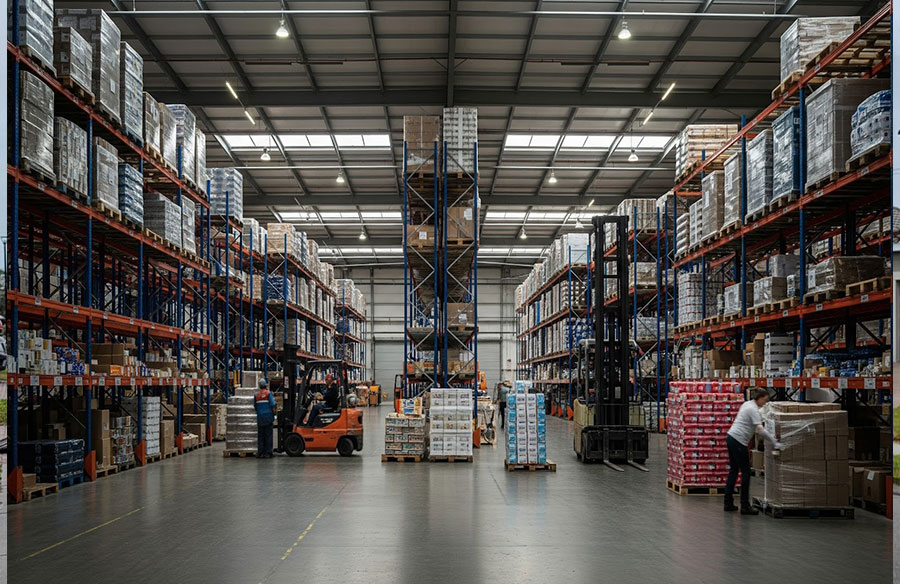
Your inventory has a voice. It speaks through its weight, its sensitivity, its very composition. A pallet of canned goods makes a different demand than a crate of microchips. Yet, many businesses listen to only one part of this conversation, the square footage, the racking height, while ignoring the critical dialogue happening at ground level. Your warehouse floor is not a passive stage; it is an active participant in the safety, efficiency, and preservation of your assets. Choosing its composition based on your specific inventory and operational flow is one of the most consequential decisions for your bottom line.
Listening to Your Inventory’s Demands
Before you look at product samples, look at your stock. A forensic understanding of what you store and how you move it dictates everything. Are you handling heavy, static pallets that demand extreme impact resistance? Does your business involve liquids or chemicals that could spill and degrade a standard surface? Perhaps you deal with temperature-sensitive products or high-value electronics vulnerable to static discharge. Each type of inventory, from bulky building materials to delicate pharmaceuticals, creates a unique set of challenges for the foundation it rests upon. This initial analysis provides the essential blueprint for your warehouse flooring decision, ensuring the solution is engineered for your reality.
Concrete for Heavy Industry
For businesses dealing in substantial, durable goods, appliances, building supplies, automotive parts, the floor must be a fortress. Here, industrial-grade concrete, often polished and hardened, is the undisputed champion. Its mass and compressive strength can withstand the relentless punishment of steel-wheeled forklifts and the immense point loads from stacked pallets. This surface won’t flinch under tons of metal or ceramic. While it offers little comfort underfoot, its primary virtue is sheer, unyielding durability, making it the default for heavy distribution and manufacturing environments where impact is the dominant force.
Resinous Coatings for Liquids and Chemicals
When your inventory includes anything that can spill, seep, or stain, a porous floor becomes a liability. For food and beverage storage, chemical suppliers, or automotive warehouses, seamless resinous coatings are the only sensible choice. Products like epoxy and polyurethane create a non-absorbent, monolithic shield over the concrete substrate. Spills of oil, bleach, or acidic solutions can be simply wiped away, preventing permanent damage and simplifying sanitation. This impermeable layer also stops moisture vapor from rising up from the subfloor, a critical defense for goods susceptible to water damage.
Specialized Floors for Sensitive Goods
Some products require more than just physical protection; they need a curated environment. For cold storage warehouses, the floor must withstand brutal thermal cycling without cracking, requiring specialized cryogenic-rated materials. In pharmaceutical or electronics logistics, static electricity is a silent enemy. Conductive flooring systems are essential here, safely channeling electrostatic discharges away from sensitive components. In high-hygiene environments, seamless floors with integral coving (curving up the wall) and antimicrobial properties prevent bacterial growth and allow for rigorous, hospital-grade cleaning protocols.
Safety and Comfort for High-Touch Areas
Not all warehouse space is for bulk storage. Picking and packing zones, assembly lines, and quality control stations are human-centric domains. Here, the priority shifts from brute strength to ergonomics and safety. Standing on hard concrete for hours leads to fatigue and injury. Installing anti-fatigue matting or a more resilient urethane cement system in these specific areas drastically improves worker comfort and productivity. These surfaces also provide superior traction, reducing slip-and-fall incidents in spaces where employees are constantly moving.
Your choice of warehouse flooring is a direct reflection of how well you understand your own business. It is a long-term investment in asset protection, operational safety, and workflow efficiency. A floor perfectly matched to your inventory doesn’t just last longer; it actively works to reduce product loss, minimize maintenance downtime, and create a safer environment for your team. It is the silent, steadfast guardian of your goods, ensuring that the foundation of your operation is as robust as the business it supports.