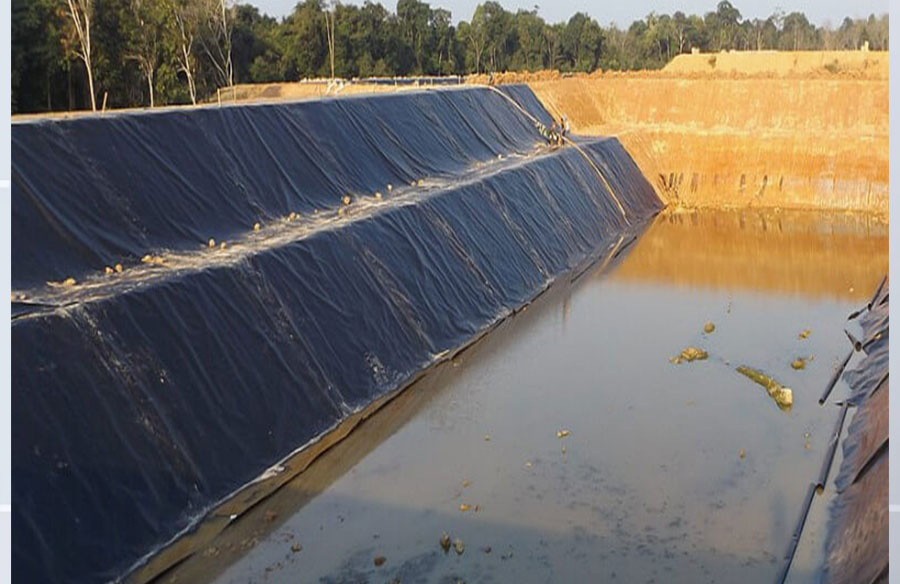
Geomembranes are thin, synthetic plastic sheets that play a vital role in many modern engineering and environmental projects. Think of them simply as an “impermeable sheet” or “protective skin” that protects soil and groundwater from contamination.
Think of a landfill or a chemical pond. This geomembrane prevents harmful liquids from seeping underground and contaminating groundwater. It is relatively inexpensive, flexible, and highly effective, so it is now used everywhere. It is used in everything from water conservation, urban infrastructure, landscaping, the petroleum industry, to mining.
What is a geomembrane?
A geomembrane is a continuous polymeric sheet with an extremely low permeability coefficient (typically ≤1×10⁻¹³ m/s), designed to act as a barrier to fluids or gases. It belongs to the broader family of geosynthetics, which includes engineered polymeric materials used in conjunction with soil and rock.
It is made from various plastics, including HDPE (a hard, durable plastic), LDPE/LLDPE (a soft, flexible plastic), PVC (used in civil and decorative applications), and polypropylene. Each has different properties some are stronger, some are more flexible, and some are more resistant to chemicals.
How geomembrane works
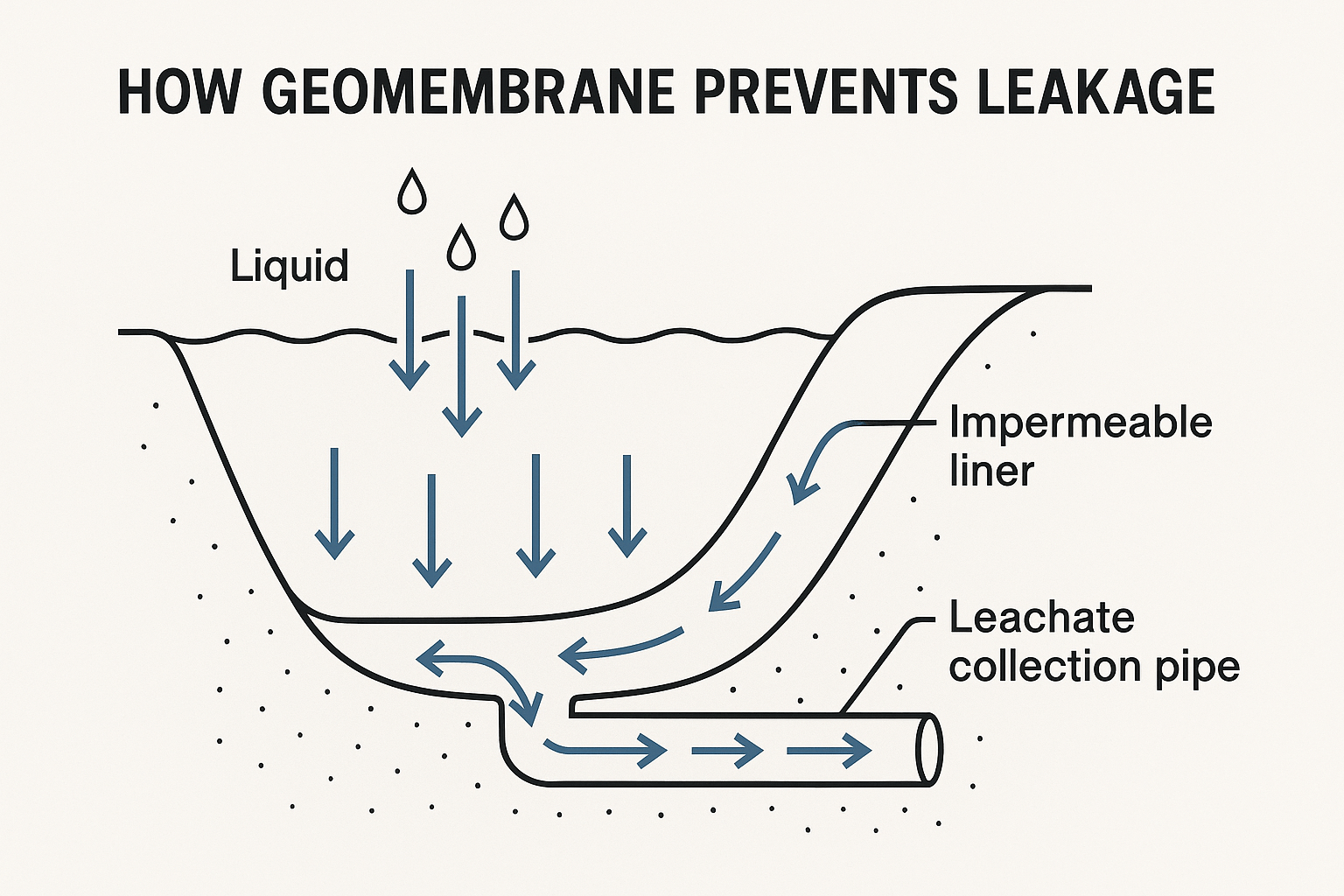 A geomembrane’s job is simple: it creates a strong barrier. When properly installed and laid over the ground, it completely redirects the flow of fluids. It prevents harmful fluids from seeping into the ground and helps to trap and collect them in a specific area so they can be safely disposed of later. It is often used in conjunction with a geotextile (a type of fabric) or drainage layer to provide additional strength.
Common Materials and Properties
HDPE Geomembrane (High-Density Polyethylene):
Most commonly used in large projects such as landfills and reservoirs. It is very strong and durable, with tensile strength typically greater than 25 MPa and puncture resistance exceeding 600 N, meeting ASTM D6693 and D4833 standards.
LDPE / LLDPE (Low-Density Polyethylene):
Softer and more flexible materials that can easily adapt to uneven or sloping ground. They offer excellent elongation (up to 700%) and good chemical resistance, making them suitable for irregular surfaces.
PVC (Polyvinyl Chloride):
Easy to assemble and weld. PVC geomembranes are commonly used in small-scale civil and decorative projects. They are known for high flexibility at low temperatures and moderate chemical resistance, conforming to ASTM D7176 standards.
Polypropylene:
They work well in industrial applications where there is frequent chemical or heat exposure.
Thickness:
Geomembranes range from very thin (0.2–0.5 mm) to quite thick (several millimeters). HDPE geomembranes, typically 1.5 mm to 2.0 mm thick, are commonly used for critical applications such as landfills or large reservoirs because they are durable, cost-effective, and easy to install.
How long does it last?
Under ideal buried conditions, protected from UV radiation, oxygen, and high temperatures, HDPE geomembrane can have a service life exceeding 100 years, according to accelerated aging models (Rowe, 2012). However, direct exposure to sunlight, harsh chemicals, or high stress can significantly reduce lifespan.
How does water actually leak?
The chances of water seeping through an intact geomembrane are almost zero. However, in practice, leaks can occur due to imperfect seams, punctures from underlying materials, stress cracking, pinhole damage, or differential settlement during or after installation. Therefore, high-quality welding and inspection are crucial for performance.
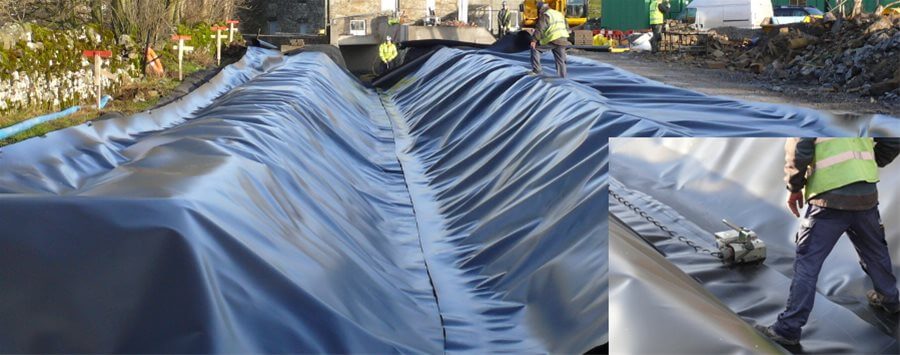 How are geomembranes connected and installed?
To make it strong and impermeable, geomembranes are joined using specialized methods:
Thermal wedge welding:
The most common method for HDPE and LLDPE. It fuses the edges under controlled temperature and pressure, forming a strong seam. Integrity is then checked using dual-track air channel testing (ASTM D4437, D5820) to ensure airtight bonding.
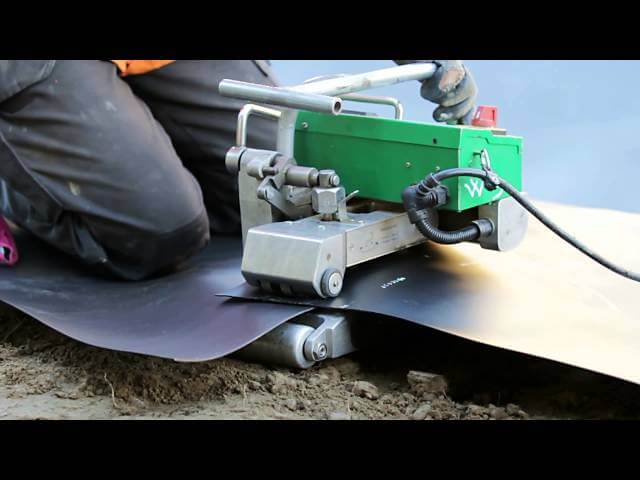 Extrusion welding:
Used for edge repairs or for welding details such as pipe penetrations, corners, or T-joints.
Adhesive or solvent bonding:
Common for PVC membranes and flexible liners, where thermal welding is less suitable.
The ground must be very flat and free of stones during installation, otherwise, leaks can occur due to pressure from below. It is very important to test each joint carefully after installation.
Five main applications of geomembranes
- Environmental protection (landfill, waste management): It acts as a protective layer above and below landfills, so that toxic liquids (leachate) released from waste cannot contaminate the soil and water. It is also used in sewage treatment plants.
- Water conservation (reservoirs, canals, dams): It is laid on the inside of ponds, canals and dams to prevent water from seeping into the ground. This increases the efficiency of water conservation.
- Municipal engineering (underground structures): It is used as a waterproof lining to prevent groundwater from entering underground parking lots, tunnels or basements.
- Landscaping (artificial lakes, garden ponds): When it is used in lakes or ponds created for beautification in gardens, water does not seep into the ground, thus maintaining the water level and reducing maintenance costs.
- Petrochemical and mining industries: It is used under chemical storage tanks in oil refineries or in dams for storing mining waste (tailings) to prevent hazardous chemicals from spreading into the environment.
Additionally, geomembranes are widely used in underground cut-off walls, salt evaporation ponds, and pollution control basins, where they act as vertical or horizontal impermeable barriers.
Advantages of using geomembranes
There are several major advantages to using geomembranes. It creates an almost perfect impermeable barrier against water and chemicals. It is cost-effective and much faster to install than concrete or clay linings. Due to its flexibility, it can easily adapt to uneven and sloping sites. And the biggest advantage is that it can last for decades if used correctly, making it a long-term and sustainable solution.
Limitations and precautions
While geomembranes are reliable, there are some limitations and precautions to be aware of. The biggest risk is incorrect installation. A small leak or weak joint can cause the entire system to fail.
They can also be damaged if exposed to sunlight, harsh chemicals, or sharp objects. Prolonged UV exposure causes polymer oxidation, which leads to surface cracking. The inclusion of 2–3% carbon black significantly enhances UV resistance and extends lifespan. Regular inspections and protective coverings (such as soil or geotextile layers) are strongly recommended.
Tips for real projects
There are a few important aspects to keep in mind to successfully use geomembranes in real projects. First, choose the right material for your project needs. HDPE geomembrane is a good choice for large and permanent projects, while LLDPE or PVC is a good choice for soft and complex areas. Second, only hire someone who is trained and experienced in installing and joining geomembranes, as professional installation is the key to long-term success. Third, after installation, cover it with a protective layer (such as geotextile or a little soil) to prevent it from leaking or corroding. And finally, regularly check the joints and overall condition after installation.
Final Verdict
Geomembranes are a flexible and cost-effective way to protect our soil and water, create reservoirs, and strengthen infrastructure. The right material selection, professional installation, and regular maintenance, these three things together ensure that a geomembrane will do its job well for a long time. Therefore, before starting any project, choosing the right geomembrane based on the location, soil, and type of use is the most important decision, which ensures the success of the project and the protection of the environment.