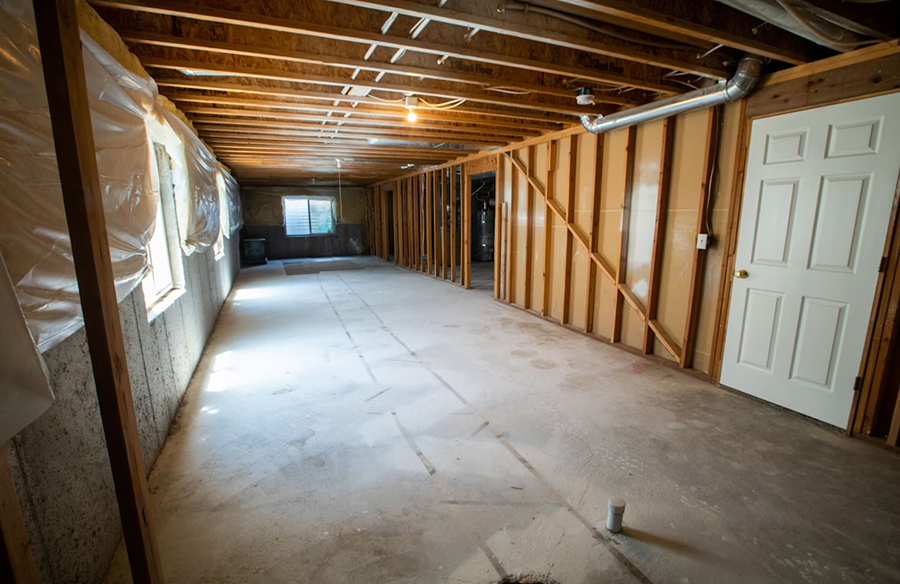
umid climates, the process demands more than drywall and décor. Moisture, poor air circulation, and hidden contaminants can quietly undo your investment and even impact indoor health. For homeowners in humid regions like the Midwest, a basement retrofit should start with one principle: build for the conditions you actually live in, not just the look you want.
In other words, a healthy basement finish isn’t just about what you see. It’s about how the space breathes, drains, and manages moisture year-round.
Step One: Start with the Envelope
Before choosing a paint color or floor finish, tackle what’s behind the walls. Basements sit below grade, where groundwater pressure, capillary action, and condensation all compete to find their way indoors. The goal is to make sure water has nowhere to collect and nothing to damage.
Here’s how a methodical approach might look:
- Improve Drainage First: Regrade soil to slope away from the foundation, extend downspouts, and verify that perimeter drains are functional.
- Inspect For Leaks and Cracks: Use hydraulic cement or epoxy injection where necessary.
- Install Vapor-Smart Barriers: Choose membranes that allow trapped moisture to dry inward or outward, depending on conditions.
- Create a Capillary Break: Between foundation concrete and framing, use sill seal or other foam gaskets to keep moisture from wicking upward.
After those upgrades, you can move on to designing the actual finish layers, including walls, insulation, and floors that won’t trap water or promote mold growth.
Step Two: Build a Moisture-Resilient Assembly
A typical below-grade wall shouldn’t mimic a standard drywall setup. Instead, consider vapor-open materials that tolerate humidity swings.
A recommended assembly might include:
- Rigid foam or mineral wool insulation directly against foundation walls
- A steel or treated-wood framing system
- Mold-resistant gypsum or composite wall panels
- A sealed but breathable floor underlayment beneath vinyl, tile, or engineered planks
For older Midwestern brick homes, this balance becomes even trickier. Original masonry walls may absorb exterior moisture or lack proper drainage planes. Retrofitting them with the wrong materials can trap dampness and lead to efflorescence or surface decay.
A real-world example of managing these challenges comes from a St. Louis Kitchen and Bath Remodeling project that integrated basement work into a whole-home upgrade. The remodel paired improved foundation drainage with balanced ventilation and moisture-tolerant finishes, an approach that tied indoor comfort and long-term durability together.
Step Three: Don’t Forget Air Quality
Even with water under control, air movement matters. A finished basement in a humid city needs mechanical ventilation that exchanges stale air without introducing excess moisture.
Key strategies include:
- Balanced ventilation systems, such as ERVs or HRVs, bring in filtered outdoor air while exhausting stale indoor air
- Right-sized dehumidifiers integrated into the HVAC system, maintaining relative humidity around 50%
- Sealed combustion appliances or electric replacements to prevent backdrafting or carbon monoxide buildup
- Radon testing and mitigation, a must before enclosing any basement walls
Together, these measures prevent the musty smell and health issues often associated with damp basements. They also keep finished materials stable, reducing expansion, contraction, and surface wear.
Step Four: Choose Finishes that Can Flex
Humidity-prone regions like St. Louis, Cincinnati, or Louisville often experience strong seasonal shifts. Materials that look perfect in dry winter air can warp or delaminate come August. The key is flexibility.
Better choices for humid basements include:
- Vinyl plank or ceramic tile flooring instead of carpet or solid hardwood
- PVC or composite trim that resists swelling
- Paints formulated for high-humidity environments
- Semi-permeable wall coatings that allow walls to breathe
- Insulated subfloor panels to reduce condensation on cool surfaces
Finishing materials should tolerate occasional dampness and allow easy cleaning, especially around laundry areas or guest suites.
Step Five: Plan for Long-Term Balance
Once your basement is complete, the work isn’t over. Seasonal maintenance helps preserve both comfort and health.
Simple steps include:
- Checking sump pump function and discharge lines before the rainy season
- Cleaning dehumidifier filters regularly
- Monitoring relative humidity with a digital hygrometer
- Inspecting for small leaks or efflorescence early, before they become big problems
If you notice air feeling heavy, surfaces sweating, or odors returning, revisit your ventilation and dehumidification settings. A balanced system should feel neutral and neither dry nor damp.
The Health Payoff
Finishing a basement correctly in a humid city does more than protect drywall. It supports better indoor air quality for the entire home. Basements act as the “lungs” of a building – whatever happens below grade influences everything above.
By pairing good drainage, moisture-smart assemblies, balanced air systems, and forgiving materials, you can turn a once-problematic basement into a genuinely healthy extension of your living space.
That transformation takes planning, but when done right, it pays off in longevity, comfort, and peace of mind, even on the stickiest summer days.