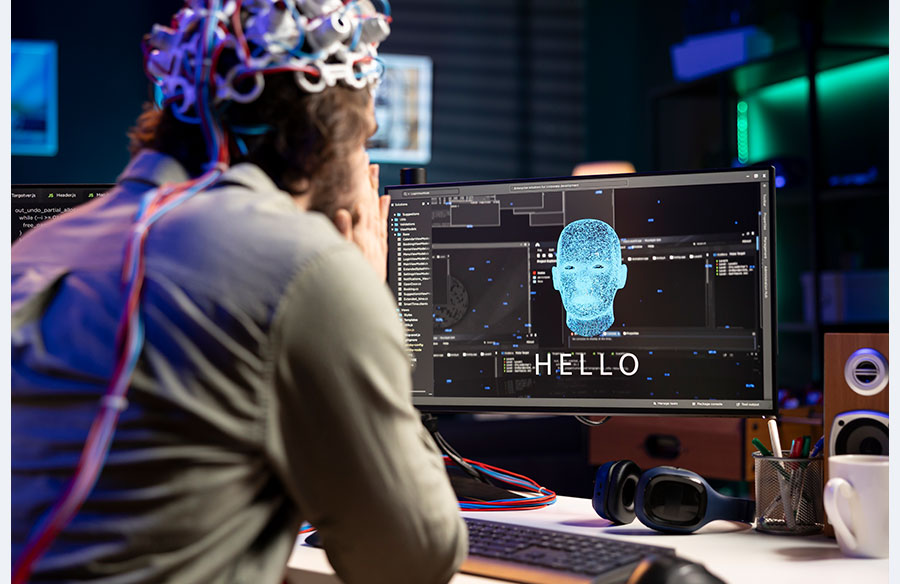
The design industry has always evolved alongside technological change. From the introduction of CAD to the rise of parametric modeling, each wave of innovation has expanded how architects and designers conceptualize, communicate, and build their visions. Today, we stand at the brink of another profound transformation: artificial intelligence is emerging not merely as a tool, but as a creative partner.
This shift isn’t about replacing human imagination. Instead, it’s about amplifying the designer’s capacity to explore, iterate, and express ideas with unprecedented speed and precision. In studios and classrooms around the world, AI is moving from experimental playgrounds to core parts of the design workflow — influencing how we generate forms, visualize spaces, and engage clients.
From tools to partners
In the past, digital technologies in architecture largely served as execution tools: CAD software for drafting, BIM for documentation, rendering engines for visualization. These systems accelerated processes but rarely contributed to the creative spark itself.
Generative AI changes that dynamic. Through large language models, diffusion systems, and training on vast image datasets, designers can now interact with AI as they would with a collaborator: suggesting concepts, receiving interpretations, and iterating in real time. A designer might input a prompt describing an urban pavilion inspired by coral formations, and within seconds, receive multiple visual interpretations. From there, the human can refine, remix, and redirect — much like a dialogue in a studio critique.
This back-and-forth dynamic is perhaps AI’s most significant contribution: it externalizes imagination at the speed of thought.
Ideation at scale
One of the most time-consuming parts of any creative process is early ideation. Traditionally, architects might sketch dozens of variations to test spatial concepts. Now, AI systems allow for the generation of hundreds of visual explorations in minutes. Tools like Midjourney, DALL·E, and Stable Diffusion have become familiar companions in concept design studios. They help overcome blank-page syndrome and provide unexpected directions that may not have emerged through conventional brainstorming alone.
These generated visuals don’t deliver finished architecture. Instead, they act as provocations — loose, suggestive ideas that spark further development. Designers can then apply critical thinking, technical knowledge, and contextual understanding to shape these suggestions into real projects.
By treating AI outputs as a starting point rather than an end, architects maintain creative authorship while benefiting from exponential ideation capacity.
Beyond the image: new modes of visualization
Visualization has always played a central role in design. As rendering engines became faster and more realistic, they allowed clients and stakeholders to experience spaces before they were built. Now, AI is extending visualization far beyond static images.
Emerging tools allow designers to transform conceptual sketches, textual descriptions, or BIM models into immersive environments almost instantly. For example, text to video AI technology can take a written narrative and generate dynamic visual sequences that communicate atmosphere, movement, and spatial transitions. This capability is changing how architects present early concepts, making narratives more tangible to non-specialists.
Similarly, AI-enhanced rendering workflows can automatically adjust lighting conditions, materials, and camera angles to create mood variations that would once have required extensive manual work. The result is faster, more compelling visual communication — essential in competitive pitching environments.
Parametric meets generative
For years, parametric design has allowed architects to explore complex geometries and responsive systems. Generative AI doesn’t replace parametricism; it complements it. While parametric tools excel at structured, rule-based transformations, AI excels at unstructured pattern recognition and stylistic exploration.
Forward-thinking studios are blending these approaches. For example, an architect might use AI to generate facade textures inspired by local ecological patterns, then feed those textures into parametric systems that control panelization or solar shading. This hybrid workflow allows for expressive forms that remain technically viable.
The result is not a binary choice between human and machine logic, but a layered conversation between different types of intelligence.
Enhancing communication with clients and communities
Architecture is as much about communication as it is about creation. Architects must translate complex spatial ideas into narratives that resonate with clients, users, and the public. AI is proving to be a powerful storytelling ally.
Language models can help craft design narratives tailored to different audiences, automatically adjusting tone, technicality, or cultural references. Visual models can generate atmospheric images that evoke emotional responses, making presentations more immersive. AI can even assist in generating alternative scenarios based on community feedback, enabling more participatory design processes.
For community engagement, interactive AI platforms can allow residents to explore variations of a proposed development in real time — modifying materials, layouts, or landscape features — and see the results instantly. This level of interaction was previously only possible in large-budget visualization environments.
AI in the studio culture
In many design studios, AI is no longer a separate “innovation lab” experiment; it’s becoming embedded in everyday practice. Junior designers use AI tools to generate presentation imagery, senior architects use them to test massing options, and marketing teams use them to create branded content more efficiently.
This integration is also changing how studios are structured. New roles are emerging: AI prompt specialists, data curators, and creative technologists. Teams are learning to combine traditional craft with machine-driven experimentation — leading to a richer, more diverse design culture.
In education, students who grow up using these tools are entering the profession with different expectations. For them, AI isn’t an add-on; it’s part of the design language itself.
Ethical and authorship questions
With new capabilities come new responsibilities. As AI becomes more intertwined with creative processes, the design community must grapple with issues of authorship, originality, and bias. Who “owns” a concept generated through a human–AI dialogue? How can designers ensure that datasets don’t perpetuate cultural stereotypes or aesthetic homogenization? These questions don’t have simple answers, but engaging with them early is crucial to shape ethical practices.
Some studios are creating internal guidelines for AI use, ensuring transparency with clients and acknowledging AI contributions in presentations. Others are actively curating training data to reflect local cultures and sustainable values, aligning technological tools with human intentions.
A new chapter in creative practice
The arrival of AI in architecture and design marks more than just another software upgrade — it signals a paradigm shift in how we conceive, explore, and communicate ideas. By positioning AI as a creative collaborator rather than a passive tool, designers can unlock new layers of possibility while retaining their unique vision and judgment.
The future studio will likely be defined by hybrid intelligence: humans and algorithms working side by side, each contributing what they do best. Humans bring cultural understanding, critical reasoning, and intuition; AI brings speed, pattern recognition, and boundless generative capacity. Together, they’re reshaping the creative landscape — not by replacing the architect, but by expanding what it means to design.