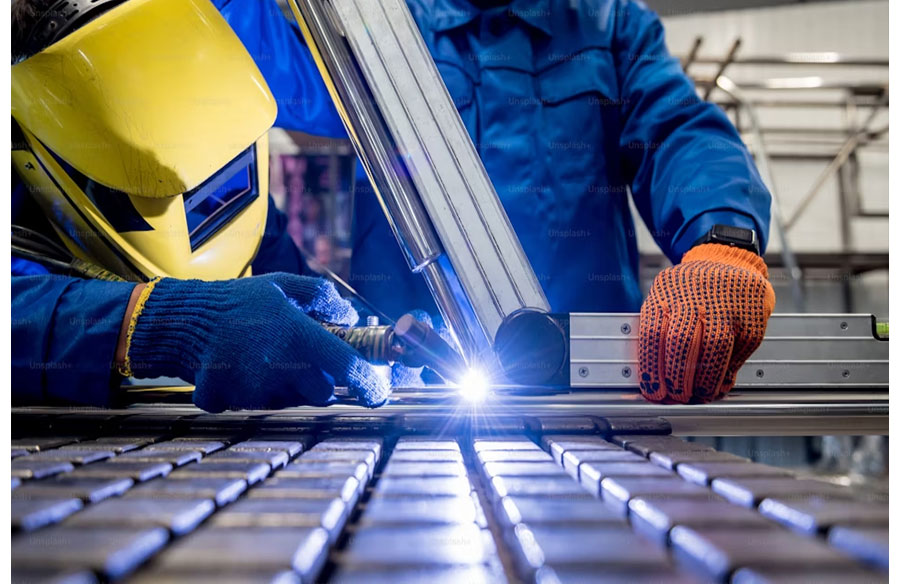
Not every problem waits for business hours. Sometimes, a cracked beam or leaking pipe turns into an emergency when no one’s around to fix it. That’s where welding steps in as the hero of the night, delivering fast solutions that keep buildings safe and operations running.
From damaged steel connections to utility pipe leaks, quick field welding handles problems that can’t wait. Read along to discover when mobile crews make all the difference in critical situations.
1. Cracked Moment Connections Risk Structural Stability
When a moment connection cracks, the integrity of an entire structure can hang in the balance —these connections bear heavy loads, often critical to holding beams and columns securely together. After hours, such damage isn’t just inconvenient—it’s dangerous.
Mobile welding crews step in to stabilize and reinforce the joint before further strain causes it to fail. Crews clean up damaged welds, assess stresses on surrounding elements, and apply durable repairs under emergency conditions. It keeps buildings safe until long-term reinforcements or inspections occur without delaying vital safety measures.
2. Damaged Stair Stringers Create Immediate Safety Hazards
Beyond structural concerns, such as cracked connections, damaged stair stringers pose urgent safety risks. A compromised stringer can make stairs unusable or, worse, lead to injuries if left unchecked. This kind of damage often demands attention immediately—especially in public spaces or high-traffic buildings.
Here’s where 24/7 emergency welding proves essential. Mobile crews inspect the extent of the damage and restore strength by reinforcing or replacing critical welds on-site.
These repairs prevent shutdowns while ensuring safe access for occupants until permanent solutions can be implemented during regular hours.
3. Failed Guardrails Compromise Public Safety
Guardrails aren’t just for aesthetics—they protect people from dangerous falls. When a guardrail fails, especially in multi-level buildings or stairwells, the risk of accidents skyrockets. Addressing this issue after hours becomes a top priority to avoid liability and ensure public safety.
Emergency welders respond by stabilizing or replacing broken railings quickly and securely. They inspect surrounding connections for stress points that may have been affected and reinforce them as needed. This swift action keeps areas safe and accessible until permanent fixes can be scheduled without disrupting daily operations.
4. Leaking Utility Piping Threatens Operations
Utility piping carries essential services like water, gas, or steam. A leak doesn’t just disrupt operations—it can also lead to serious safety risks. After-hours pipe failures often demand immediate attention to prevent flooding, contamination, or hazardous conditions.
Welding crews equipped for emergency calls handle these repairs quickly by sealing leaks with precise welds or replacing damaged sections entirely. They work efficiently to minimize downtime while ensuring the system operates safely again. Quick-response welding prevents costly shutdowns and reduces the escalation of minor issues into major disruptions overnight.
5. Jammed Conveyors Halt Critical Workflows
Conveyors keep warehouses, factories, and service areas running smoothly. When a conveyor system jams due to misaligned components or structural damage, it can bring operations to a grinding halt. Overnight delays often mean missed deadlines or lost productivity.
Emergency welding provides a fast solution by repairing broken frames, rollers, or joints on-site. Crews realign damaged sections and reinforce weak points to restore functionality quickly. This approach ensures minimal disruption and keeps essential workflows moving until more comprehensive maintenance can be scheduled during standard operating hours.
6. Storm-Bent Canopies Protect Against Further Damage
Finally, severe weather often leaves behind structural damage that demands urgent attention. Bent or partially detached canopies are common after storms, and if left unaddressed, they can pose serious safety risks or lead to further property damage from falling debris.
After hours, welding crews stabilize these structures by cutting away compromised sections and reinforcing the canopy’s frame with fresh welds. They ensure everything is securely in place to withstand additional strain until full repairs are scheduled. Addressing these issues promptly ensures emergency welding restores functionality and prevents more costly problems down the line—keeping buildings safe through the night when time is of the essence.
Conclusion
Emergencies rarely wait for the convenience of daylight, and the ability to act quickly can make all the difference. Welding doesn’t just repair—it stabilizes, reinforces, and protects when it matters most.
The next time damage threatens safety or operations after hours, consider how timely weld repairs offer a practical solution. Sometimes, quick action is what stands between chaos and keeping everything running smoothly through the night.