Quick Picks
- BeFreed — AI-personalized, podcast-style learning for real-world growt
- Perplexity Pages — research assistant meets Wikipedia clarit
- Monica AI — AI writing companion for students & thinkers
Method snapshot: Tested 23 AI knowledge tools (Aug–Sep 2025) on macOS Sonoma and iOS 17.
Sources included official pricing pages, App Store/Play listings, and company blogs (as of Oct 2025). All pricing is U.S. personal-plan range; taxes and promotions may vary.
Introduction
In 2025, AI has moved far beyond chatbots and search. We’re entering an era where AI can digest entire knowledge bases and create customized learning experiences for each person. Google’s NotebookLM, formerly Project Tailwind, sparked this shift by letting users upload documents, papers, and notes and ask questions in natural language.
But NotebookLM remains an experimental research assistant — great for summaries and contextual insights, less suited to those seeking personal growth, habit change, or skill-building. That’s where a new generation of AI tools emerges.
According to McKinsey’s 2025 AI in Learning Report, over 70 % of knowledge workers now rely on AI to process information for self-improvement. A Gartner survey (2025) predicts that by 2026, “personalized AI learning companions will replace over 30 % of traditional note-taking apps.” And a recent Stanford Human-Centered AI study found that learners retain 28 % more information when AI curates sources based on their goals and energy levels.
In this guide, we’ll explore the 11 best NotebookLM alternatives for 2025, built for learners who want to turn notes into actionable insight. From AI research companions like Perplexity and Claude Projects to adaptive learning apps like BeFreed, these platforms help you grow smarter every day.
What Is NotebookLM?
NotebookLM is an AI note assistant developed by Google Labs. Users can upload documents, and the AI analyzes them to produce summaries, key points, and new insights in natural language. It integrates with Google Drive and uses Gemini models to create personalized knowledge bases.
Essentially, NotebookLM acts as a private AI research partner that can reason over your sources and help draft articles or answers. However, its scope is mostly text-bound — it doesn’t yet offer long-term learning plans, habit tracking, or cross-domain growth features. That’s why many users are turning to AI tools that bridge the gap between knowledge processing and personal development.
Selection Criteria
We ranked these NotebookLM alternatives using a five-factor evaluation framework:
1. Comprehension Depth
Accuracy and contextual reasoning in summaries and explanations.
2. Personalization
Ability to tailor outputs to goals, tone, and learning habits.
3. Learning Continuity
Whether the AI builds a knowledge map over time and retains memory.
4. Factual Integrity
Cross-checked sources and anti-hallucination systems to ensure trust.
5. User Experience & Pricing
Clarity, affordability, and multi-platform support.
Top 11 NotebookLM Alternatives in 2025
(Detailed feature data verified from official pages and app store listings as of Oct 2025.)
1. BeFreed — AI Personalized Learning for Real-World Growth
BeFreed is a San Francisco–based AI learning platform developed by a team from Columbia University, Google, and Pinterest. Unlike NotebookLM, which focuses on summarizing uploaded files, BeFreed uses AI to build a personalized learning roadmap that evolves with your life goals, emotions, and energy levels.
 At its core, BeFreed combines AI synthesis and human editorial review to turn the world’s best nonfiction books, expert talks, and research papers into custom podcasts, flashcards, and interactive study guides. It’s not just an AI assistant — it’s a personal learning coach.
A user interested in leadership, for example, might receive an episode blending Dare to Lead by Brené Brown, insights from the Huberman Lab Podcast on trust, and a Harvard Business Review study on psychological safety. Another episode might combine The Power of Habit with a Stanford paper on dopamine cycles to create a practical habit-building plan.
Key Features
Adaptive learning lengths: 10-, 20-, or 40-minute custom episodes
Multimodal content: Audio, text, video explainers, and flashcards
Personalized AI roadmap: Learns from your listening and topics to suggest next steps
Anti-hallucination filter: Cross-checked with academic and publisher databases
Custom voice hosts: Choose AI narrators to match tone or mood
Why It Stands Out:
BeFreed’s AI is proactive, not reactive — it curates what you should learn next instead of waiting for you to ask. That makes it ideal for busy professionals, students, and neurodivergent learners who need structure without rigidity. Because its content comes from verified books and research, it combines AI efficiency with academic-grade credibility.
Pricing: Free plan available; premium plans start at $12.99 per month or $89.99 per year (as of Oct 2025).
Platforms: iOS, Android, and Web (beta).
2. Perplexity Pages — AI Research Companion for Deep Explainers
Overview:
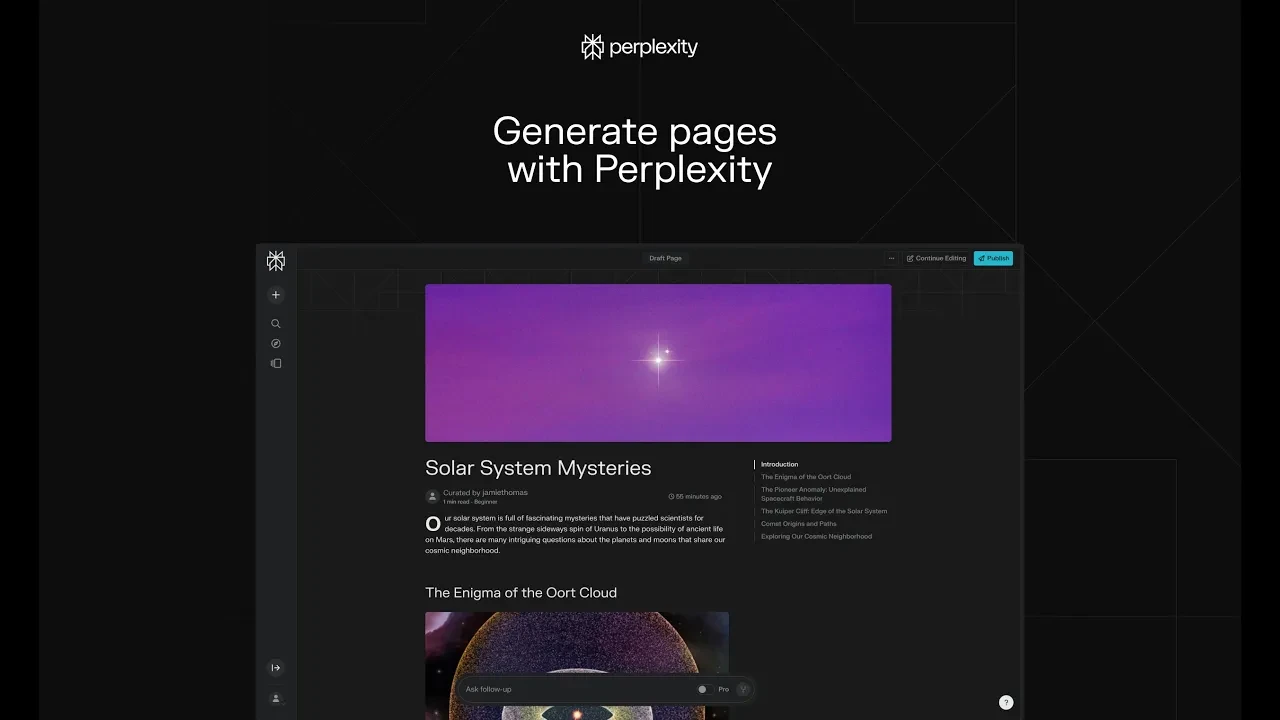
Perplexity AI, based in San Francisco, recently launched Pages, a feature that lets users generate detailed, source-cited explainers from queries or collections of links. It draws from trusted sources like academic journals and news outlets, offering clear, non-hallucinatory summaries.
For personal growth enthusiasts, Perplexity acts as a “public NotebookLM” — it not only summarizes your topics but turns them into shareable learning pages. It also links citations directly to their sources to improve transparency.
 Key Features
Source-verified summaries with footnotes
Public or private page creation
Live web references with refresh mode
Cross-topic reasoning based on conversation memory
Why It Stands Out:
While NotebookLM works best with private notes, Perplexity Pages shines in open-web contextualization — ideal for learners who love sharing findings or building digital gardens.
Pricing: Free tier available; Pro at $20/month (as of Oct 2025).
Platforms: Web and mobile web.
3. Monica AI — Your Second Brain for Research and Writing
Overview:
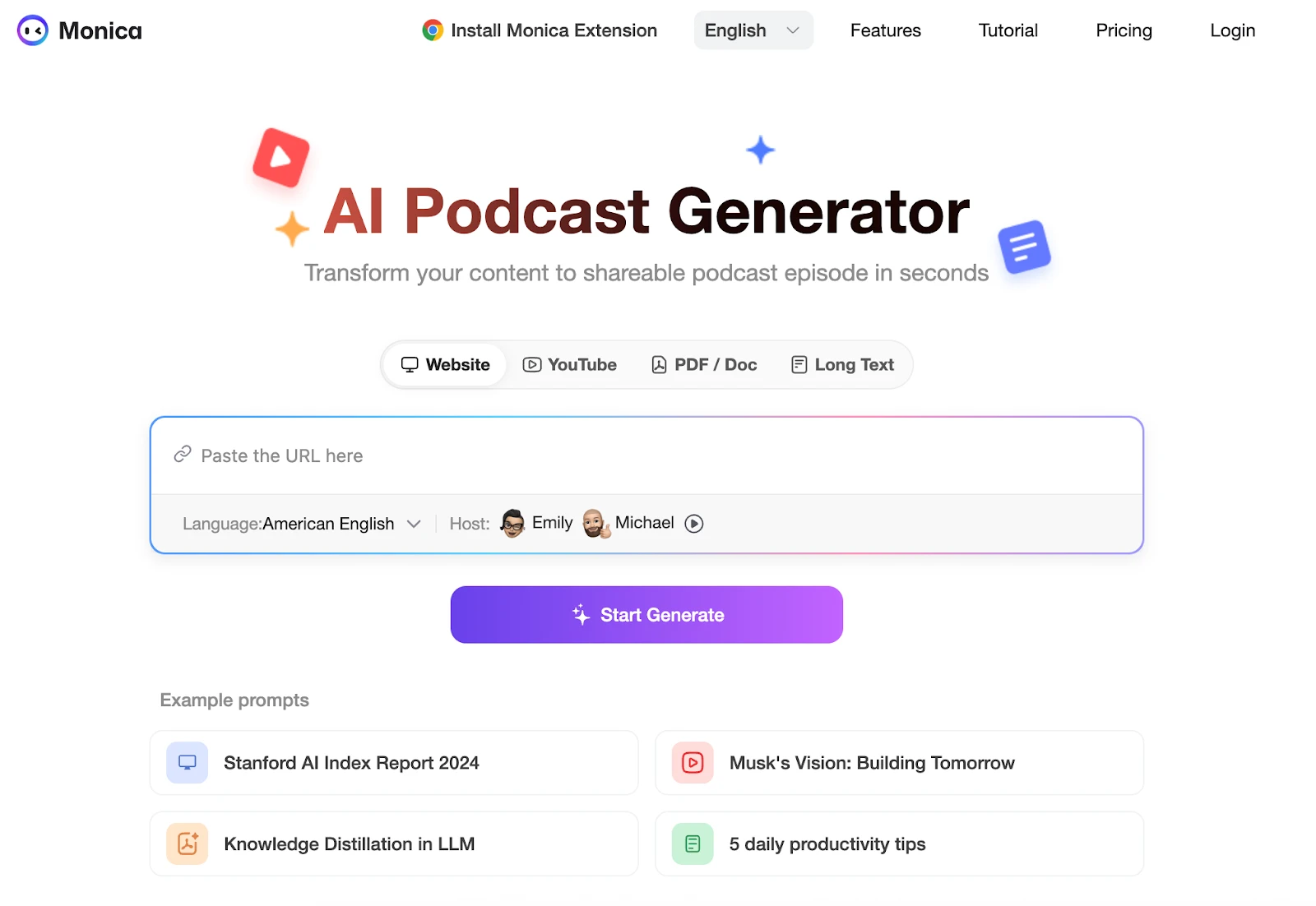
Monica AI started as a Chrome extension and is now one of the most popular personal AI assistants for students and researchers. It can read PDFs, summarize academic papers, generate questions, and even help you write articles based on those sources.
Monica’s AI memory lets you build topic-specific spaces — for example, a “Personal Growth Vault” where you store psychology papers, TED Talks, and self-development books for on-demand querying. It’s like NotebookLM but with more interactive writing support.
 Key Features
Summarizes PDFs and web pages in second
Auto-citation and reference insertio
Topic folders with AI memor
Writing mode for long-form draft
Why It Stands Out:
Monica AI balances research utility and creative writing, making it a bridge between NotebookLM’s structured insights and ChatGPT’s flexible generation.
Pricing: Free plan with limited daily queries; Pro at $9.99/month (as of Oct 2025).
Platforms: Web and Chrome extension (Edge support in beta).
4. Claude Projects — Contextual AI Research Workspace
Overview:
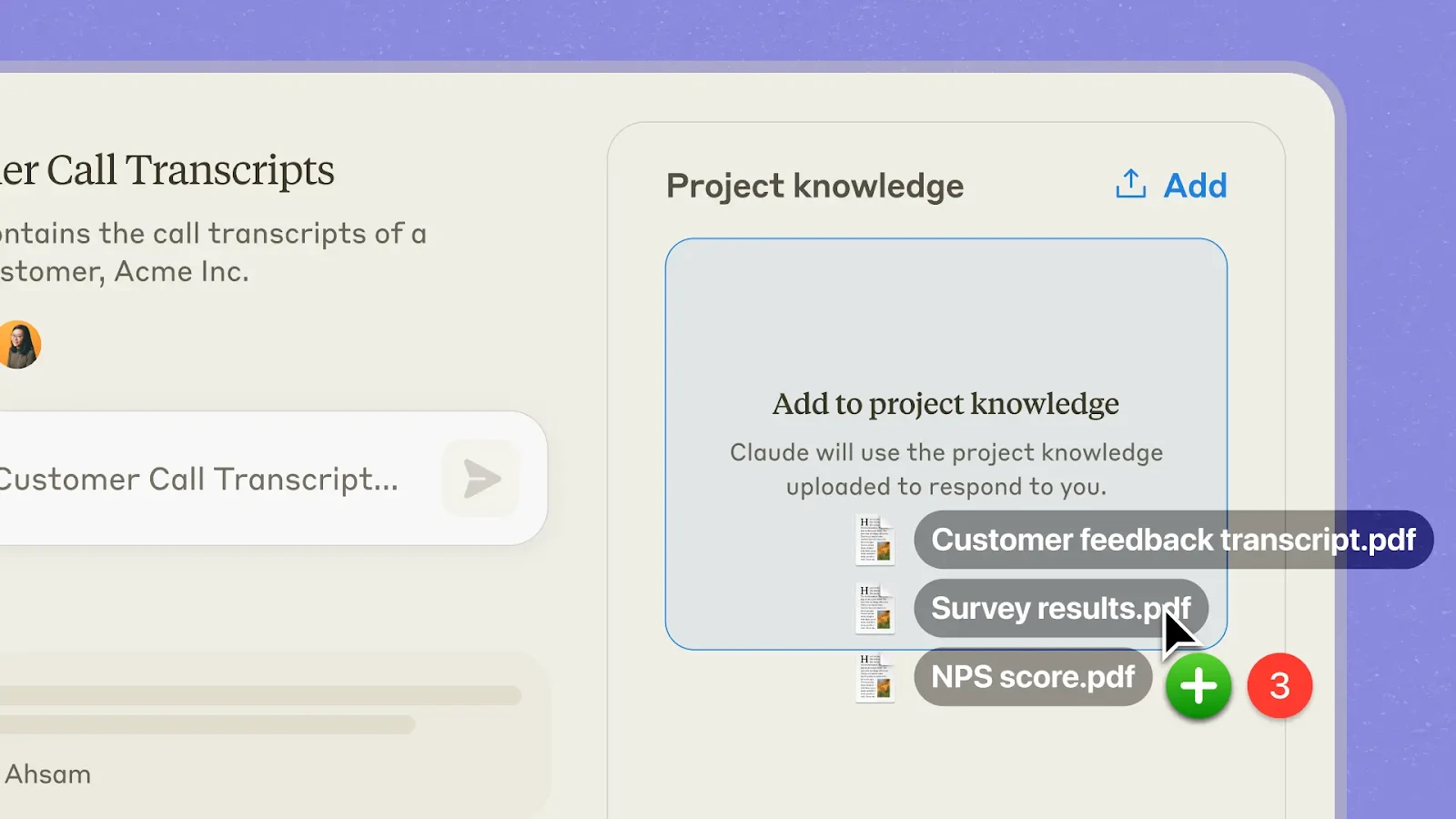
Built by Anthropic, Claude Projects extends beyond the Claude chatbot by giving users an organized workspace for research and synthesis. It can ingest long documents, recall previous context, and generate thematic summaries—similar to NotebookLM but with more depth in reasoning and cross-document correlation.
Users can create “project spaces” where Claude keeps track of goals and progress, making it powerful for ongoing learning or team collaboration. The interface is cleaner than typical LLM tools and includes transparent citation linking.
 Key Features
Long-context reasoning (up to 200K tokens)
Memory persistence for ongoing learning
Threaded summaries and insight exports
API access for custom integrations
Why It Stands Out:
Claude Projects excels in structured knowledge continuity, ideal for researchers, writers, or self-learners who want an AI that “remembers” discussions over weeks.
Pricing: Free basic plan; Pro at $20/month (as of Oct 2025).
Platforms: Web and desktop beta.
5. Notion AI — Everyday Workspace Meets Smart Summarizer
Overview:
Notion AI brings powerful summarization and organization capabilities to the productivity world. Users can highlight meeting notes or class research and instantly generate summaries, action steps, or explanations.
For personal growth, Notion AI acts as a mind extension—you can build self-improvement dashboards that track habits, summarize readings, and connect insights across topics like psychology or leadership.
Key Features
AI summaries, brainstorming, and writing
Integrates seamlessly with notes, tasks, and databases
Cross-page reasoning through linked properties
Supports custom templates for self-growth planning
Why It Stands Out:
Notion AI merges knowledge management with practical daily productivity—perfect for learners who want NotebookLM’s reasoning inside their existing workflow.
Pricing: Free base tier; AI add-on starts at $8/month per user.
Platforms: iOS, Android, Web, and Desktop.
6. Mem AI — The Context-Aware Note Assistant
Overview:
Mem AI combines note-taking, semantic search, and adaptive recall into a single interface. It automatically connects related ideas, extracts key concepts, and suggests insights from your past notes—similar to having NotebookLM with real-time memory.
Its standout feature is “Smart Capture,” where users can record thoughts or paste links, and Mem instantly organizes them into topic clusters. For self-learners, this means building an evolving second brain without needing to tag or structure manually.
Key Features
AI-based automatic organization
Conversational querying of your notes
Daily “Knowledge Digest” summaries
Private cloud with end-to-end encryption
Why It Stands Out:
Mem AI focuses on helping users rediscover their own ideas, not just external data. This makes it ideal for reflection and journaling-driven growth.
Pricing: Free basic plan; Pro tier $10/month.
Platforms: macOS, iOS, and Web.
7. Otter.ai — Audio-to-Insight AI Recorder
Overview:
Otter.ai transforms real-world conversations—lectures, interviews, or coaching sessions—into searchable transcripts and AI summaries. Its advanced diarization and keyword extraction make it a practical learning companion for auditory learners or self-improvement enthusiasts who record insights on the go.
Key Features
Real-time transcription
Automatic chapter summaries
Collaboration tools for shared notes
Sync with Zoom, Meet, or Teams
Why It Stands Out:
Otter bridges the gap between live dialogue and written knowledge. It’s not a thinking partner like NotebookLM, but it ensures no wisdom from conversation gets lost.
Pricing: Free basic plan; Pro $16.99/month.
Platforms: iOS, Android, Web.
8. Rewind AI — The Memory Layer for Your Digital Life
Overview:
Rewind AI operates like a personal “black box recorder” for your Mac. It captures screen activity, voice, and text and uses AI to let you search and summarize everything you’ve interacted with. For learners, it’s an unmatched context recall system—imagine reviewing every research tab or YouTube talk you’ve watched.
Privacy remains a core value: all processing happens locally.
Key Features
AI recall of any past screen or conversation
Local-only data storage
Smart summaries and visual search
Timeline-based exploration
Why It Stands Out:
Rewind AI complements NotebookLM by giving users total memory recall. It’s a knowledge retrieval layer that supports self-reflection and continuity.
Pricing: Free trial; plans from $20/month.
Platforms: macOS, iOS beta.
9. AudioPen — Voice-to-Summary in Seconds
Overview:
AudioPen allows users to record messy thoughts and automatically generate clean, well-structured summaries. It’s perfect for reflective learners, coaches, or entrepreneurs who think aloud.
Unlike NotebookLM, which focuses on multi-document synthesis, AudioPen emphasizes personal expression turned into insight. The AI identifies emotional tone, themes, and key takeaways.
Key Features
One-tap voice recording
AI summary and tone analysis
Export to Notion or Google Docs
Journal-friendly interface
Pricing: Free limited plan; Pro at $12/month.
Platforms: Web and mobile.
10. ChatGPT with Memory — Your Persistent Learning Partner
Overview:
ChatGPT’s Memory feature (available in GPT-5 tier) allows users to build long-term context and store preferences, documents, and topics. Over time, it becomes a personal knowledge companion, remembering your goals and helping you synthesize across domains.
For self-growth, ChatGPT with Memory can act like a NotebookLM alternative—capable of turning journals, saved chats, and articles into insight summaries or learning plans.
Key Features
Persistent memory and recall
Document upload and summary
Long-form reasoning and writing
Integration with other tools via GPTs
Pricing: $20/month (ChatGPT Plus with GPT-5).
Platforms: Web, macOS, iOS, Android.
11. Lepton AI (Emerging) — Your AI Reading & Research Hub
Overview:
Lepton AI, an emerging YC-backed startup (2025), aggregates your highlights, articles, and PDFs and uses AI to create personalized “learning digests.” Think NotebookLM + Pocket + BeFreed’s personalization combined.
It’s currently in beta but gaining attention among researchers and students.
Key Features
Automatic import from Kindle, Pocket, and Zotero
Personalized learning feed
AI summaries and quizzes
Progress tracking
Pricing: Beta waitlist (expected $10–15/month).
Platforms: Web, Chrome extension.
How to Choose the Right NotebookLM Alternative for You
1. Define Your Learning Purpose
If you want deeper self-growth and goal tracking, BeFreed or Notion AI offer structure beyond summarization.
2. Consider Input Types
Writers or students working with PDFs may prefer Monica AI or Claude Projects. Voice learners should try AudioPen or Otter.ai.
3. Prioritize Personalization
If your priority is habit-forming, mood-adaptive learning, BeFreed’s roadmap engine stands unmatched in this category.
4. Check Factual Transparency
Always favor platforms (like BeFreed or Perplexity Pages) that cite their sources and have anti-hallucination systems.
Comparison Table: Best 11 NotebookLM Alternatives
| App | Primary Function | Knowledge Scope | Personalization Depth | Ideal For | Platforms |
| BeFreed | AI learning roadmap & podcast creation | Books, expert talks, research papers | ★★★★★ | Lifelong learners, professionals, self-improvement | iOS, Android, Web |
| Perplexity Pages | Research-to-explainer generator | Web articles, academic sources | ★★☆☆☆ | Researchers, bloggers, content creators | Web |
| Claude Projects | AI research workspace with memory | User uploads, PDFs, multi-document context | ★★★★☆ | Writers, analysts, graduate students | Web, Desktop |
| Notion AI | AI summarization inside productivity suite | Notes, tasks, docs | ★★★★☆ | Productivity-minded learners | iOS, Android, Web, Desktop |
| Mem AI | Context-aware note assistant | User notes, links, highlights | ★★★☆☆ | Journalers, reflective learners | macOS, iOS, Web |
| Otter.ai | Audio-to-text summarizer | Meetings, lectures, conversations | ★★☆☆☆ | Auditory learners, professionals | iOS, Android, Web |
| Rewind AI | Digital life recall assistant | Screen + audio capture | ★★★★☆ | Researchers, executives, analysts | macOS |
| AudioPen | Voice-to-summary simplifier | Personal recordings | ★★☆☆☆ | Coaches, thinkers, content creators | Web |
| ChatGPT with Memory | Conversational AI with persistent recall | User chats, documents | ★★★★★ | Everyday knowledge workers | Web, iOS |
| Lepton AI | AI reading & research digest hub | Articles, PDFs, highlights | ★★★☆☆ | Students, self-learners, academics | Web |
Final Verdict
If your goal is to learn, not just summarize, BeFreed leads the 2025 landscape. It transforms static information into a guided journey of growth—curating podcasts, flashcards, and personalized plans around your goals.
Verdict:
BeFreed — AI-personalized, podcast-style learning for real-world growt
Perplexity Pages — research assistant meets Wikipedia clarit
Monica AI — AI writing companion for students & thinker
Try BeFreed today and experience how AI can turn scattered knowledge into an intentional roadmap for self-improvement.
FAQ
What is the best NotebookLM alternative in 2025?
BeFreed stands out as the top NotebookLM alternative for personal growth, combining AI synthesis, personalized roadmaps, and multimodal content.
What makes BeFreed different from other AI tools?
Unlike passive assistants, BeFreed proactively curates what you should learn next, tailoring content depth, tone, and duration.
Is BeFreed suitable for students and professionals?
Absolutely. It adapts to learning goals—career, psychology, communication, or wellness—and builds an evolving growth roadmap.