Hotels are no longer just a place to drop your bags and crash after a long day of sightseeing. Instead, travellers are searching for a place to restore and reimagine their wellbeing.
As a result, wellness has become one of the strongest forces shaping modern hospitality design. From meditation gardens to salt therapy rooms, wellness-focused spaces are becoming the hallmark of forward-thinking hotels.
And among these, hotels with hot tubs and Jacuzzis have emerged as a defining symbol of this shift, blending architecture, wellness, and guest experience in a single design feature.
The Wellness Tourism Boom
Wellness tourism saw a sharp increase in demand as travellers are becoming more aware of a healthy lifestyle and staying. The graph of wellness tourism has seen steady growth over the past decade and will continue to increase in the future.
Guests are no longer satisfied with an occasional spa treatment; they want wellness to be integrated into the fabric of their stay. This means accommodations that support both physical recovery and mental relaxation.
A hot tub may seem like a simple addition, but for many travelers, it transforms a stay from ordinary to restorative. Hydrotherapy, the warmth of water, and the soothing sensory experience all contribute to relaxation and renewal.
It’s why choosing the right hotel with the right rooms and amenities can completely redefine a travel experience, turning a weekend getaway into a true retreat.
Hot Tubs as Architectural Features
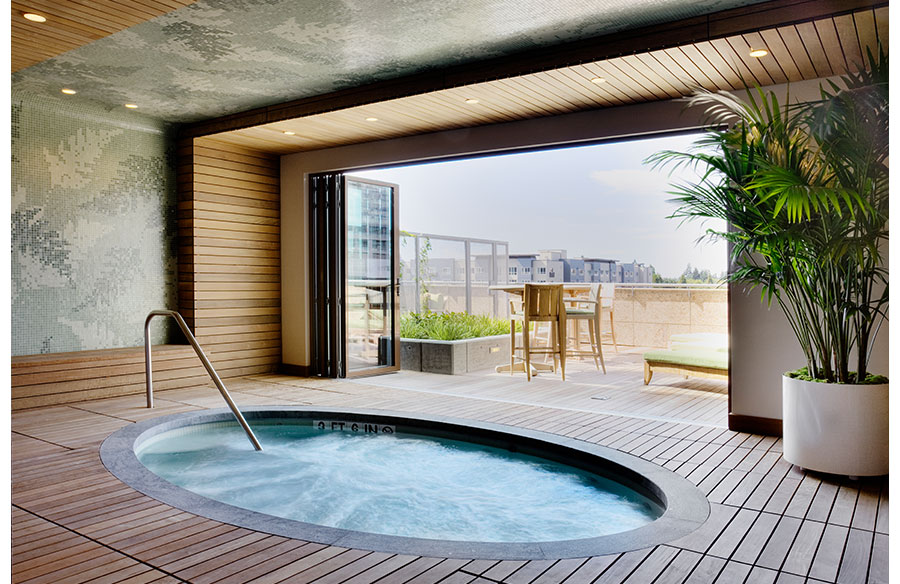
In the past, hot tubs were often hidden away in basement-level spas. Today, they are front and center in hotel design. Architects and hospitality designers are using hot tubs not only as wellness amenities but also as visual and experiential focal points.
Think of a rooftop hot tub overlooking the Manhattan skyline, or a minimalist wooden tub nestled on the terrace of a Scandinavian lodge. These spaces are designed with intention, integrating views, privacy, and atmosphere. Materials like stone, cedar, or polished concrete are often chosen to align with the overall architectural theme.
The design challenge lies in balancing intimacy and openness: how to give guests a private sanctuary while still making the hot tub a centerpiece of the hotel’s aesthetic. With resources like TubHotels, travelers can easily explore a curated selection of hotels with hot tubs that match both their design tastes and wellness needs.
Biophilic Design and the Spa-Like Experience
One of the strongest design movements influencing hotels today is biophilic design: the integration of natural elements into built spaces to improve wellbeing. Hot tubs fit seamlessly into this trend, connecting water, nature, and architecture.
Imagine soaking in a tub surrounded by alpine forests, or gazing at the ocean from an infinity-edge Jacuzzi. These moments combine the restorative power of nature with architectural design that frames the experience. Natural lighting, outdoor placement, and the use of organic textures amplify the sense of calm.
By creating these immersive environments, hotels allow guests to experience not just relaxation but also a deeper connection to place and nature. This is something today’s wellness-conscious traveler values immensely.
Minimalism and Luxury Redefined
Luxury in hospitality is evolving. Once synonymous with opulence and excess, it is now defined by quiet indulgence, personalization, and restorative spaces. A private suite with a hot tub exemplifies this shift: it offers an exclusive, deeply personal experience that doesn’t rely on flashy design but rather on subtle, meaningful details.
Minimalist aesthetics, neutral palettes, natural woods, and simple lines enhance the sense of tranquility. In many ways, the hotel with jacuzzis and hot tubs has become the new symbol of understated luxury: indulgent without being overwhelming, restorative without being showy.
This refined version of luxury appeals to travelers who prioritize wellness, calm, and authenticity over sheer extravagance.
The Future of Hospitality Design
As the trend continues, aesthetics and wellness will be the driving factor in hospitality innovation. Hotel features like rooftop pools, architectural spas, and in-room hot tubs will become standard offerings.
Travellers and health-conscious people are already inclined towards hotels with a balanced offering between wellness and design. A strategically placed hot tub can be used as a marketing feature to attract them.
For travelers who want to align their stays with this growing trend, curated platforms like TubHotels offer a simple way to find properties that blend design and wellness.
Conclusion
Hotels are no longer just a check box on a traveler’s list; it has become an integral part of their lifestyle. Everyone wants to have an unforgettable experience that they can remember for years, not just aesthetically, but with wellness attached to it.
The once seen luxury has now become a necessity. Hot tubs are in demand for wellness and relaxation, and the trend is likely to go up. These can be hidden in the room or perched on a rooftop, but they define the future of hospitality.