One-third of all food produced globally ends up in the trash. Let that fact register. We’re not talking about scraps. We’re talking about perfectly good food that never makes it to anyone’s plate.
But what if the answer isn’t better trucks or smarter shoppers? What if it’s about making our buildings work harder? This is where architecture stops being just about aesthetically pleasing spaces and starts solving real problems. Buildings that grow food. That may be the future we’re entering.
The Food Waste Challenge in Modern Cities
Your average vegetable travels 1,500 miles before it reaches your grocery cart. Consider journey trucks, warehouses, distribution centers, more trucks, storage rooms, display cases.
Every step creates another opportunity for something to go wrong. Too hot in the truck? Spoiled. Stored too long in the warehouse? Rotten. Seasonal surplus means prices crash? Straight to the dumpster.
Cities are the worst offenders here. We consume the most food, waste the most food, and have the least connection to where our meals actually originate. Urban households throw away groceries, not because they’re wasteful people, but because that food was already deteriorating when they purchased it.
That’s exactly why we need innovative food waste solutions that address the root cause. Instead of shipping food to cities, let’s grow it there.
Buildings That Grow Food
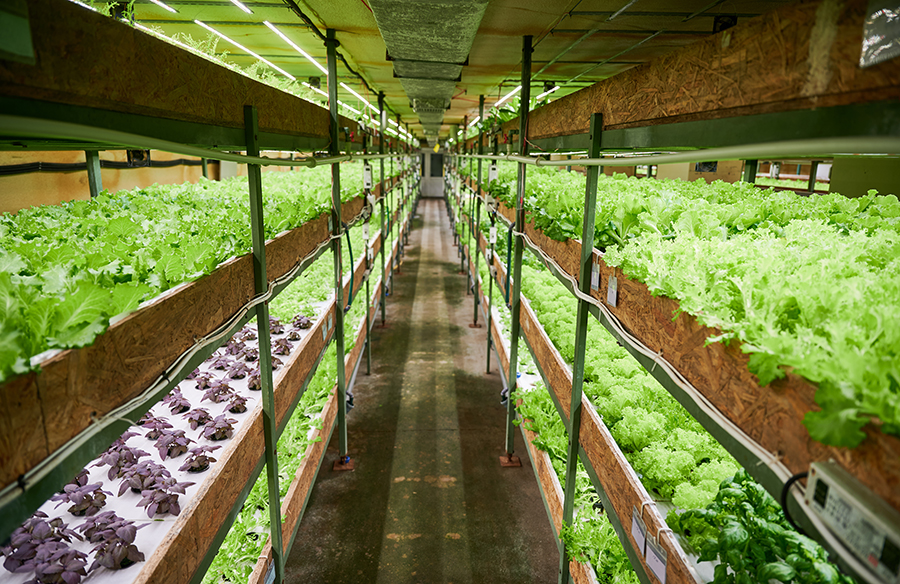
What if our buildings did not just consume resources but produced them? Vertical farms allow us to do exactly that. Rooftops, façades, and underused structures like old shopping centers or warehouses can be transformed into productive farms. Instead of gray concrete, these spaces become green, living systems.
The advantages are practical as well as environmental. Building-integrated farms can reuse waste heat, recycle greywater, and even process organic waste as a resource. Because food is grown steps away from consumers, there is less transport, less handling, and far fewer chances for produce to spoil along the way. The result is fresher food and a big dent in urban food waste.
Science Behind the Shift: Beyond Lettuce
For years, everyone claimed vertical farming only worked for lettuce and specialty herbs. “Sure, it’s interesting, but can it feed people?” The skeptics had a valid point.
Not anymore. The Technical University of Munich just published research that changes everything. Their 2025 study proves vertical farms can handle fruits, staples, and significantly more variety than anyone thought possible.
The numbers are remarkable. These layered growing systems produce multiple times more food per square meter than traditional farming. Water usage drops by 95%. Fertilizer runoff? Eliminated completely.
But here’s the transformation for food waste: predictable harvests. Traditional farming is essentially gambling against the weather. Drought destroys crops. Floods destroy crops. Pests destroy crops. When crops fail, the entire supply chain scrambles, leading to shortages followed by overproduction, followed by massive waste.
Vertical farms don’t gamble. Every harvest is planned, measured, and delivered exactly when needed. No weather surprises. No pest disasters. No “we grew too much” scenarios that end up in landfills.
Vertical Farming for Food Security and Planet Health
The research from Frontiers in Sustainable Food Systems and Frontiers in Science reveals something bigger than just efficient farming. We’re talking about reshaping how cities work with the environment instead of fighting it.
Year-round harvests eliminate seasonal waste cycles. Remember those mountains of pumpkins rotting after Halloween? That doesn’t happen when you control the growing schedule.
Controlled environments slash pesticide use, often eliminating it entirely. No chemical runoff poisoning rivers. Reduced biodiversity loss from industrial agriculture. The land that would have been farmland can return to being a natural habitat.
But the real breakthrough is eliminating transport waste. When farms exist in the same city, better yet, the same building, where people eat, spoilage during shipping becomes irrelevant.
Here’s what researchers are calling it: “circular urban food systems.” Everything gets used. Nothing gets wasted. Food grows where people live, using resources that buildings already produce.
The Trade-Offs We Cannot Ignore
Vertical farming isn’t inexpensive to establish, and those LED lights require significant energy. Both energy and equipment costs remain substantial. The learning curve is steep.
Currently, these systems work best for high-value crops: herbs, specialty greens, some fruits. We’re not growing wheat in skyscrapers anytime soon. Technology has limitations, and those limitations matter.
Here’s what provides optimism though:
- Energy costs are declining as solar and wind become more affordable each year
- LED efficiency continues improving while prices keep dropping
- Automation is reducing labor costs faster than most people realize
- Each successful project teaches us how to execute the next one better and more affordably
These are growing pains, not permanent obstacles. Early adopters are proving the concept works while the technology becomes better and more accessible.
Cities That Feed Themselves
You’re walking through downtown in 2035. Office towers have gardens ascending their sides. The shopping mall’s food court sources ingredients from farms on the upper floors. Your apartment building has a rooftop garden that actually contributes to your grocery budget.
This isn’t fantasy. It’s an architectural evolution that can be happening right now. We already construct mixed-use buildings that combine homes, offices, and shops. Adding farms can simply be the next logical step.
Entire neighborhoods could develop their own food networks. Production, processing, and consumption happen within a few blocks of each other. Food waste drops to minimal levels because the whole system operates at human scale.
Cities become more resilient, more sustainable, and people actually understand where their food originates again. That disconnect between urban life and agriculture, a significant factor in food waste, disappears when you can see the farm from your office window.
The Bottom Line
Architecture and agriculture working together can solve a substantial portion of our food waste problem. Not all of it, but enough to matter. Enough to change how cities function.
We achieve greater food security, less environmental damage, and cities that actually make sense. Instead of buildings that just occupy space, we get buildings that contribute value.