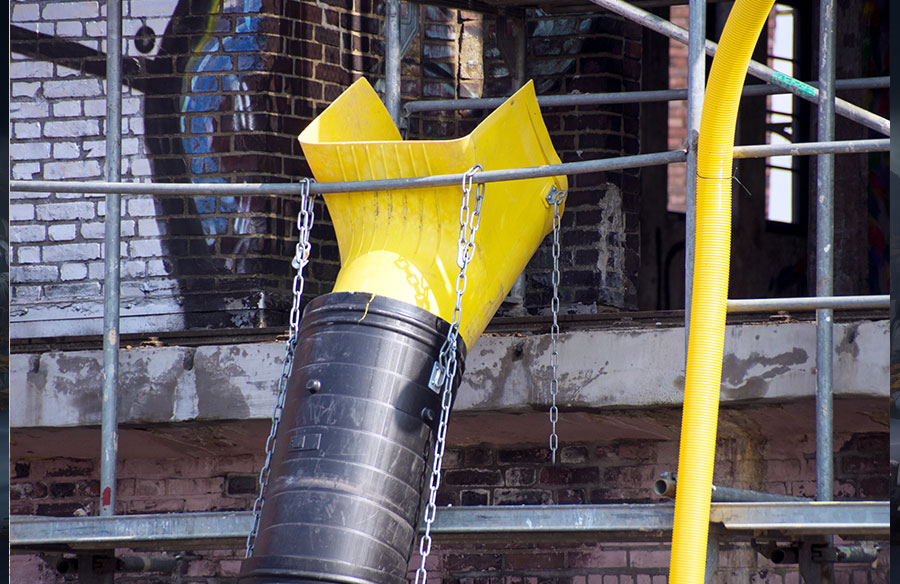
In the fast-paced world of construction and demolition, job site efficiency depends heavily on how well debris is managed and removed. With waste materials piling up quickly on multi-story projects, a safe and efficient solution is essential. Enter the construction debris chute system — a time-saving, safety-boosting investment that streamlines job site operations across the board.
Whether you’re managing a roofing replacement, a large commercial renovation, or a full-scale demolition, using the right chute system ensures waste doesn’t become a bottleneck for progress. In this guide, we’ll walk you through everything you need to know to choose the right debris chute for your project—from chute types and materials to installation and safety tips—all while reinforcing the importance of quality systems like those from HodChutes.
 What Is a Construction Debris Chute System?
A construction debris chute system is a vertical channel made of durable materials (typically plastic, rubber, or steel) used to safely and efficiently transport construction waste from elevated floors to a dumpster or containment bin at ground level.
Instead of moving debris manually down stairs or elevators—a time-consuming process that increases injury risk—a chute system allows workers to dispose of materials instantly and cleanly from upper levels. This system drastically reduces workplace hazards, speeds up cleanup, and enhances compliance with safety standards like OSHA.
Key Benefits of Debris Chutes for Construction Projects
The use of debris chutes for construction projects provides both functional and safety-related advantages. Here are some reasons why they’re a construction site essential:
1. Safety First
Transporting debris down multiple levels by hand is risky. A properly installed chute system limits worker exposure to falling or sharp debris and eliminates the need for manual hauling down stairs, reducing the risk of sprains, falls, and strains.
2. Time Efficiency
Time is money, especially on construction sites. Debris chutes allow workers to dispose of material immediately, minimizing interruptions and maximizing productivity across all floors.
3. Cleaner, More Organized Sites
By consolidating all waste into one controlled disposal path, the system reduces clutter on floors and walkways. A tidy worksite improves morale, navigability, and overall efficiency.
4. Easier Regulatory Compliance
Construction employers are required to comply with safety and clean-up protocols. A chute system helps you meet local, state, and OSHA regulations concerning job site cleanliness and safe disposal practices.
Types of Construction Chute Solutions
Not all chute systems are the same, and selecting the right one depends on your specific site conditions, height requirements, and materials you’re discarding.
Plastic Debris Chutes
Ideal for mid-sized construction projects, plastic chutes are lightweight, impact-resistant, and easy to install. They’re particularly useful for roofing, drywall, and wood waste. Most plastic chutes are made of high-density polyethylene (HDPE), which is weatherproof and durable.
Steel Debris Chutes
Known for their fire resistance and strength, steel chutes are used in high-rise or industrial projects. They’re more expensive and require secure rigging, but they can withstand heavy, abrasive waste better than plastic alternatives.
Rubber Chutes
Rubber debris chutes offer excellent noise reduction and flexibility. They’re typically used in demolition work because they help dampen the vibration and noise of debris while also withstanding irregular or oddly shaped waste materials.
Modular Systems and Customization
Most construction chute solutions are modular, meaning that multiple units can be joined together to create custom lengths. Optional add-ons—like intake hoppers, dust covers, and winch systems—enhance both safety and usability. Be sure to choose a system that allows these features for optimal efficiency.
What to Consider When Choosing a Debris Chute System
Before purchasing or renting a chute system, evaluate your project’s specific needs. Selecting the wrong chute can create safety concerns or slow down your job site instead of helping it.
1. Type of Debris
Light materials like cardboard and roofing shingles can be handled with standard plastic chutes, while concrete, metal, or brick debris require heavier-duty materials like reinforced plastic or steel.
2. Project Height
The vertical rise of your building will determine the length (and material strength) of your chute system. Systems must be strong enough to support their own length and the material load without buckling or cracking.
3. Installation Ease
A quality chute system should be easy to mount on scaffolding or directly to a building opening. Look for assembly that can be handled by your team without specialized equipment.
4. Material Durability
If your work takes place in extreme weather or long-term projects, prioritize durable construction debris chutes made from UV-resistant and impact-tolerant materials. This will reduce the need for replacements and service calls.
Why HodChutes Construction Solutions Stand Out
HodChutes is an industry leader in waste disposal systems, trusted by contractors across the U.S. for reliability, safety, and quality. What sets HodChutes construction solutions apart?
- Superior Materials: We use high-impact polyethylene that resists cracking, UV damage, and weather conditions.
- Extensive Inventory: From heavy-duty demolition chutes to lightweight roofing systems, we have chute configurations for virtually every construction application.
- Easy Installation: Our modular segments and secure mounting brackets make it simple to assemble even large-scale systems.
- Custom Solutions: We provide custom chute lengths, accessories like winches and intake doors, and fast shipping to fit tight job timelines.
Every system at HodChutes is backed by industry expertise and a commitment to contractor satisfaction. If it’s about performance, safety, and ease, we’ve got your chute solution.
Proper Installation and Safety Tips
Even the best systems can pose a risk if incorrectly installed. Follow these best practices to ensure your chute works optimally:
- Secure all brackets tightly to scaffolding or roof openings using manufacturer instructions.
- Use a top hopper and intake openings to manage material flow safely.
- Install dust containment and vibration-absorbing accessories as needed.
- Train your team on how to use and maintain the system properly.
- Regularly inspect all segments for cracks, breaks, or loosening parts.
Common Mistakes to Avoid When Using Debris Chute Systems
Even a top-rated construction debris chute system can fail to deliver results if it’s installed or used improperly. Based on insights from real job sites, here are some of the most common mistakes contractors should avoid:
1. Skipping Regular Inspections
Over the course of a project, debris chutes take significant wear from daily use and exposure to the elements. Failing to inspect chute segments regularly can lead to structural weakness, loosened connections, or unsafe operating conditions.
2. Ignoring Load Limits or Overstuffing
Each chute system is designed to handle specific weight limits and material types. Overloading a light-duty chute with dense materials like concrete or metal can lead to damage, malfunctions, or even complete failure.
3. Improper Mounting to Scaffolding or Roof Lines
Incorrectly anchoring the chute system can cause structural instability, swaying, or unintentional detachment. Always follow the supplied setup instructions on how to bolt and stabilize the chute safely.
4. Lack of Crew Training
Not all workers are familiar with chute safety. Make sure everyone on-site knows how to use the system, what materials it’s rated for, and where discharging debris is safe and allowed.
Avoiding these mistakes helps shield your team from unnecessary delays or injuries and keeps the chute system performing at its best through the entire life of the project.
Investing in Site Safety and Productivity
As construction trends shift toward stricter environmental and safety standards, investing in a high-functioning construction debris chute system is more than just good practice—it’s a competitive advantage. You improve crew efficiency, save time, and protect your bottom line from fines and injuries.
For more information about the most reliable and durable debris removal solutions on the market, visit our construction debris chute system at HodChutes — your trusted partner in construction waste management.
Final Thoughts
A construction site without an effective debris plan quickly becomes chaotic, dangerous, and inefficient. Choosing the right debris chute system is more than a line item — it’s a strategic investment in your team’s productivity and your company’s reputation for professionalism and safety.
Whether your project involves a renovation, new build, or full demolition, having a trusted partner like HodChutes makes all the difference. From modular chute sections to rugged debris control tools, HodChutes construction solutions are built for demanding real-world applications.
In the end, what matters most is choosing a solution that gets debris under control — so your crew can stay focused on building, not on cleanup. The right construction debris chute system will save time, reduce injury risk, and help you finish your project safely and on schedule.