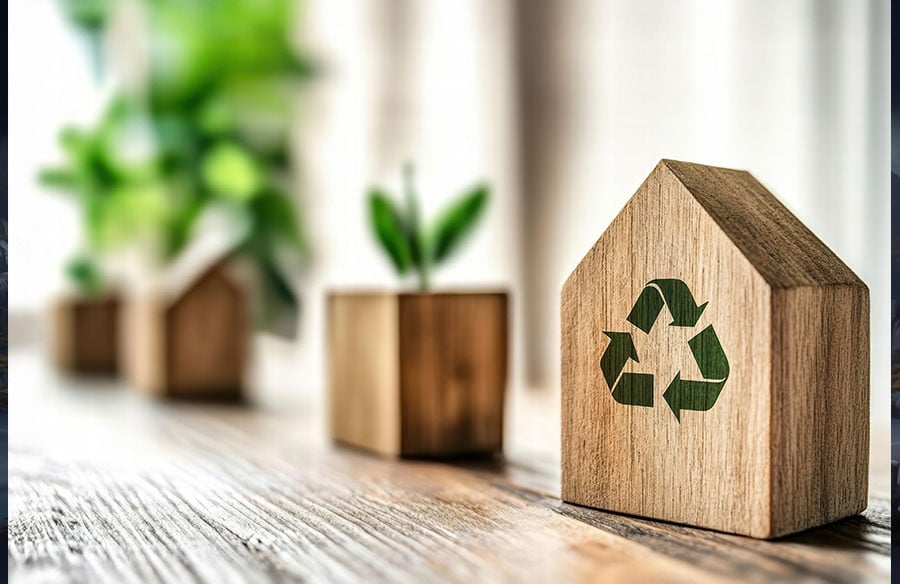
Home remodeling is a good idea whether you want to put your home up for sale or get more enjoyment out of your single largest investment.
Such a project is also a golden opportunity to go green. As you plan your renovation project, consider ways to reduce waste, conserve energy, and do whatever is possible to lower your carbon footprint and be a good environmental steward.
Hiring a reputable contractor is a good idea if you want to pursue roofing, siding, and gutter projects in an energy-efficient and environmentally durable way.
Whether remodeling a kitchen, building a basement, or tackling some exterior projects, here are six smart ways to be as green as possible.
1. Use Recycled or Reclaimed Material
One way to lower your carbon footprint when renovating is to use recycled or reclaimed materials. Planks, bricks, tiles, and some metals can be reclaimed and reused instead of purchasing new resource-draining material. If you’re buying new products, ensure they can be recycled at the end of their lifecycles to avoid inundating landfills.
Use materials that contain recycled products like glass or paper composite countertops, and recycled plastic or rubber flooring.
You can consult with your contractor to see how to proceed in an environmentally sensible way.
2. Use Energy More Efficiently
It pays to think green when remodeling. For instance, you can switch to efficient, energy-saving lighting, appliances, and insulation.
Appliances: Replace old appliances with ENERGY STAR-rated alternatives that use a lot less electricity and water.
Windows: Install new double- or triple-pane windows to conserve energy.
Lighting: Substitute incandescent lights with LED lights, which use less power and last longer.
Insulation: Don’t neglect walls, attics, and basements. Proper insulation will keep your heating and cooling bills lower year-round.
These modifications will pay for themselves in savings on utility bills and added home value.
3. Use Low-VOC and Non-Toxic Products
Most older traditional paints, adhesives, and sealants release volatile organic compounds (VOCs) that release toxic vapors. They are indoor air pollutants and induce sickness ranging from headaches to respiratory diseases.
When renovating, use VOC-free or low-VOC paints, finishes, and stains. Also, use products that have the GREENGUARD or Green Seal label, indicating smaller environmental impacts and better indoor air quality.
4. Reduce Construction Waste
Another way to make your renovation project greener is to think about reducing waste.
Find the right contractor for your green building project. It can help you design a waste reduction plan. This should include the following:
Recycling Construction Waste: Wood, metal, and drywall can be recycled rather than heading to the landfill.
Buying Only What You Require: Buying only what you require will prevent waste and save money.
Less waste equates to less strain on the earth and potentially cheaper dumping fees.
5. Install Water-Saving Fixtures
Water is a valuable resource, and your renovation is the perfect time to consider your household’s water consumption. Bathroom and kitchen areas are the ideal locations to install water-conserving appliances.
Low-flow faucets and showerheads can conserve water without diminishing functionality, and dual-flush or low-flow toilets can conserve water.
Consider Long-Term Durability
Select sturdy, quality materials that will pay off over the long run, even if they are a bit more expensive at the start. For instance, choose long-lasting, quality floors that won’t require frequent replacement, and opt for wood over particleboard cabinets.
Going green is about creating a healthier, more efficient, and more valuable home. Being smart about materials, construction, and durability will allow you to minimize your carbon footprint and create a warmer, more welcoming, and more beautiful dwelling.
Every decision matters. From recycling to putting in energy-efficient equipment, the decisions made today can offer substantial dividends tomorrow.