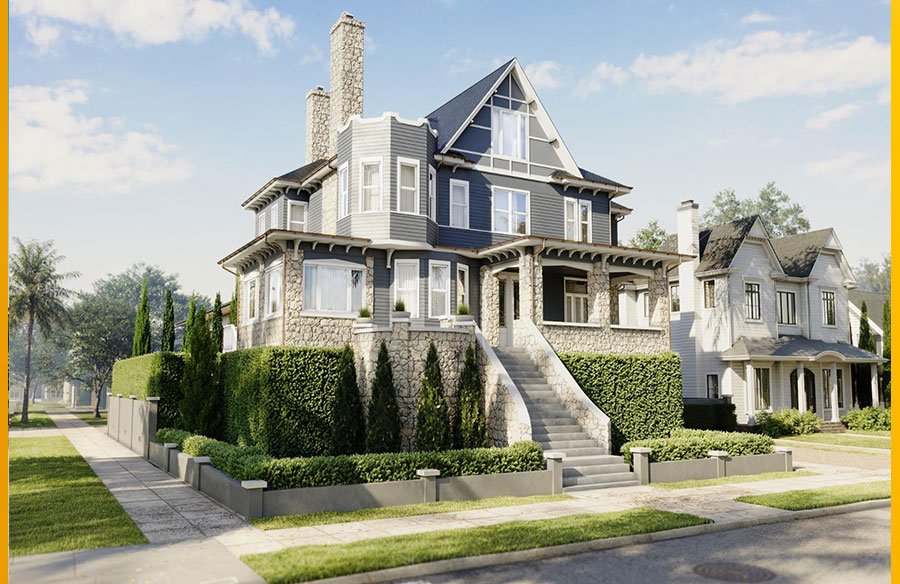
Shelter has always been a basic human need. Yet in the 21st century, the way we imagine, design, and deliver that shelter is evolving faster than ever. Urban populations are increasing, land is becoming scarce, and climate demands are transforming the architectural landscape. The complexity of building in today’s world has outgrown the capabilities of traditional blueprints, still renders, or static floor plans. And so, architecture itself is learning to move.
Enter the animated walkthrough—not a flashy add-on or a luxury, but a new language in architectural planning. Increasingly, project proposals no longer view these dynamic visualizations as mere embellishments. They are becoming an industry standard, often essential to getting plans approved, funded, and understood.
A Shift from Representation to Simulation
In the past, showing a building meant presenting drawings, then renderings, and maybe an interactive VR experience if the budget allowed. Today, the animated walkthrough sits comfortably in the middle—more immersive than a still, less demanding than a VR headset, and far more informative than a dry set of plans.
Animated walkthroughs let stakeholders feel the project. A camera glides from the entrance through the foyer, revealing light-filled interiors, landscaping, and the spatial flow. The viewer doesn’t need to interpret symbols or imagine dimensions—they experience them directly. This kind of intuitive storytelling is particularly powerful when communicating complex ideas to non-architects: city councils, private investors, and community groups.
Why Planners Love a Walkthrough
If a static rendering is like a portrait, a walkthrough is a documentary. It gives context, narrative, and mood. And that makes it invaluable for planning departments that must weigh how a project integrates with its surroundings.
When a proposed residential building is shown in motion, you don’t just see what it will look like—you see how it casts shadows at noon, how its balconies interact with the street, or how its ground-level retail might enhance pedestrian flow. Such spatial foresight is invaluable in urban planning.
Animated walkthroughs can serve as a diplomatic tool for public infrastructure projects, particularly those that may encounter resistance. They show—rather than tell—how noise will be mitigated, how greenspace will be preserved, and how the neighborhood will benefit.
It’s not about selling the dream. It’s about communicating intent—clearly, visually, and persuasively.
Efficiency, Not Just Aesthetics
There’s also a time-saving factor that has made these animations near-essential. In the iterative process of design, architects often need to present updates, refinements, or alternatives. A flexible animation file can be edited quickly compared to rebuilding an entire set of still images.
For stakeholders reviewing dozens of projects, these videos help with decision fatigue. A well-paced, two-minute walkthrough is often more effective than twenty slides of renderings. The visual language is universal, requiring no architectural literacy—just human perception.
The Psychological Edge
There’s a reason movie trailers exist. They don’t just inform; they entice. Walkthroughs do something similar. They offer a sensory preview of what a space feels like—whether that’s the quiet of a library reading room or the grandeur of a civic hall.
This emotional resonance has the power to create or break momentum in development meetings. A project that feels real is one that feels inevitable. And that psychological edge can mean faster buy-in and fewer delays.
Technology as Translator
Let’s face it: architecture has long had a communication problem. Designers speak in ratios and references; clients want to know where the couch goes. Planners request sustainability metrics, while communities seek assurance that concrete won’t engulf their park.
3D animation architecture acts as a translator between those worlds. It connects the data-driven side of design with the emotional and experiential needs of its users. With the right software, architects can animate airflow to show natural cooling strategies, visualize seasonal sunlight angles, or simulate how public spaces respond to foot traffic—all before a single brick is laid.
This is not about showing off. It’s about showing enough.
Accessibility and the Democratization of Design
Cloud-based software, AI support, and scalable pipelines can now accomplish tasks that once required a studio of visual effects artists. This shift means that even smaller firms, independent architects, and grassroots urban initiatives can produce compelling walkthroughs.
This accessibility has a profound consequence: more people can participate meaningfully in the design process. Residents can better understand how a redevelopment will affect them. Community feedback becomes more informed. Architecture becomes less abstract, more accountable.
Not Just for the Big Stuff
It’s tempting to think animated walkthroughs only make sense for billion-dollar skyscrapers or mega malls. However, the trend is expanding to include schools, clinics, housing developments, and even individual homes.
The reason is simple—good communication saves time, money, and heartache. Whether it’s a developer explaining a proposed apartment block to city council or an architect helping a family visualize their future kitchen, motion brings clarity.
The Challenges Ahead
Of course, like any tool, architectural animation has limits. A beautifully animated video can oversell a weak design. Or worse, be used to obscure issues that won’t be visible until construction. The distinction between visualization and marketing is subtle, and ethical considerations are crucial.
There’s also the question of data. As animations become more sophisticated, pulling from BIM models, GIS data, and sensor simulations, they must remain transparent about what’s real and what’s not. Trust is essential.
But these are signs of maturity, not failure. They signal that 3D architectural animation is not a gimmick. It’s a language—and like all languages, it must be used with care.
The Future Moves
The future of design is not static. It moves, breathes, and reacts. In this landscape, motion is not just a feature—it’s a necessity.
3D animation isn’t the centerpiece of every architectural design story, but it’s the narrative thread tying together intention, experience, and context. It makes spaces visible, legible, and ultimately, livable.
As cities grow more complex and demands on buildings intensify, one thing is certain: the buildings of the future will be shown in motion—long before they’re built.