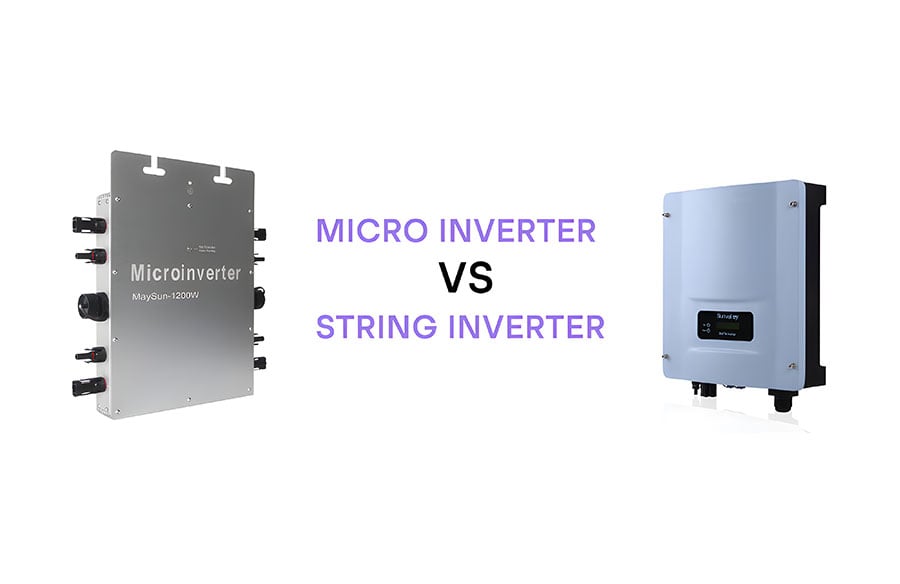
As energy costs continue to soar and solar adoption reaches record highs, homeowners face a crucial decision that can make or break their investment: choosing between microinverters and string inverters. This choice isn’t just about hardware—it’s about maximizing your home solar system‘s performance, ensuring reliable power during outages, and protecting your long-term investment. While both technologies convert solar energy into usable household power, their approaches differ significantly in terms of efficiency, reliability, and cost-effectiveness. Today’s solar installations must not only reduce electricity bills but also provide resilient backup power during increasingly frequent grid disruptions. This comprehensive guide will walk you through the key differences between microinverters and string inverters, explore their integration with modern battery systems, and help you make an informed decision based on your specific home and energy needs. Whether you’re planning your first solar installation or upgrading an existing system, understanding these inverter options is crucial for optimizing your home’s energy independence.
Solar Inverter Fundamentals: The Heart of Your Home Solar System
At the core of every solar power system lies the inverter, a sophisticated device that transforms the direct current (DC) generated by solar panels into alternating current (AC) that powers your home appliances. Think of it as a translator, converting solar energy into a language your home can understand. Modern inverters do far more than simple power conversion—they actively optimize energy production, monitor system performance, and enable critical safety features. In residential solar installations, inverters serve as the command center, coordinating power flow between panels, batteries, and your home’s electrical system. They determine how effectively your system harvests sunlight throughout the day and manage the complex dance of storing excess energy in batteries while maintaining stable power output. Whether you’re drawing power directly from your panels during sunny days or relying on stored energy during cloudy weather and nighttime, your inverter orchestrates this entire process. Understanding this fundamental component helps explain why choosing between microinverters and string inverters significantly impacts your system’s long-term performance, reliability, and adaptability to future energy needs.
Microinverters: Decentralized Power Optimization
How Microinverters Work
Microinverters revolutionize solar power systems by operating at the individual panel level. Unlike traditional setups, these compact devices mount directly beneath each solar panel, converting DC to AC power right at the source. This decentralized approach enables Maximum Power Point Tracking (MPPT) for each panel independently, ensuring optimal performance regardless of surrounding conditions. The system continuously adjusts to changing sunlight patterns, cloud cover, and temperature variations throughout the day.
Advantages for Homeowners
The panel-level operation of microinverters delivers superior performance in challenging conditions. When shade from trees or nearby structures affects one panel, others continue operating at full capacity. Real-time monitoring provides detailed insights into each panel’s performance, allowing quick identification of issues. This granular control makes system expansion straightforward—homeowners can add panels without reconfiguring the entire system. Additionally, microinverters enhance safety by eliminating high-voltage DC wiring across the roof, reducing fire risks and simplifying maintenance procedures.
Limitations to Consider
While microinverters offer numerous benefits, they typically involve higher upfront costs compared to string inverter systems. Each panel requires its own inverter, increasing the initial investment. Maintenance can be more complex since technicians must access the roof to service individual units. However, manufacturers continue to address these challenges through innovative designs and extended warranty coverage, making microinverters an increasingly attractive option for long-term solar investments.
String Inverters: Centralized Solar Conversion
String Inverter Operation Principles
String inverters employ a centralized approach to solar power conversion, connecting multiple panels in a series circuit or “string.” This configuration channels the combined DC power from all panels to a single conversion point, typically mounted near your home’s electrical panel. The system operates like a chain, with panels working together to achieve the necessary voltage for efficient power conversion. Modern string inverters incorporate sophisticated Maximum Power Point Tracking (MPPT) technology that optimizes the entire string’s output based on collective performance.
Benefits for Residential Use
The primary advantage of string inverters lies in their cost-effectiveness, offering significantly lower upfront investment compared to microinverter systems. Their centralized design simplifies maintenance, with a single access point for diagnostics and repairs. String inverters also benefit from decades of proven reliability in the field, with robust components designed to handle high power loads. For homes with unobstructed, uniform solar exposure, string inverters can deliver excellent performance while maintaining lower system costs.
Key Drawbacks
The series configuration of string inverters creates inherent vulnerabilities. When one panel experiences shading or malfunction, it can disproportionately affect the entire string’s performance—similar to how one dim bulb in old Christmas lights affects the whole strand. This centralized design also means that system failures impact all connected panels simultaneously. Additionally, expanding the system later requires careful planning to match existing string specifications, potentially limiting future solar array modifications.
Direct Comparison: Choosing Your Home Solar Champion
Efficiency & Energy Harvesting
When comparing microinverters and string inverters in real-world conditions, the efficiency gap becomes most apparent during partial shading scenarios. Microinverter systems typically harvest 5-25% more energy annually in environments with intermittent shading from trees, chimneys, or neighboring structures. During early morning and late afternoon hours, when sunlight angles create uneven panel exposure, microinverters maintain optimal performance across each panel while string inverters operate at the level of their lowest-performing panel.
Cost Analysis Over Time
While microinverters command a 15-30% premium in initial equipment costs, their long-term value proposition often outweighs this upfront investment. Most microinverters come with 25-year warranties, compared to the typical 10-12 years for string inverters. When factoring in replacement costs and energy harvest advantages, microinverter systems frequently achieve better return on investment over a 25-year period, especially in areas with high electricity rates.
Monitoring Capabilities
The distinction in monitoring capabilities significantly impacts system maintenance and optimization. Microinverter systems provide granular, panel-by-panel performance data, enabling quick identification of underperforming panels and precise maintenance scheduling. String inverter monitoring, while effective at the system level, cannot isolate individual panel issues without additional power optimizers, making troubleshooting more time-consuming and potentially costly.
Battery Backup Integration: Maximizing Solar Investment
Cost-Effective Backup Solutions
Modern home solar batteries offer unprecedented flexibility in capacity and performance. Lithium iron phosphate (LiFePO4) batteries emerge as the optimal choice, balancing safety, longevity, and cost. When sizing your backup system, calculate essential loads first—typically including refrigeration, lighting, and critical medical equipment—then expand based on budget and space constraints. Most homes start with 10-20kWh of storage, though systems can scale up to 80kWh for complete energy independence.
Inverter-Battery Compatibility
Microinverter systems integrate seamlessly with AC-coupled batteries, requiring only an additional battery gateway for communication. Leading solutions like the EcoFlow OCEAN Pro exemplify this flexibility, allowing direct connection to existing microinverter setups while maintaining panel-level optimization. String inverter systems often need hybrid inverter upgrades or DC-coupled batteries, though modern solutions enable retrofit installations without replacing existing equipment.
Backup Power Setup Guide
Begin by identifying critical circuits for backup protection and installing a smart electrical panel for automated load management. Position batteries in temperature-controlled spaces, ideally in garages or utility rooms, maintaining proper ventilation and accessibility. Configure your system’s time-based charging schedule to maximize solar charging during peak production hours while reserving sufficient capacity for overnight needs. During outages, smart load controllers automatically prioritize essential circuits, extending backup duration through intelligent power distribution.
Energy Balancing & Smart Management
Modern solar inverters act as intelligent energy conductors, orchestrating power flow between your panels, home, and the grid. Through sophisticated monitoring algorithms, they continuously evaluate household consumption patterns against solar production, making split-second decisions about energy routing. During peak solar hours, these systems prioritize powering immediate household needs first, then direct excess energy to battery storage or grid export based on current electricity rates. Smart inverters interface with utility time-of-use schedules, automatically adjusting charging and discharging cycles to maximize savings. For homes with net metering agreements, both microinverter and string inverter systems precisely track energy exports, though microinverters offer more granular reporting capabilities. The key difference lies in their response to varying production levels—microinverters can independently optimize each panel’s contribution to home consumption or grid export, while string inverters manage energy flow at the array level. This intelligent management becomes particularly valuable during partial cloud cover or seasonal changes, ensuring every watt of solar production is utilized effectively for maximum financial benefit.
Making Your Solar Inverter Decision
The choice between microinverters and string inverters ultimately depends on your specific home configuration and energy goals. Microinverters excel in installations with partial shading, complex roof layouts, or plans for future expansion, justifying their higher initial cost through superior long-term performance and panel-level optimization. String inverters remain a cost-effective solution for homes with uniform sun exposure and straightforward installations. When integrating battery backup, consider your system’s scalability needs and local power outage patterns. Whether prioritizing maximum energy harvest, system longevity, or initial cost savings, today’s solar technology provides viable paths to energy independence. Take the next step by scheduling a professional site assessment to evaluate your roof’s solar potential and determine which inverter technology best aligns with your home’s unique characteristics.