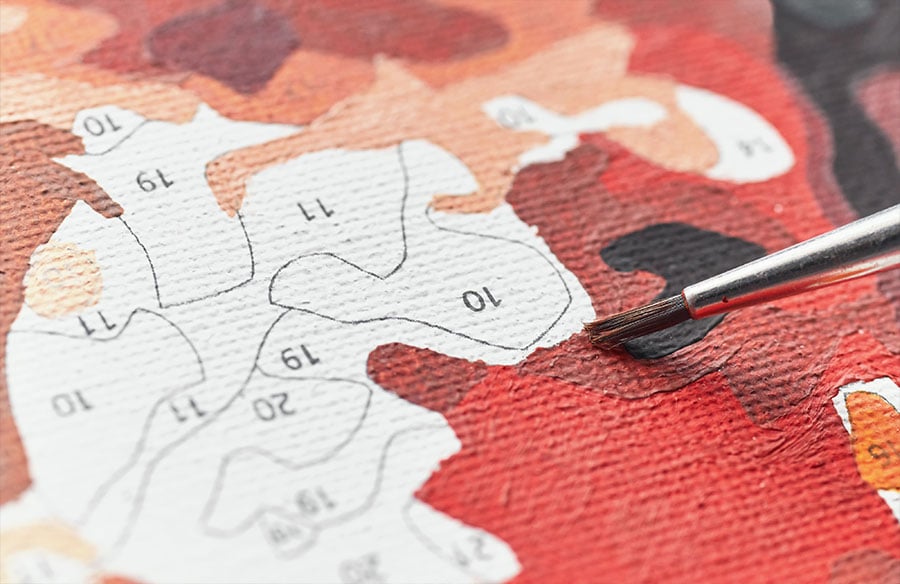
Learning how to shade can make any painting look more realistic, but it can be challenging for newcomers. Paint-by-numbers designs offer a simple way to practice shading skills and see progress without feeling overwhelmed. Choosing the right beginner-friendly pattern is a smart step for those who want to focus on learning basic shading techniques.
Many people have discovered that using adult art kits in paint by numbers style can take the guesswork out of painting while helping them pay attention to light, color, and shadow. These kits make it possible for anyone to create artwork that not only looks great but also helps them understand shading in a hands-on way.
Simple landscapes with large color blocks
Simple landscape paint-by-numbers designs use wide areas of color instead of small, detailed shapes. These designs may show green hills, open fields, or big blue skies. Large blocks of color help beginners focus on shading without getting lost in tiny parts.
Painting a simple landscape helps someone see how colors work together. It teaches how to blend shades where two colors meet, such as where the sky touches a hill or a tree stands against the grass.
Beginners notice shading changes more easily with bigger shapes. For example, they may add lighter tones at the top of a hill and use darker shades underneath. This process teaches depth and dimension in a gentle way.
Large color blocks also allow for relaxed brush strokes. New painters find it less stressful to try blending when there is room to practice. These kinds of designs are a smart starting point for learning shading basics.
Cartoon animals featuring bold outlines
Cartoon animals with bold outlines are a practical choice for beginners learning shading. Thick lines clearly define each section, making it easier to see where shadows and highlights can be added.
These designs usually have large, open areas. This gives learners more space to practice blending and adding subtle color changes without dealing with tiny, detailed spots.
Simple animal shapes, like cats or elephants, let new painters focus on learning shading instead of worrying about drawing accuracy. The playful style of cartoon animals also removes pressure to be perfect, making the practice feel fun and stress-free.
By starting with cartoon animals, painters can experiment with shading techniques using basic, easy-to-see forms. Mistakes are easy to fix, and improvements can be spotted quickly on these types of designs. With regular practice, learners will notice their shading skills grow more quickly.
Sunsets focus on gradient shading
Sunset designs are among the easiest paint-by-numbers projects for learning how to shade with gradients. These images naturally have lots of soft color transitions in the sky, which helps beginners practice blending light and dark shades.
The sky in sunset scenes usually moves from pale yellows and oranges near the horizon to deeper reds and purples higher up. This makes it simple to notice where one color ends and another begins.
Shading is easier to follow with clear steps. Artists can start with the lightest color and gently add darker colors as they move away from the horizon. This step-by-step approach helps beginners spot where edges blend.
Painting sunsets is also forgiving. If a shade blends too much or too little, it’s easy to touch it up with another layer. Working with gradients in sunset designs helps artists gain confidence with basic shading techniques.
Floral patterns with distinct petal sections
Floral paint-by-numbers designs with clear petal sections can help beginners learn basic shading skills. Each petal shape usually has its own area for color, making it easier to add light and shadow.
Petals like those found on sunflowers, daisies, or hibiscus have obvious borders. This lets painters see where to use darker or lighter paint within each part. With this structure, learners can focus on shading without worrying about blending across confusing shapes.
Many flower patterns use larger petals split into separate zones. Painters can practice adding shadows to the outer edges and highlights toward the center. This simple approach helps improve understanding of how light affects color.
Because each section is clear, it is easier to correct mistakes or compare shading between petals. Flowers with bold, separate petals provide a helpful starting point for practicing basic shading.
Abstract geometric shapes with clear boundaries
Abstract geometric shapes are a strong choice for learning shading with paint-by-numbers. These shapes—like squares, circles, or triangles—have straight or curved edges that make it easier to spot where one color ends and another begins.
With clear boundaries, beginners can focus on practicing shading in each part without getting lost in detailed designs. Simple shapes help learners see how shadows and highlights change with light.
Using different shades in each section gives a clear idea of how color transitions work. Adjusting paint from light to dark within a shape teaches how to create a sense of depth and dimension.
These designs are also less confusing because there aren’t extra details or tiny spaces. This lets new painters pay attention to how colors blend across edges, which is helpful for building basic shading skills. Abstract geometric art is a friendly way to practice these techniques.
Conclusion
Simple paint-by-numbers designs with large, open areas and basic color blocks make it easier for beginners to practice shading. Choosing pictures with clear shapes and fewer tiny sections helps learners focus on blending colors smoothly.
Soft landscapes, fruits, and basic animals are popular starting points. These allow painters to see where shading makes a difference without feeling rushed or confused.
Patience and practice are key when learning new techniques. With time, anyone can gain confidence in shading and move on to more detailed designs.