

What You’ll Learn: Inside Dreamlux’s AI Engine
Dreamlux’s Image to Video AI might feel like pure sorcery, but it’s grounded in some of the most fascinating technologies of our time. This article unveils what powers this AI marvel—from neural networks and cloud rendering to creative use cases and seamless user design. You’ll learn how deep learning processes still images, how GANs bring motion and realism, and how Dreamlux scales its services with speed.
You’ll also discover the applications of this technology in marketing, education, and storytelling. Whether you’re an enthusiast or a professional, this guide makes advanced AI easy to understand and even easier to imagine in action.
What is Image-to-Video AI, and Why Does It Matter?
Image to video AI is the process of turning static images into fully animated, dynamic videos using artificial intelligence. Dreamlux leverages this technology to help users transform photos into emotionally engaging visual content. Why does this matter? Video has emerged as the most popular media format on the internet.
Whether you’re a business promoting products or a teacher bringing concepts to life, Dreamlux’s AI can make your content more immersive. It reduces the time, cost, and skills required to produce high-quality visuals, empowering more people to use video as a powerful communication tool.
Deep Learning: The Core of Dreamlux AI
At the center of Dreamlux’s Image to Video AI lies deep learning—a type of artificial intelligence that mimics how humans learn. Dreamlux uses convolutional neural networks (CNNs) to analyze image features like edges, patterns, and facial structure.
Then, recurrent neural networks (RNNs) predict how those features would behave over time to simulate movement. The model learns from massive datasets, becoming better with each use.
This allows Dreamlux to generate smooth, context-aware motion without manual animation. Every frame feels organic and alive because the AI is trained to understand visual storytelling in a human-like way.
GANs: Breathing Life Into Still Photos
Dreamlux uses Generative Adversarial Networks (GANs) to enhance realism in its animations. GANs consist of two AI systems—the generator, which creates video frames, and the discriminator, which judges whether they look real. This back-and-forth process refines the output until it resembles natural movement.
Dreamlux’s advanced GAN architecture excels at facial animations, eye blinking, smiling, and even subtle movements like breathing. These micro-details make a big difference in how human the video feels. The AI doesn’t just move pixels; it simulates life, making Dreamlux one of the most advanced image-to-video AI platforms available.
Speed Meets Scale: Powered by the Cloud
Dreamlux’s AI runs on scalable cloud computing, allowing for fast and efficient video generation. Dreamlux utilizes powerful remote servers to handle the processing power instead of relying on your computer’s capabilities.
This setup enables the platform to serve thousands of users simultaneously without compromising on quality or speed. A photo uploaded from your phone can be transformed into a 10-second animated video in less than a minute. Real-time performance design ensures that you never have to wait long to bring your visuals to life.
The User Interface That Simplifies Creativity
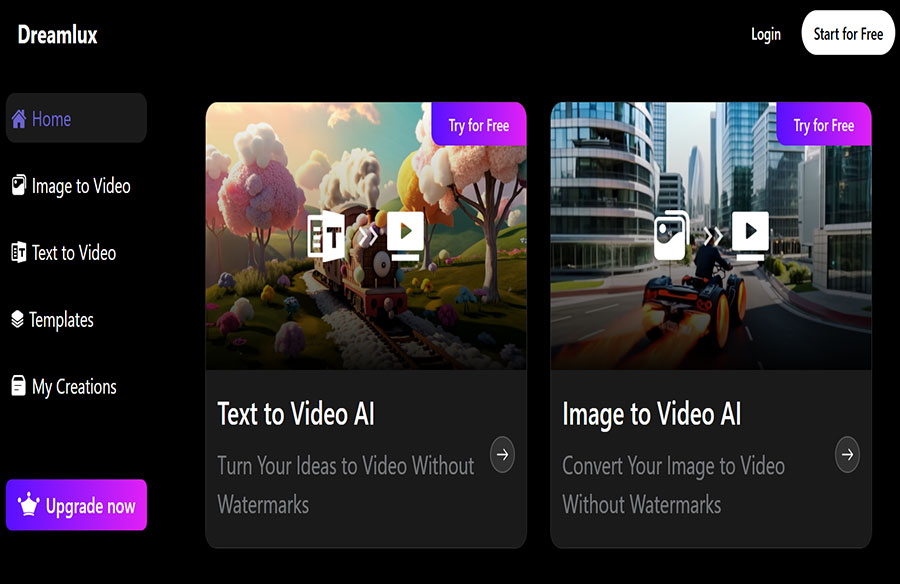
While the backend is full of complex algorithms, Dreamlux’s front end is refreshingly simple. Users just upload an image, choose animation preferences, and click generate. Dreamlux’s AI handles facial tracking, background mapping, and motion logic in the background. There’s no need for video editing skills or expensive software.
Whether you’re an influencer wanting to make your content pop or a marketer creating ad visuals, the intuitive design means anyone can create something magical. Dreamlux turns high-end AI into a user-friendly tool for everyday creatives. For those exploring similar tools, the AI Video Generator ecosystem offers various platforms—but Dreamlux remains a favorite for quality and ease.
Real-World Applications Across Industries
Image to Video AI isn’t just futuristic tech—it’s already reshaping industries. In marketing, businesses create personalized customer experiences using animated portraits. To increase student engagement, educators can visualize intricate processes or bring historical figures to life.
The fashion and real estate industries use it to display dynamic views of outfits or properties. Even healthcare uses it for animated patient guides. Dreamlux makes such applications possible through its scalable platform, helping professionals across sectors deliver more impactful and visually engaging content.
Looking Ahead: Smarter, More Personalized AI
Dreamlux isn’t stopping here. The company is integrating features like AI voiceovers, emotion-driven animations, and multilingual lip-syncing into its roadmap. Each update is driven by user feedback and AI learning, making the tool more personalized over time.
Their goal is not just to animate images but to turn them into intelligent, responsive, emotionally compelling media. Dreamlux is positioning itself at the forefront of creative technology as AI continues to evolve, ensuring that users have access to tomorrow’s tools today.
Conclusion: The Future of Visual Storytelling Starts Now
Dreamlux’s Image to Video AI is not just about converting images into videos—it’s about unlocking creative potential. By blending deep learning, GANs, and cloud technology with an easy-to-use interface, Dreamlux empowers users from all walks of life. From personal storytelling to business promotions, the possibilities are endless.
As this technology continues to evolve, one thing is clear: the future of content creation lies in smart, scalable automation that feels personal, human, and engaging. Dreamlux is leading that revolution—one frame at a time.
FAQs
Q1: What is Image to Video AI?
Image-to-video AI is technology that uses artificial intelligence to animate static images into dynamic video clips, making visuals more engaging and lifelike.
Q2: How does Dreamlux make video generation so fast?
Dreamlux uses cloud-based computing, which processes data at high speed and scale. This eliminates the need for heavy hardware on the user’s side.
Q3: Can I use Dreamlux without design experience?
Yes! Everyone can use Dreamlux. Its user-friendly interface allows you to create animated videos with just a few clicks—no editing skills required.
Q4: Where is image-to-video AI used in real life?
Marketing, education, real estate, fashion, and even healthcare use it extensively to create more dynamic and engaging content experiences.
Q5: Is the content generated by Dreamlux copyright-safe?
Yes, Dreamlux generates original animations based on your input image. Please make sure you have the necessary rights to use the uploaded images to prevent any legal issues.







