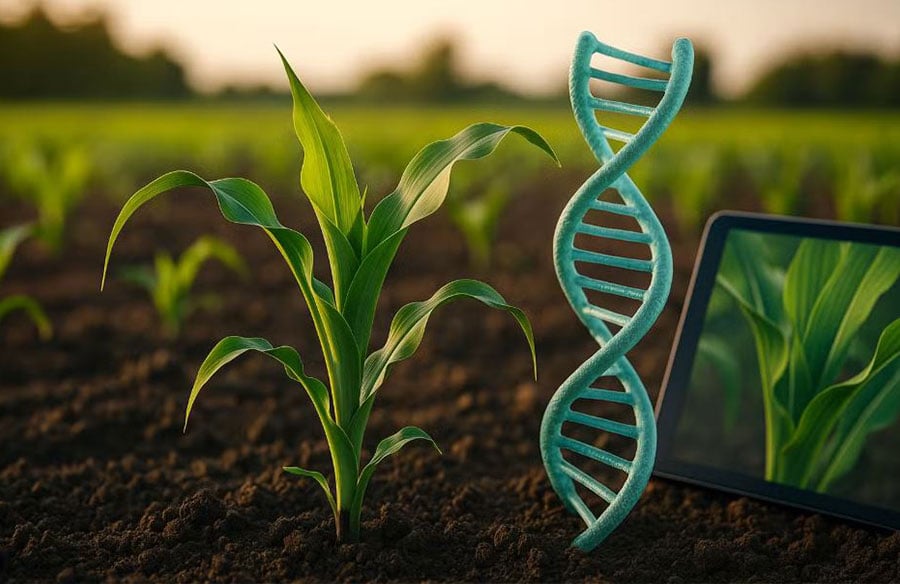
The world today is riddled with so many challenges. Besides recession, there are also challenges like climate change, environmental degradation, and global food insecurity. The agricultural sector is particularly affected by all these challenges. However, farmers have discovered several ways to address these challenges, and the most effective one has been sustainable farming. Sustainable farming is an approach in agriculture that helps meet current food needs without compromising the future. It focuses on eco-friendly practices that preserve resources for future generations. Biotechnology in agriculture helps enhance sustainable farming practices. In the next sections of this post, we will look at key techniques of biotechnology in agriculture that enhance sustainable farming practices. Let us dive into it.
1. Environmental engineering
Environmental engineering is a science that focuses on protecting the environment and public health by offering solutions like waste management, water treatment, and pollution control. The advancements of biotechnology in agriculture intersects with environmental engineering, which is a key practice in promoting sustainable farming practices. Below are examples of environmental engineering practices that are backed with modern biotechnology:
- The development of crops with enhanced nutrients while reducing reliance on chemical fertilizers.
- The development of pest-resistant crops.
- The introduction of bioengineered drought-tolerant plants that help conserve water resources.
- The development of close-loop agricultural systems, which help minimize waste and harmful impact on the environment.
- Reduction of pesticide use by implementing techniques for precision agriculture.
2. Regenerative agriculture
It is a farming practice that focuses on restoring and enhancing the healthy state of the soil and entire ecosystem. Regenerative agriculture goes beyond sustaining the environment. It helps sustain, restore, and enhance the environment. Modern biotechnology helps advance regenerative agriculture. It offers innovative solutions that address global challenges. For instance, molecular breeding and genetic engineering are biotechnology practices that help develop crops with improved traits, which helps with regenerative agriculture.
3. Organic farming
Organic farming is a practice that emphasizes different agricultural practices while avoiding the application of chemical pesticides and fertilizers. It is one of the best and most effective sustainable farming practices. Modern biotechnology helps come up with new techniques to manipulate the genetic information on plants to be able to support organic farming and eliminate dependence on fertilizers and pesticides. Practices like transgenic and gene editing are perfect examples of modern biotechnology techniques enhancing organic farming.
4. Waste reduction practices
Modern biotechnology is helping develop farming practices that result in plants that improve the shelf life of fruits and vegetables. This is critical in sustainable farming, as it reduces food waste and ensures that agricultural products can be transported over long distances without expiring or spoiling. For example, modern biotechnology helps create genetically modified tomatoes and fruits which can resist bruising and have an extended shelf life.
5. Precision agriculture
Modern biotechnology is also making a significant impact in precision agriculture, which is an approach that encourages the use of technologies like drones and precision irrigation. Precision agriculture helps reduce waste, optimize crop yields, and enhance sustainable farming practices. In simpler words, precision agriculture uses technology to monitor and manage crops with better accuracy by ensuring resources like water, pesticides, and fertilizers are used efficiently and sustainably.
Modern biotechnology plays a key role in precision agriculture. For instance, it provides farmers with tools for choosing crops that perform the best, monitoring the health of plants, and point out problems that may affect the entire farm if not handled early. Genetic markers for plants and bio-based fertilizers are examples of biotechnology inventions that help enhance precision agriculture.
Conclusion
Modern biotechnology helps enhance sustainable farming practices by addressing common challenges in the field. Sustainable farming practices help improve environmental outcomes, enhance food security, increase farmer resilience, and better livelihoods. Thanks to modern biotechnology, farmers can discover new ways to practice sustainable farming and gain more benefits. As the field of biotechnology continues to advance, new techniques for sustainable practices come up. This is because of the clear link between modern biotechnology and sustainable agricultural practices.