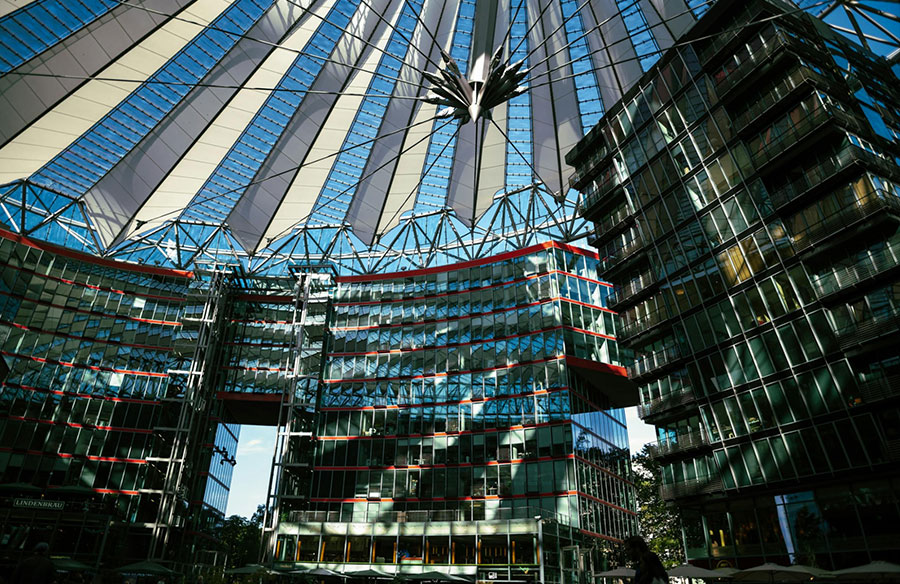
It may be worth knowing how architects like you are embracing today’s digital masterpieces, like the math tools you now use to design buildings with precision and creativity.
It’s also fascinating how technology is reshaping today’s architectural landscape, making complex calculations more accessible and designs more innovative all over the world.
Embracing Digital Math in Architecture
The face of mathematics has been so transformed today with the contributions of math art and other digital innovations.
Just like when you’re sketching a building concept, conceptualizing and drawing may consume your world, but you can’t stop on your drawing board. Bringing it to life is your next mission after you have completed your project’s blueprint.
You have to make sure it’s structurally sound and meets your design standards with accurate computations and installations. This is where your handy digital math tools come into play.
With them to use and to wield, you can:
-
Ensure Structural Integrity
By calculating loads and stresses, you can design buildings that stand the test of time.
-
Optimize Space
Mathematical models allow you to make the most of available space, enhancing functionality.
-
Visualize Designs
Tools like BIM (Building Information Modeling) integrate mathematical data to create detailed 3D models.
Simplifying Calculations with Algebra Tools
When you’re knee-deep in a building design, there’s one thing you can’t afford to get wrong – the math. Whether you’re calculating the slope of a roof, load distribution on a beam, or figuring out how a curve affects floor space, it all involves equations.
That’s where digital innovations like an algebra calculator tool can be quite handy. It’s just like having a math genius in your pocket – it’s always there when needed and can save you from your woes. Here’s how it can actually help you:
-
Solve Equations Step-by-Step
It’s like when you’re working out a complex equation to determine a stress point on a beam. With this innovative system, you don’t just get the final answer – you get each step broken down clearly. That way, you can double-check your logic, understand the flow, and catch mistakes and effect reworks when needed, the earliest.
-
Graph Functions in Seconds
Design isn’t plain numbers – it’s also about shapes, curves, flow, and the art of it all. So, what happens when you’re trying to figure out how a parabolic curve looks when applied to a roofline or an arch? It’s actually a math genius that lets you graph functions without sweat.
So, just plug in your equation, and you’ll see the curve on a graph – no drafting software may be needed. This can easily help you visualize things like symmetry, slope, and intercepts, which all play a huge role in how your structure feels and functions after completion.
-
Instantly Verify Your Work
Even if you’re confident with math, it never hurts to double-check, especially when lives and structures depend on your accuracy. With a trendy online calculator, you can verify equations in seconds. There’s no need for you to recalculate everything manually and double the hassle.
Just like when you’re finalizing your building’s foundation load distribution, one wrong value could compromise the entire structure. Having this tool with you, therefore, can help make sure your numbers are right and each of your designs stays safe.
Why This Matters to You
You’re not just drawing lines and placing windows. You’re solving spatial puzzles and balancing physics – often all at once. So, having an algebra calculator tool on standby means:
- You get to work faster
- You can apprehend errors before they become costly mistakes
- You free up brain space for the fun stuff – like creativity and aesthetics
Actually, it’s all about designing smarter, not harder. Working with tech-savvy tools and gadgets and building a more competent toolbox, you’re more likely to become a precision designer, not just an architect.
Global Trends in Architectural Technology
The architectural field is rapidly evolving with technology. Here are some notable trends:
-
Increased Use of Digital Tools
Today, more architects are adopting software that integrates design and mathematical analysis, streamlining workflows, so why not engage and work?
-
Sustainability Focus
Mathematical modeling helps you design projects like energy-efficient buildings that align with today’s world of sustainability advocacies.
-
AI Integration
The increasing Artificial intelligence integration is to help predict design outcomes and optimize building performance.
Must-Have Digital Tools for Modern Architects
To stay ahead in the field, consider incorporating these tools into your practice:
-
BIM Software
To help you craft more comprehensive design and documentation for your projects.
-
3D Modeling Tools
These modeling tools are needed so you can create detailed visualizations of your projects.
-
Energy Modeling Software
This can help you design and create energy-efficient buildings and structures that are meant to be environmentally friendly.
The Impact of Mathematics on Design
Mathematics isn’t just about numbers; it’s a foundational element in architecture. It aids in:
-
Design Precision
This can help you make sure every element fits perfectly.
-
Structural Analysis
It’s more like an inherent acumen in your field where you can calculate forces and stresses to prevent failures.
-
Aesthetic Proportions
This gives body to your math, using ratios and geometry to create visually pleasing designs.
Conclusion
When you find and adopt digital math tools into your architectural practice, you’re sure to enhance your efficiency and, at the same time, maintain the quality and reputation of your designs.
So, embrace these tools to elevate your architectural endeavors and prowess to new heights!