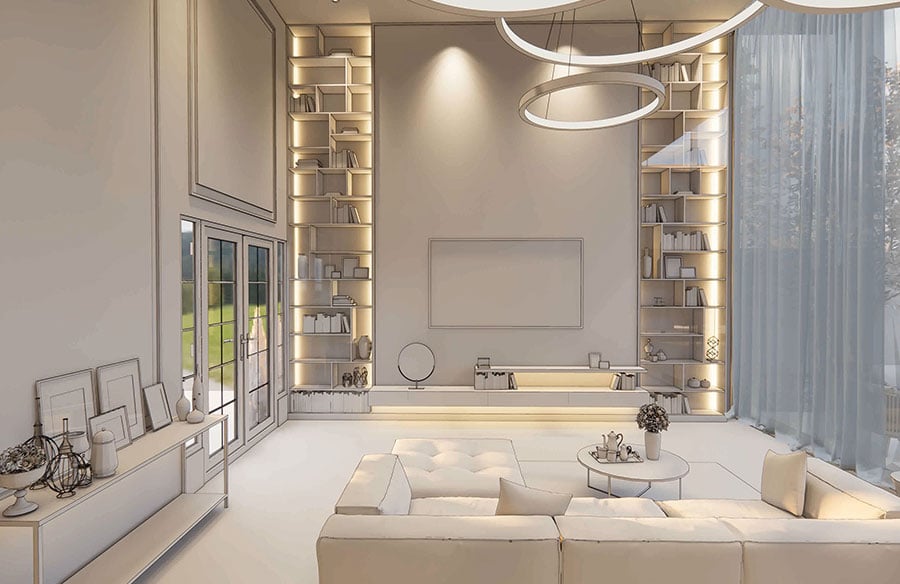
Achieving a high-end interior design requires more than just selecting expensive furniture and lavish décor. True luxury is about balance, sophistication, and thoughtful execution. Many homeowners make common mistakes that can detract from the elegance of their spaces, making them look cluttered, mismatched, or even artificial. To help you avoid these pitfalls, we’ve compiled the most common high-end interior design mistakes and how to fix them.
1. Overcrowding the Space with Too Much Furniture
One of the biggest mistakes in luxury interior design is trying to fill every inch of a room with furniture and decorative pieces. High-end interiors are defined by their openness, functionality, and intentional design. Overcrowding a space can make it feel chaotic and overwhelming rather than elegant and refined.
Solution:
- Stick to a curated selection of statement pieces rather than filling the room with unnecessary items.
- Prioritize quality over quantity—choose a few well-crafted, timeless pieces that enhance the space.
- Allow for negative space to create a sense of openness and balance.
2. Ignoring the Importance of Lighting
Lighting is one of the most essential aspects of high-end interior design, yet many people overlook it. Poor lighting can make even the most luxurious furniture and décor appear dull, while the right lighting can enhance textures, colors, and the overall ambiance of a space.
Solution:
- Incorporate a mix of lighting sources, including ambient, task, and accent lighting.
- Use dimmer switches to adjust lighting levels based on the time of day and mood.
- Opt for statement chandeliers, wall sconces, and designer table lamps to add a touch of elegance.
For more expert insights on crafting a luxurious interior with impeccable lighting and décor choices, visit luxuryinteriors.org. Their comprehensive guide offers tips and inspiration for creating sophisticated and well-balanced spaces.
3. Choosing Trends Over Timelessness
Trendy design elements may look stunning today, but they can quickly become outdated, leading to costly redesigns in the future. While it’s tempting to follow the latest interior design fads, relying too heavily on trends can result in a space that feels temporary rather than timeless.
Solution:
- Invest in classic, high-quality furniture and finishes that will stand the test of time.
- Incorporate trends through accessories like throw pillows, rugs, and artwork that can be easily updated.
- Focus on neutral palettes and elegant materials that exude longevity and sophistication.
4. Mismatched or Incohesive Color Schemes
A poorly chosen color scheme can instantly make a high-end space look disjointed or visually unappealing. Some homeowners make the mistake of using too many bold colors or failing to create harmony between different hues.
Solution:
- Stick to a cohesive color palette with complementary tones that flow seamlessly between rooms.
- Use a mix of textures and shades within the same color family to add depth and interest.
- Consider working with an interior designer or using digital design tools to test color combinations before committing.
5. Neglecting the Importance of Scale and Proportion
A well-designed space takes scale and proportion into account. Large rooms with tiny furniture pieces or small spaces with oversized furniture can make a room feel awkward and unbalanced.
Solution:
- Choose furniture that is proportional to the size of the room.
- Pay attention to height variations—mix low-profile seating with taller elements like bookshelves or floor lamps for balance.
- Use area rugs to define spaces and create a cohesive layout.
6. Forgetting About Texture and Layers
Luxury interior design isn’t just about color and furniture—it’s about creating a rich sensory experience through textures and layers. Flat, one-dimensional spaces can feel uninspired and cold.
Solution:
- Incorporate a variety of materials such as velvet, leather, silk, and wood to add depth and interest.
- Layer rugs, cushions, throws, and curtains to create a cozy yet sophisticated feel.
- Use a mix of matte and glossy finishes to enhance visual contrast and appeal.
7. Cluttering with Too Many Accessories
Decorative accessories can enhance a space, but overloading a room with too many items can make it feel messy rather than luxurious.
Solution:
- Stick to a few carefully selected statement pieces rather than covering every surface with décor.
- Use symmetry and balance when arranging accessories.
- Opt for high-end decorative accents like sculptural vases, elegant trays, and curated artwork.
8. Poorly Arranged Artwork and Wall Décor
Haphazardly placed artwork can make a space look disorganized and diminish the overall design aesthetic. Many people make the mistake of hanging artwork too high, too low, or in random placements without considering the proportions of the room.
Solution:
- Hang artwork at eye level for a natural and aesthetically pleasing effect.
- Choose oversized pieces for large walls to create a focal point.
- Use gallery walls or symmetrical arrangements for smaller frames to add a refined touch.
9. Not Incorporating Natural Elements
Luxury interiors often embrace nature to create a balanced and harmonious environment. Neglecting natural materials and greenery can leave a space feeling sterile and uninspired.
Solution:
- Introduce indoor plants like fiddle-leaf figs, orchids, or succulents for a fresh, organic touch.
- Use natural materials such as stone, wood, or marble in flooring, countertops, and furniture.
- Opt for large windows or sheer curtains to maximize natural light.
10. Overlooking Functional Comfort
Luxury should never come at the expense of comfort. Some homeowners focus too much on aesthetics and forget about functionality, leading to spaces that look impressive but are impractical for daily use.
Solution:
- Invest in comfortable seating and high-quality fabrics that feel as good as they look.
- Ensure there is ample storage to maintain an uncluttered, organized space.
- Prioritize ergonomic furniture and layouts that enhance both beauty and usability.
Avoiding these common high-end interior design mistakes can help you achieve a space that is not only beautiful but also functional and timeless. Thoughtful planning, attention to detail, and a focus on quality over quantity are key to creating a luxurious and inviting home.