
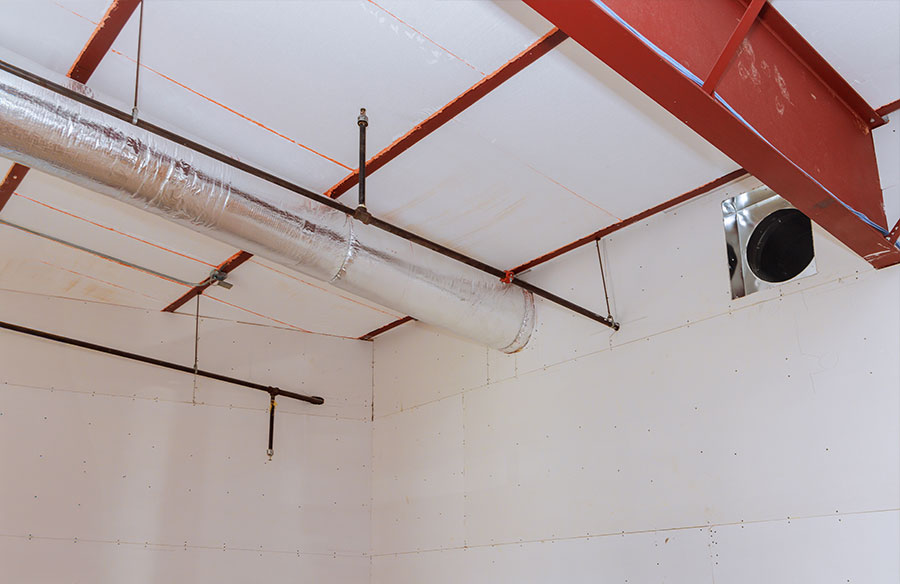
For business owners and facility managers, fire safety and workplace hygiene are significant responsibilities. A failure in either area can lead to severe consequences – legal penalties, insurance disputes, and serious risks to employee safety. Fire dampers, which are important components of a building’s fire protection system, prevent fire and smoke from spreading through ventilation ducts. However, they can fail if they’re neglected, whether this is down to mechanical faults or simple blockages caused by dust and grease build-up.
Although many businesses focus on visible cleaning, they often overlook less accessible hazards including obstructed fire dampers. This is where fire damper maintenance and commercial cleaning overlap. In short, regular servicing, cleaning, and testing ensure regulatory compliance, while reducing fire risks. Without a proactive approach, businesses may face not only safety failures but also financial losses from non-compliance. In this guide, we’ll explore how integrating these services keeps your workplace safe, compliant, and prepared for emergencies.
What Are Fire Dampers and Why Are They Important?
Fire dampers are part of a building’s ventilation system. They’re fitted to help prevent fire and smoke from spreading through ducts. Such dampers are installed where ductwork passes through fire-resistant walls and floors, automatically closing when exposed to heat. Without proper maintenance, dampers can fail, allowing flames and toxic smoke to spread unchecked.
Investing in fire damper services ensures these safety features function as intended, reducing the risk of blaze-related injuries and property damage. Well-maintained fire dampers also improve a building’s fire resistance, helping businesses comply with UK safety regulations.
In addition to protecting occupants, fire dampers contribute to air quality by allowing airflow within a building while they’re open. A well-functioning damper system helps maintain safe working conditions, supporting both fire prevention and workplace comfort.
The Role of Fire Damper Services in Workplace Safety
Businesses have a legal and moral duty to ensure their premises are equipped with fully operational fire protection systems. As part of this responsibility, routine inspections, maintenance, and repairs to fire dampers should be organised to ensure compliance with UK fire safety laws.
Failing to service dampers can lead to rust, mechanical failures, or other impediments, compromising their ability to close in a fire. This could result in fines, legal action, or liability claims if a fire spreads due to negligence. Regular servicing ensures these risks are minimised.
By incorporating damper inspections into workplace safety procedures, businesses can identify potential hazards before they become serious. Regular assessments help ensure that all fire dampers remain in peak condition, providing reliable protection in the event of a fire emergency.
The Importance of Fire Damper Cleaning
Over time, ventilation ducts accumulate dust, grease, and other airborne contaminants, which can obstruct dampers and create fire hazards. Fire damper cleaning is the best way to remove these deposits, ensuring dampers close fully and function as designed.
Without regular cleaning, fire dampers can become stuck due to excessive debris. This not only increases the risk of fire spreading but also reduces overall air quality, leading to respiratory issues for employees. A clean ventilation system ensures a healthier working environment.
Professional cleaning services use industry-approved techniques to remove obstructions while preserving the integrity of the dampers. Regular cleaning schedules prevent costly repairs and ensure compliance with UK fire safety regulations, keeping workplaces both safe and legally protected.
Fire Damper Drop Testing: A Critical Safety Requirement
UK fire regulations require businesses to conduct fire damper drop testing to verify that dampers automatically close when exposed to high temperatures. This testing process ensures that the dampers remain functional and free from obstructions.
The test involves manually triggering each damper to confirm that it responds correctly. If a damper fails to close, it could indicate mechanical issues, debris build-up, or corrosion. Any of these issues would necessarily compromise fire safety. Regular drop testing helps businesses avoid compliance breaches.
By scheduling periodic drop tests, those responsible for building safety can identify and rectify faults before they escalate. This preventative approach ensures dampers are always ready to perform in an emergency, protecting lives and minimising potential property damage.
Understanding the Overlap Between Fire Damper Maintenance and Commercial Cleaning Services
Fire safety and workplace hygiene go hand in hand, making commercial cleaning services a valuable component of a comprehensive safety plan. Professional cleaning teams help remove dust, grease, and debris that could obstruct dampers and ventilation systems.
Regular deep cleaning reduces the risk of blockages that could prevent dampers from operating correctly in a fire. By keeping ventilation ducts and airways clear, cleaning services complement fire safety measures, ensuring both hygiene and compliance.
Businesses should coordinate with both fire safety professionals and cleaning teams to maintain optimal conditions. An integrated approach to fire damper maintenance and cleaning improves overall safety, prevents regulatory issues, and enhances workplace health.
Workplace Safety and Compliance: Why You Need Both Fire Damper and Commercial Cleaning Services
UK fire regulations, such as the Regulatory Reform (Fire Safety) Order 2005, require businesses to maintain fire protection systems, including fire dampers. Neglecting damper maintenance or cleaning could result in hefty fines or liability claims if an incident occurs.
By investing in professional fire damper testing and cleaning, businesses reduce fire risks while ensuring a more hygienic, healthier workspace. Such services prevent the accumulation of combustible debris and ensure safety systems remain functional.
Combining damper maintenance with commercial cleaning demonstrates a commitment to workplace safety. By addressing both fire hazards and hygiene risks, businesses create a safer, legally compliant, and more efficient work environment.
Workplace Safety and Commercial Fire Damper Cleaning in Summary
A forward-thinking approach to fire damper maintenance and commercial cleaning is vital for workplace safety and legal compliance. Regular fire damper cleaning prevents dust and grease build-up, while drop testing ensures dampers function correctly in emergencies. Simply put, neglecting these measures can lead to fire hazards, regulatory fines, and invalidated insurance claims.
By integrating professional fire safety services with commercial cleaning, businesses minimise risks and create a safer working environment. Prioritising these essential maintenance practices safeguards employees, assets, and compliance with UK fire safety regulations.