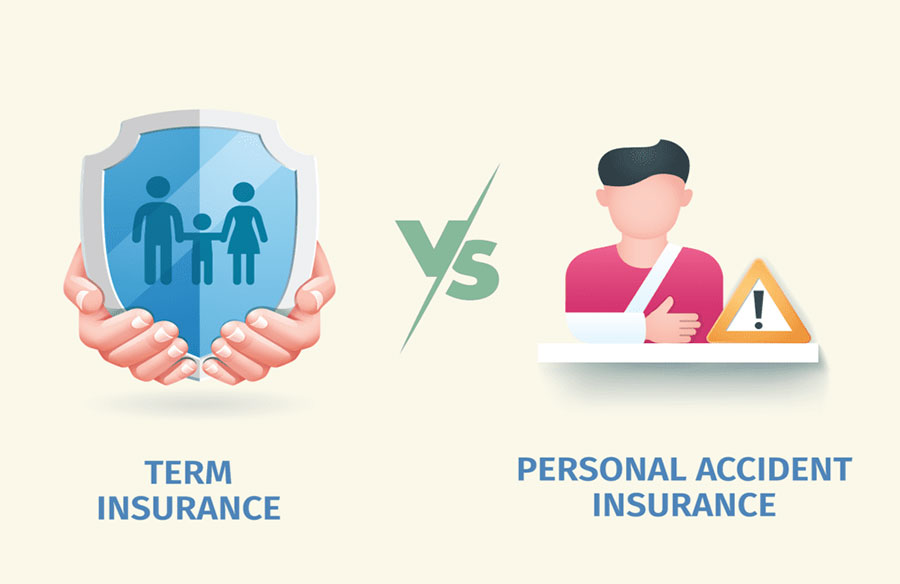
An insurance business primarily is a risk-driven business. The more a person is perceived as a risk, the more probable he is likely to pay for it. Lifestyle choices are among the critical determinants of the level of risk that a policyholder brings to the table in the case of insurance products such as term insurance plan and personal accident insurance. The insurers calculate their premiums considering all the behaviours, habits, and lifestyles of an individual.
Understanding Term Insurance and Personal Accident Insurance
It will be helpful, before proceeding further into how lifestyle choices affect premiums, to briefly understand what these insurance products entail.
- Term life insurance policy: Under this kind of life insurance, coverage is provided for a specific period. That is to say, the terms are offered for 10 to 30 years. The death benefit is the value paid upon death to his beneficiaries. It is relatively less expensive for two reasons: Firstly, it never develops a cash value and only provides protection in case of death.
- Personal accident insurance: It will thus be that insurance covering one against accidents which result in physical injury, disability, or death. Health insurance covers the cost of treatment by a practitioner. However, personal accident insurance would often ensure that financial loss resulting from bodily injuries by an accident leads to partial or total loss of limbs, permanent disability, or death.
Both of these insurance products are based on the assessment of risk and lifestyle options; smoking, exercise level, and occupation serve as an essential variable in quantifying that risk.
Role of Lifestyle in the Calculation of Premiums of Insurance
Lifestyle habits are closely related to an individual’s health and accident risks. Therefore, it affects the amount of premium that is charged on both term insurance and personal accident insurance in the following ways: With regard to the above major lifestyle habits, one can determine the implications thereof in terms of insurance price:
1. Smoking and Use of Tobacco:
Probably one of the most important lifestyle factors that heavily influence both the term insurance and personal accident premium rates is smoking. Tobacco products have been listed as one of the biggest single risk factors leading to diseases related to heart conditions, lung carcinoma, and a host of problems related to breathing. Smoking tends to increase accidents because smoking inherently relates to compromised coordination and also a general level of health.
- Term insurance: The smoker will automatically fall into the category of risk for the life insurance companies because there are many health problems that the smoker faces. In other words, the smokers are charged between 30% and 50% more than what the nonsmokers have to pay in procuring term insurance plans.
- Personal accident insurance: Smokers may be charged with higher premium rates for personal accident insurance since the likelihood of accidents or injuries will be higher in their cases. Smoking disables balance and lung functions hence enhancing falls or accidents, especially among elderly people.
2. Alcohol Consumption
Like smoking, chronic alcoholism risks pose significant threats to health and safety. Such risks include several forms of liver disease and possible cardiovascular and psychiatric disorders, and all these are factors that affect a life and accident insurance provider.
- Term Insurance: Indeed the premiums of compulsive drinkers will even deprive them of purchasing one. Increased chances of risks of an early death may sometimes be the reason in some insurance companies, for a compulsive drunkard, or those afflicted by such issues in which the said death is fueled directly or indirectly by alcoholism, such as liver ailments and accidents or even violent acts.
- Personal accident insurance: Alcohol impairs judgment and coordination and increases the chances of accidents. Whether the policyholder gets injured in a car accident, while undertaking activities that the insurance company may consider highly dangerous, or even in a slip-and-fall, alcohol increases the chances of the accident and the severity of the injury.
3. Physical Activity and Fitness
A healthy lifestyle including regular exercise and physical fitness would be positively added to both life expectancy and accident prevention. Insurers recognize the fact that a fit person reduces the risk of chronic diseases, improves balance and coordination, and in general becomes more resilient to accidents.
- Term insurance: The insurers generally regard more active, physically active individuals as of lesser risk. Hence, term insurance tends to be less costly for such policyholders. Exercise is a good preventive measure against heart disease, diabetes, and stroke. All these conditions not only make life longer but also reduce the possibility of accessing insurance claims.
- Personal accident insurance: Fitness may be able to cut down the potential of serious injuries if an accident occurs. For example, someone with strong bones and muscles would be able to recover faster when falls or accidents occur.
4. Occupation and Work Environment
Another determinant of premium is the kind of occupation which may be available. People working jobs that are purely physical in nature and of risk, like in construction, mines, or use of heavy machinery have a greater opportunity of accident occurrence and injury.
- Term life insurance: People engaged in risky occupations may pay a higher premium due to the potential for fatal accidents or long-term health problems related to the nature of the work. The insurance companies will measure the risk factor based on the dangers associated with that occupation. Office workers or white-collar workers have lower premiums compared to firefighters or deep-sea divers.
- Personal accident insurance: Occupational influence happens here in a more direct way. Workers who hold jobs that expose them to greater dangers, for example, in construction or oil rigs, will suffer injuries in the workplace. The probability of making an accident claim is much higher in high-risk occupations, so premiums are high.
5. Diet and Nutrition
This comprehensive field is related to health and well-being, constituting diet and nutrition. Proper diet is extremely vital, whereas bad dietary habits can cause serious chronic health conditions, like obesity, diabetes, and even heart diseases.
- Term Insurance: Bad eating habits cause lifestyle diseases, resulting in the loss of some years of life. More overweight and obese persons are risky as compared to other prospects; insurance companies can collect a higher amount for the term insurance policy.
- Personal accident insurance: Here, the connection to accidents is not so apparent about the diet, though poor nutrition impacts how one performs as well as recovery from injuries; for instance, appropriate nutrition may be necessary for recovery after being involved in an accident.
Conclusion:
The determining factors of term insurance plan premiums and personal accident insurance are, in the case of a policyholder, lifestyle choices. Habits concerning health, smoking, alcoholism, exercise, and diet will directly influence the risk level an insurer would assign to the individual. A person’s occupation and work environment also play a big role in the potential accidents or injuries that could happen.
The healthy choices one makes in living healthier and disease-free can in no way save the individual from improvement in his general well-being and lowering his cost of premiums in insurance, as not smoking, keeping active, the healthy diet one maintains, and avoiding risky behaviour will all make for big savings on both term and personal accident insurance.