

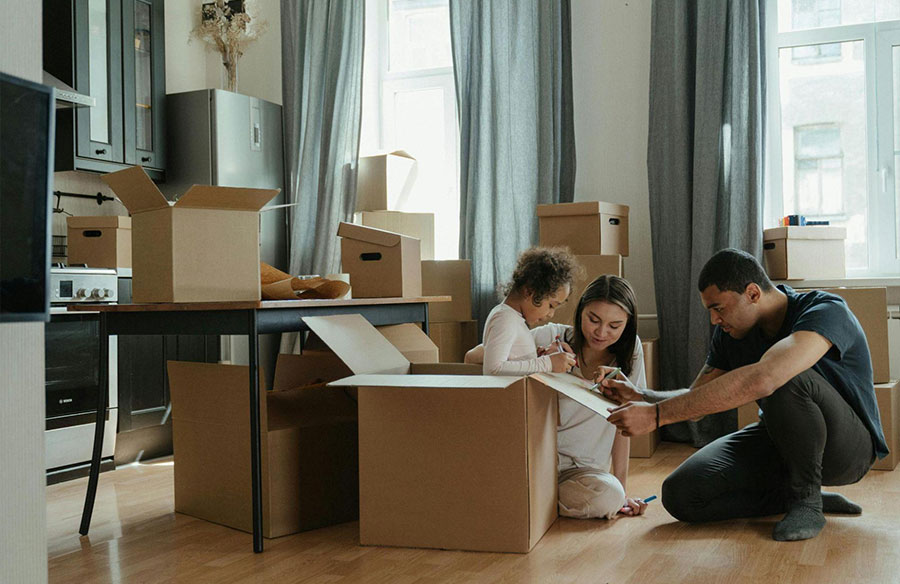
Moving is almost always a lengthy and difficult process that necessitates meticulous planning. We will tell you how to organize moving to a new apartment on your own without unnecessary nerves and stress, as well as pack and unpack your belongings.
How to Prepare for Moving
According to a space organization specialist who also deals with turnkey moves, the average preparation time for a physical move is between a week and a month. Those who have a small amount of things and have extra helpers will cope with packing the fastest. For example, a family of two, with the help of two or three friends, can quickly assemble everything in five or six hours. It will take a month for those who intend to pack everything and go through each category of items to determine if they require it.
When moving into a new apartment, it’s a good idea to do some preliminary research on how it’s furnished. For example, if the new apartment includes a dryer in addition to a washing machine, you do not need to bring a folding dryer. Similarly, the expert recommends studying each area of the house and creating a special checklist of what is required in the new apartment. Are there enough dishes in the kitchen, or will you need to bring your own? Are the old furnishings compatible with the new? Is there enough closet and other storage space? Do you have everything you need to clean?
How to Transport Large Items
It is also worth estimating the amount of bulky furniture and appliances that will be transported and leaving a request in advance with a specialized moving service. The best example of a reputable moving company is Elate Moving. A team of movers will help to disassemble, pack, take out, and carefully move things to a new address.
When moving independently, the specialist recommends that you find out ahead of time about the parking lot schedule and any restrictions in the house where you will be moving. For example, in many new apartment complexes, you are not permitted to bring items in through the main entrance, and underground parking lots have height restrictions on vehicles.
What Not to Take
At the start of the packing process, it is important to determine which items are absolutely necessary to move and which can be discarded. To accomplish this, divide your apartment into zones and go through them one at a time to determine what you require. It is best to get rid of “duplicates” (repetitive items) first: “Before you pack up the tenth frying pan, ask yourself if you really want to pay for the transportation of each one?”
Next, evaluate your finances immediately after the move and decide whether to leave some old items (a worn chair, a chipped table, or an old kettle) for the first time in your new home or purchase new ones right away. The same logic applies to household chemicals: half-empty jars can be left in the apartment, or they can be taken with you and poured into smaller containers.
Later, rearrange your closet and carefully choose clothes that have not been worn in several seasons, and are small, torn, or broken. Broken children’s toys, old rags, mops, chipped dishes, and other items that are no longer usable or repairable should be discarded or recycled before moving to another apartment.
How To Pack
There are many options today for packing things, from boxes to vacuum bags. But what you really need are simple boxes. Lots of boxes… You don’t have to buy new boxes – you can use leftover ones from your shopping spree or pick up unwanted ones for free at the nearest store. Sturdy boxes can be found in the household goods department – they are designed to hold ten bags of laundry detergent or twenty bottles of shampoo without a problem.
When you can’t find free ones, moving boxes can be purchased at home improvement stores. For example, boxes can be bought online from specialized wholesale firms. Sometimes it can be even cheaper than in hypermarkets. And also sometimes they are sold by those who have already moved and who don’t need them now.
You will also need bags. Sturdy cloth and propylene bags are suitable for heavy items. They are sold in hardware and construction stores and are often even cheaper than boxes. The advantages of bags are that they hold more items, the contents are easier to tamp down, and, if necessary, the bag can be dragged along the ground. The main thing is not to stack items with sharp corners, such as picture frames or books, otherwise, the bag may tear.
In Conclusion: Unpacking and Furnishing
Before moving furniture and appliances into the new apartment, cover the corners, slopes, and floors with packing or bubbles first. Move just a box into the new apartments and do not go crazy and unpack everything at once on the first day. It is better to separate the unpacking zones and then clean everything together in the big common cleaning.







