

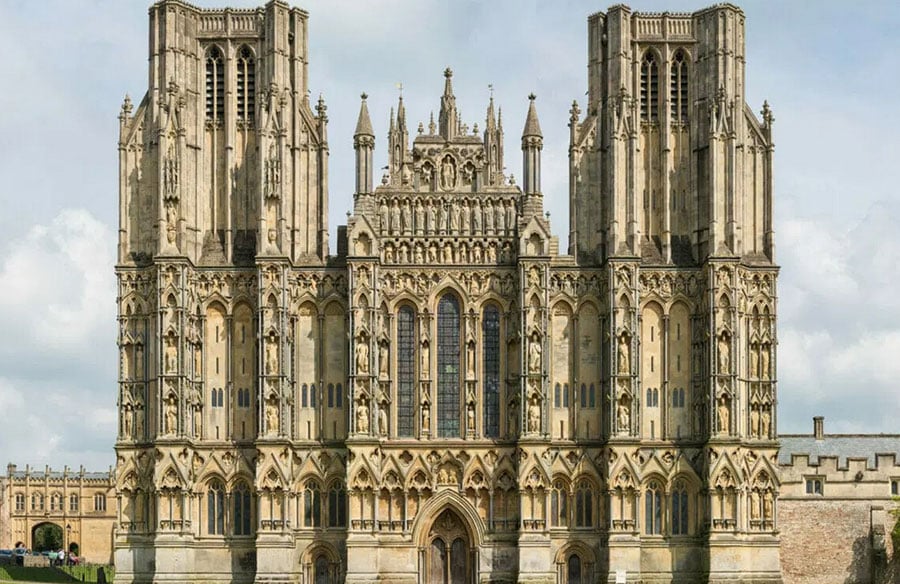
A legend says that the Gothic style was a dream of Abbot Sugerius, who, in 1140, was ordered by King Louis VII to rebuild the church of Saint-Denis Abbey. The word ‘Gothic,’ presently associated with grandeur and monumentality in its origins, was almost a swear word and associated with barbarism because this unique and recognizable style initially stood very contrary to the canons of church construction. Studying Gothic architecture is a fascinating topic and a very good option to order a paper from the research paper writing service because there exist so many Gothic churches, and writers with great experience can choose only the most interesting facts for you.
Gothic architecture is a style that emerged in France in the XII century and became one of the most well-known and magnificent styles in the history of building. Later, we will remind you about the most famous examples of Gothic architecture in the world and share with you some facts about which you perhaps did not know.
Notre Dame de Paris
The Notre Dame de Paris is the symbol of not only French Gothic architecture but also of the culture of France in general. Construction of this majestic structure began in 1163 and lasted almost two centuries. The very name of the Notre Dame de Paris goes far beyond architecture and religion. It is further symbolized by the figures of chimeras and gargoyles that, according to medieval beliefs, protect the church from evil spirits. In 2019, the cathedral became a victim of a terrible fire that destroyed the world-recognized spire. But the good news is that the restoration is finished, and at the end of 2024, Notre Dame will open its doors to visitors again. However, the full restoration is planned to be completed by 2028.
St. Stephen’s Cathedral
Another striking example of Gothic architecture in Central Europe is St. Stephen’s Cathedral, or Stephansdom, in Austrian Vienna. The construction of the cathedral was completed as early as the 14th century. The southern tower of the cathedral is 136 meters high and is a recognizable symbol of Vienna; one of the towers served a very practical purpose and was used as an observation tower to protect the medieval city from fires.

Kölner Dom
Cologne Cathedral, in the city of the same name in Germany, is one of the world’s largest and most famous Gothic cathedrals. Its construction began in 1248. It is hard to believe, but the temple’s construction continued for 600 years and was finally completed in the XIX century. This cathedral, with its two huge towers reaching 157 meters, is the highest church in Germany and one of the tallest Gothic buildings in the world.
Cologne Cathedral is famous not only for its size but also for its architectural beauty. It is also an important center of Pilgrimage in Europe. The cathedral houses the relics of the Three Magi, which are kept in a specially built golden sarcophagus. An interesting fact about the cathedral is that during the Second World War, this building miraculously survived the mass bombing.
Milan Cathedral
Milan Cathedral, also known as Duomo di Milano as Notre Dame for Paris and France, is a symbol and example of unique Italian architecture of the Middle Ages. The cathedral is one of the largest Gothic structures in the world and is remarkable for its detail and unique approaches during construction. The church’s construction began at the end of the 14th century, in 1386, but like the Kölner Dom, it was constantly being completed and improved. Some elements of decoration were added as late as the 20th century. The cathedral is best known for its marble spires. There are 135 of them in the building, and thanks to this unique silhouette, it is difficult to confuse this building with anything else. On the cathedral’s highest spire, there is a golden statue of the Madonna, which symbolizes Milan.
It is worth adding that this building is also one of the most decorative and detailed in the world, as its facade is decorated with more than a thousand statues and sculptures. Inside the cathedral are huge stained-glass windows that fill the space with soft light and give the building a mystical atmosphere. Milan Cathedral is also an important religious and cultural center in Italy, receiving millions of visitors annually.
Westminster Abbey
Many examples on our list, including Westminster Abbey, are real symbols of their countries and cities. London’s notable and iconic Gothic building has cultural, historical, and national significance. Since time immemorial, the most significant state ceremonies have occurred at the Abbey, including the coronation of British monarchs. Founded by Henry III in 1245, the Abbey incorporated various features characteristic of the Gothic style with an idiosyncratically English interpretation.

One of the most significant features of the Abbey is the “St. Edward’s Cathedral,” where the coronations take place.
Chartres Cathedral
Another great monument of Gothic architecture in France is Chartres Cathedral. The building dates from the 12th to the 13th century and contains huge pieces of stained glass thought to be amongst the greatest works of Gothic Art. Most famous is the central rose on the west facade of the cathedral. Chartres Cathedral has two towers of unequal height and style, making its facade even more unusual. It is also an important pilgrimage center because it contains relics, including the cloak of the Virgin Mary.
Conclusion
Gothic is not just about buildings with stained glass windows and high ceilings. Gothic is an entire era of cultural development in Christian Europe. By learning about the unique works of medieval sculptors, one can learn more about the history and culture of countries from the Middle Ages to modern times.







