

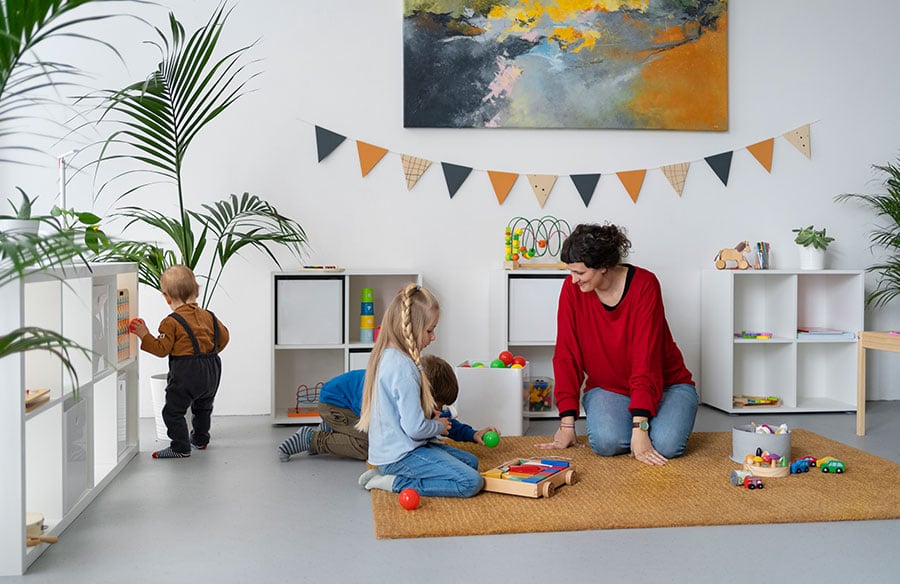
Physical environments significantly influence child development. Quantifying the adverse effects of deficiencies in home design on kids can be challenging. However, science has proved that excessive darkness, extreme cold, unchecked dampness, poor indoor air quality, loud noise and bad visual aesthetics can jeopardize a little one’s future, especially when being homeschooled.
Young individuals can face distinct obstacles to learning and honing vital cognitive abilities. However, considering these concepts when reimagining indoor spaces to create child development-friendly indoor environments goes a long way.
Daylighting
Most children are afraid of the dark. They feel anxious about the absence of visual stimuli, discouraging them from playing, exploring and pushing their boundaries. They think twice about practicing independence when they can’t see what’s around them.
Airy rooms promote cognitive development. The sun always shines — it’s just a matter of harnessing and augmenting natural light inside the house.
Everything begins with proper window placement. Fenestration units in strategic locations bring in as much sun as possible throughout the day.
On cloudy days, use reflective surfaces and bright colors to maximize the small amount of sunshine in the house. Mirrors, glossy walls, shiny counters and floors, and metallic fixtures cause visible light to bounce around, creating an illusion of brilliance.
Heating
Kids are susceptible to frigid temperatures. They’re particularly vulnerable to hypothermia and frostbite, threatening their comfort, health and safety.
Cold weather can also render outdoor play out of the question. Although indoor spaces don’t offer the same learning opportunities as outdoor environments, not feeling hale and hearty due to chilliness promotes inactivity. Kids can feel lethargic and sleepy when the room isn’t toasty enough.
Neutralizing the cold is key to designing a safe learning environment, especially for kids who study full time at home. A space that promotes mental fitness and prevents chronic illnesses can inspire kids to perform better academically and nurture a positive attitude toward education.
Aside from equipping the house with properly sized and energy-efficient HVAC equipment, designing the house for thermal comfort is also a must.
Be mindful of the sun’s orientation during winter. Combine an open floor plan with massive windows to catch sufficient solar heat to raise indoor temperatures naturally.
Moreover, materials with high thermal mass, such as concrete and stone, should be used. They absorb infrared light during the day and incrementally emit the energy in storage as the temperature drops.
Ventilation
Indoor air is generally dirtier than outdoor air. Every room must have an efficient means of cleansing the air of contaminants that can get kids sick, cause irritation or trigger allergic reactions. Poor ventilation can also trap toxic substances indoors, driving their amounts to dangerous levels.
Limited airflow within the space also contributes to dampness. Many harmful organisms require moisture to survive and proliferate, compromising child development.
For example, mold species colonize damp spaces and expand their footprint around the house through the air ducts. Exposure to mycotoxins emanating from mold spores can damage or destroy neurons, causing kids to suffer from impaired brain function, experience nervous disorders and be more prone to mood swings.
Ventilating rooms helps control humidity by expelling stale, moist air to the outside. ASHRAE recommends a minimum of 0.35 air exchange rate per hour. The faster outdoor air replaces indoor air, the easier it is to achieve a healthy environment for human habitation.
Marrying natural and mechanical ventilators is crucial for effectively exhausting contaminated air into the outside year-round. Cross ventilation is super efficient because drafts can push out warm air from one side of the room to the other.
Casements outperform other window types in this task because they can use almost 100% of the wall opening for ventilation. Double-hung and sliding units are always 50% covered at most because they have staggered sashes. However, the latter are more efficient because they generally cover larger openings.
Regarding mechanical devices, a home ventilation system can manage the entire house’s air circulation. Adding supplementary units, like exhaust fans, in heated or air-conditioned areas can result in energy waste since these devices are heat conductors, not insulators.
Insulation
Insulation materials abate unwanted sounds and reduce heat transfer. Children need quiet environments to focus on tasks requiring concentration, like jigsaw puzzles, and increase their attention spans. Bothersome acoustic distractions, such as roadway noise and loud video volumes, can sidetrack kids.
Nailing the recommended regional R-values using multipaned glazed units filled with argon or xenon and installing thick insulation across the board goes without saying. Decorating rooms with soundproofing furnishings, such as the pleated fabric cells of honeycomb shades and the natural wool or synthetic fiber of carpets, can deaden noises.
Design Friendly Indoor Environments for Child Development
Child development must be a top priority for home design. A single deficiency can negatively impact the acquisition of critical cognitive skills, like self-regulation. Therefore, homeowners and interior designers must leave no stone unturned to create a kid-friendly learning environment.
Jack Shaw
Jack Shaw is a freelance writer and home improvement specialist. He’s the senior writer of Modded.com, and has contributed his advice through sites like CAD Details, House 2 Home Organizing, Realty Times and more.







