

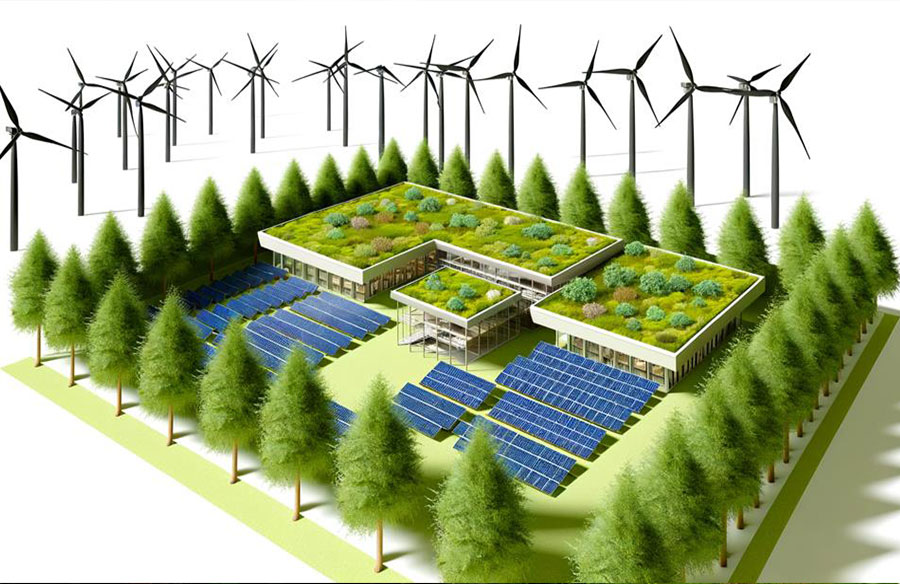
You can elevate your eco-friendly architectural firm’s sustainability by adopting green hosting solutions. Opt for hosting providers that run their data centers with renewable energy like solar or wind, guaranteeing minimal carbon footprint. Prioritize those utilizing virtualization to reduce physical hardware needs and advanced cooling techniques like liquid and AI-driven climate control for energy efficiency. Verify your hosting provider has certifications such as Green-e or ISO 14001, and check their carbon offset programs. Integrating these green practices aligns with your firm’s sustainable goals and boosts eco credibility. Stay tuned to explore the intricate benefits and practical steps of sustainable hosting.
Importance of Green Hosting

As an architect, your commitment to eco-friendly designs should extend to your digital presence. Green hosting means using servers powered by renewable energy, reducing your firm’s carbon footprint considerably. By opting for green hosting, you align your firm’s operational ethos with the sustainable principles you champion in your projects.
Choosing green hosting isn’t just about environmental responsibility; it’s also a savvy business move. Clients increasingly prioritize sustainability in their selection criteria. Demonstrating your firm’s commitment to green practices can differentiate you in a competitive market.
Furthermore, green hosting providers often utilize energy-efficient hardware and cooling solutions, which can lead to more reliable and faster website performance.
Additionally, green hosting providers typically engage in carbon offset initiatives, such as reforestation projects or investing in renewable energy credits. This means that even if some of their energy consumption isn’t from renewable sources, they’re actively working to neutralize their impact.
Renewable Energy Data Centers
Managed website hosting plays a crucial role in supporting green hosting initiatives, which aim to enhance sustainability through the use of renewable energy data centers. These data centers are powered by renewable sources such as solar, wind, and hydroelectric energy, enabling them to operate efficiently while minimizing reliance on fossil fuels. By adopting this approach, managed website hosting providers significantly reduce the carbon footprint traditionally associated with conventional data centers. This shift represents a concrete move toward environmentally responsible hosting practices.
When you choose a hosting provider utilizing renewable energy data centers, you’re not just cutting down on energy consumption; you’re also promoting the growth of green energy industries. These facilities often incorporate advanced cooling techniques, such as using ambient air or liquid cooling, to further minimize energy usage.
Additionally, renewable energy data centers are engineered for efficiency. They employ state-of-the-art technologies like virtualization and energy-efficient hardware to optimize performance while conserving resources.
This approach guarantees that your architectural firm’s data is managed in an eco-friendly manner, aligning with your commitment to sustainability.
Carbon-Neutral Hosting Providers

These hosting companies invest in renewable energy projects or purchase carbon offsets to balance out the emissions generated by their data centers.
When selecting a carbon-neutral host, look for certifications like Green-e or RECs (Renewable Energy Certificates) to verify their claims are substantiated. Many of these providers also participate in initiatives like the Carbon Disclosure Project, which publicly tracks their environmental impact.
Aside from reducing emissions, these hosts often employ energy-efficient technologies and practices, such as advanced cooling systems and server virtualization.
These measures not only lower energy consumption but also enhance the overall performance and reliability of your hosting services.
Efficient Resource Management
Efficient resource management is essential for architectural firms aiming to minimize their environmental impact while maximizing operational effectiveness. You need to focus on optimizing energy use, reducing waste, and leveraging renewable resources.
Start by conducting an energy audit of your current hosting infrastructure. This helps identify inefficiencies and areas for improvement. Implementing virtualization technologies can greatly reduce physical server needs, cutting down energy consumption and cooling requirements.
You should also consider load balancing to distribute workloads evenly across servers. This not only improves performance but also guarantees no single server is overburdened, thereby extending hardware life and reducing energy use. Incorporate scheduling algorithms to power down servers during off-peak hours, further conserving energy.
Data management plays a significant role too. Efficient storage solutions like deduplication and compression reduce the amount of data stored, lowering energy consumption and costs.
Prioritize using data centers that employ advanced cooling techniques, such as free cooling or liquid cooling, which are more energy-efficient than traditional air conditioning.
Lastly, always monitor and review your resource usage. Utilize analytics tools to gain insights into your energy consumption patterns and make data-driven decisions. This continuous optimization guarantees your firm stays on the path to sustainability.
Eco-Friendly Server Hardware

Opt for components made from recyclable materials to reduce your environmental footprint.
Additionally, choose energy-efficient processors that deliver high performance without unnecessary power drain.
Low-Power Consumption Units
Many architectural firms are now turning to low-power consumption units for their server hardware to minimize environmental impact and reduce operational costs. By opting for energy-efficient servers, you can considerably cut down on the electricity required to keep your systems running around the clock. These units are designed to deliver robust performance while consuming less power, making them ideal for eco-conscious operations.
One key advantage of low-power servers is their ability to lower your carbon footprint. They often employ advanced power management features, such as dynamic voltage scaling and efficient cooling systems, which reduce energy waste. By integrating these servers into your IT infrastructure, you’re not just saving on utility bills; you’re also contributing to global sustainability efforts.
To verify you’re selecting the right low-power units, look for certifications like ENERGY STAR and EPEAT. These labels indicate adherence to strict energy efficiency guidelines and environmental standards.
Additionally, implementing virtualized environments can further optimize resource usage, allowing you to run multiple applications on fewer physical machines. This consolidation reduces the number of servers needed, which in turn decreases overall power consumption.
Embracing low-power consumption units is a strategic move that aligns operational efficiency with environmental responsibility.
Recyclable Material Components
Incorporating recyclable material components into your server hardware is a pivotal step towards achieving an eco-friendly IT infrastructure. By selecting servers made from recyclable metals and plastics, you’re not only reducing your carbon footprint but also setting a precedent for sustainable practices within the architectural industry.
Many manufacturers now offer components designed for easy disassembly, facilitating the recycling process at the end of the hardware’s lifecycle.
When choosing recyclable materials, prioritize metals like aluminum and steel, which are highly recyclable and can be reused multiple times without degrading in quality. Similarly, opt for biodegradable or recyclable plastics that don’t contribute to landfill waste.
Verify that your hardware suppliers adhere to the Waste Electrical and Electronic Equipment (WEEE) Directive, which mandates the recycling of electronic goods.
Moreover, consider the packaging of your server hardware. Biodegradable packing materials and minimalistic packaging reduce waste and environmental impact.
Engaging with vendors committed to sustainability can also provide you with hardware that includes recycled content, further minimizing the environmental impact.
Energy-Efficient Processors
After optimizing your server hardware with recyclable material components, it’s equally important to focus on energy-efficient processors for your eco-friendly server setup.
Modern processors, like those from Intel’s Xeon or AMD’s EPYC series, are designed to deliver high performance while consuming less power. These processors employ advanced power management features such as dynamic voltage and frequency scaling (DVFS), which adjust power usage based on workload demand.
Choosing energy-efficient processors not only helps reduce your carbon footprint but also lowers operating expenses. These processors generate less heat, minimizing the need for large cooling systems. As a result, your data center can function at higher temperatures, which further reduces energy consumption. If you’re managing multiple client accounts through reseller hosting with WHMCS, using energy-efficient solutions can significantly enhance both performance and cost-effectiveness.
When selecting processors, look for those with a high performance-per-watt ratio. This metric indicates how much computational power you get for each watt of electricity consumed.
Investing in processors with a strong performance-per-watt ratio guarantees that your servers run efficiently while maintaining the computing power necessary for complex architectural design tasks.
Data Center Cooling Solutions
Maximizing data center cooling solutions is essential for architectural firms committed to sustainability. Cooling accounts for a considerable portion of data center energy consumption. By choosing energy-efficient cooling methods, you can dramatically reduce your environmental footprint.
First, consider leveraging liquid cooling technology. Unlike traditional air cooling, liquid cooling uses water or coolants to dissipate heat, which is far more efficient and effective. This method can lower energy use by up to 40%, making it a prime choice for eco-conscious firms.
Another option is to implement free cooling, which utilizes the natural temperature of the external environment to cool data centers. In regions with cooler climates, this technique can cut energy consumption considerably, reducing reliance on energy-intensive HVAC systems.
Additionally, adopting hot and cold aisle containment can enhance airflow within your data center. By segregating hot and cold air streams, you’ll minimize energy waste and improve cooling efficiency.
Lastly, using AI-driven climate control systems can dynamically adjust cooling based on real-time conditions, ensuring peak performance while conserving energy.
Sustainable Web Development Practices

Streamlining your code minimizes server load, leading to lower energy consumption.
Pairing this with data centers powered by renewable energy creates a robust foundation for sustainable web development.
Efficient Code Optimization
Efficient code optimization stands as a cornerstone of sustainable web development practices, directly impacting an architectural firm’s environmental footprint. By minimizing redundant code and streamlining algorithms, you reduce server load, which in turn decreases energy consumption.
Efficient code not only speeds up your website but also lowers the carbon emissions associated with data transfer and server maintenance.
Start by using lightweight frameworks and libraries that minimize bloat. Leverage tools like Google PageSpeed Insights to identify performance bottlenecks and areas for improvement. Compress images and use modern formats like WebP to reduce file sizes without sacrificing quality.
Implement lazy loading to defer off-screen images until they’re needed, further cutting down on initial load times.
You should also adopt efficient coding practices such as minimizing HTTP requests. Combine multiple CSS and JavaScript files into single files to reduce server calls. Employ browser caching to store frequently accessed files locally, reducing the need for repeated data retrieval from the server.
Green Data Centers
Ever wonder how architectural firms can further shrink their carbon footprint while maintaining high-quality web performance? Enter green data centers. These facilities leverage renewable energy sources like wind, solar, and hydroelectric power, greatly reducing your environmental impact. By choosing a hosting provider that prioritizes green energy, you guarantee your website’s data is stored and processed in a more eco-friendly manner.
Green data centers also employ advanced cooling techniques, such as free cooling and liquid cooling, to minimize energy consumption. Traditional data centers rely heavily on air conditioning, which is energy-intensive. By contrast, green data centers optimize airflow and use natural cooling methods, drastically cutting down on electricity use.
Moreover, these centers often incorporate energy-efficient hardware and virtualization technologies. Energy-efficient servers and storage devices consume less power, while virtualization allows multiple virtual servers to run on a single physical server, maximizing resource utilization.
Selecting a Green Hosting Provider
Choosing a green hosting provider is a vital step in guaranteeing your architectural firm’s digital presence aligns with its sustainability goals.
Start by evaluating the provider’s energy sources. Opt for those that utilize renewable energy, like wind or solar power, to run their servers. Check if they’ve certifications such as Green-e or ISO 14001, which validate their commitment to environmental standards.
Next, assess their data center efficiency. Look for providers that use advanced cooling technologies and have a low Power Usage Effectiveness (PUE) ratio. A PUE below 1.5 indicates efficient energy use.
Transparency in their environmental policies is essential. Confirm they publish annual sustainability reports detailing their energy consumption and carbon footprint. This transparency indicates their dedication to ongoing improvement.
Also, consider their carbon offset programs. A responsible provider should invest in projects that compensate for their emissions, like reforestation or renewable energy initiatives.
Lastly, review their customer support and reliability. Green credentials shouldn’t compromise their service quality. Confirm they offer robust security measures and uptime guarantees.
Conclusion







