

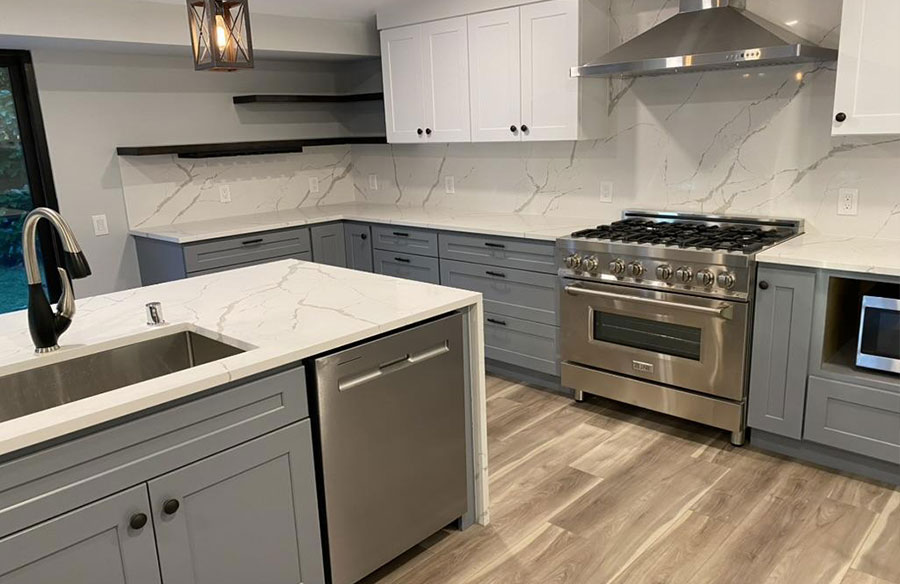
Your kitchen cabinet’s hardware, small as it may seem, can actually significantly affect the look and feel of your cabinets.
The most common types of kitchen cabinet hardware include latches, handles, and knobs and pulls. In this blog, we’ll focus more on whether you need knobs or handles for your kitchen cabinets. Understanding the key difference between knobs or pulls on cabinets can further improve the look, functionality, and overall balance of your cabinets.
What Are Cabinet Knobs?
Knobs are round or square metal hardware that are attached to the front of cabinet doors or drawers, usually with a single screw. Due to their functional design and practicality, knobs have been a popular option for doors and cabinets since the 18th century.
Knobs are typically available in a wide array of materials, such as metal, wood, glass, and ceramic. This variety gives knobs the versatility to suit any kitchen style, from modern to traditional. Some common types of kitchen cabinet knobs include:
- Round Knobs: This is the most popular type of cabinet knob, often considered a timeless choice, as they can fit any kitchen style.
- Square Knobs: They serve as a stylish alternative to traditional round knobs, ideal for those who prefer a more angular style.
- Mushroom Knobs: A spin on the classic round knob, mushroom knobs feature a domed top that offers a softer grip.
- T-Knobs: Resembling the shape of a “T,” these knobs are perfect for modern and industrial-style kitchens.
- Barrel Knobs: With their cylindrical form, barrel knobs are a perfect fit for rustic or traditional kitchens. Their unique shape provides an eye-catching alternative to the more conventional round or square knobs.
Advantages and Disadvantages of Knobs
In addition to the versatility of cabinet knobs, they’re also generally easier to install compared to pulls, as they only require just one screw. Knobs are also more affordable, which can be a good option for homeowners who want to refresh their cabinets on a budget.
On the downside, knobs can be less comfortable to use, especially on heavier drawers or doors, where a pull might offer better leverage. Their smaller size can also make them harder to grip for people with larger hands or limited dexterity. In some cases, knobs may seem a little outdated and less appealing compared to more elaborate pulls, particularly in modern or high-end kitchen designs.
When Should I Choose Knobs for Kitchen Cabinets?
Generally, knobs are best used on cabinet doors, offering a neat and functional grip that complements most designs. However, they can also be an excellent option for smaller drawers if you want a uniform look across your cabinetry.
Regardless of the shape—whether it’s round, square, or something more unique—the most important consideration is placement. Kitchen cabinet contractors would recommend placing knobs about 2 1/2 to 3 inches from the door’s corner to ensure they’re both easy to use and aesthetically balanced.
What are Cabinet Pulls?
Cabinet pulls, or handles, are elongated hardware pieces that provide a larger surface area for gripping. They function much like handles, with a bar connected by two secure points.
This type of cabinet hardware is typically more secure as they require two or more screws to be installed properly.
There are a variety of materials you can choose from when selecting cabinet pulls, such as sleek stainless steel, classic wood, or decorative ceramic. Common types of cabinet pulls include:
- Bar Pulls: Bar pulls are slim, cylindrical handles that can be mounted horizontally or vertically. It is recommended for contemporary kitchens and has a sturdy grip, which makes it ideal for larger doors and drawers.
- Cup Pulls: Cup pulls, or bin pulls, are semi-circular with an open bottom, designed for easy drawer access. Its vintage appeal makes it popular for farmhouses or traditional kitchens.
- Finger Pulls: Recessed finger pulls provide a sleek, subtle way to open cabinets. Their minimalist design makes them suitable for modern kitchens.
- Edge Pulls: Edge pulls are attached to the top or side of cabinet doors. These are especially great with flat-panel cabinets.
- Handle Pulls: Handle pulls have a classic, curved design and can either be simple or incredibly detailed. It fits well with both traditional and contemporary kitchen styles.
Advantages and Disadvantages of Cabinet Pulls
Cabinet pulls are a great option for heavier drawers and larger doors as they provide a strong, secure grip. Their longer design allows for more intricate styles, making them great for both modern and traditional kitchens. Additionally, pulls tend to be more ergonomically friendly, providing easier access for people with arthritis or other mobility challenges.
However, one of the most common mistakes homeowners make when choosing cabinet pulls is opting for a size that’s too large for the cabinets, resulting in a more “cluttered” look. Installation also requires more precision due to the need for two attachment points, and the cost is generally higher than that of knobs.
Mixing Knobs And Pulls On Kitchen Cabinets
Having a difficult time deciding whether you should add knobs or pulls on your kitchen cabinets? You can actually try incorporating both.
One popular approach is to place knobs on all the upper cabinets and pulls on the lower ones. This method provides a good visual contrast while still ensuring the design is cohesive.
Alternatively, you can opt to use knobs on all cabinet doors and pulls on drawers. This method is great for maintaining a clean, uniform look while ensuring that heavier drawers are easy to open.
Key Takeaways
To answer the question of “Are knobs or handles better for kitchen cabinets?” it ultimately depends on your kitchen’s design, functionality needs, and personal preferences.
Knobs are a good choice for homeowners who want an affordable and simple option. Pulls, on the other hand, are more suited for larger drawers and those seeking a more modern or ergonomic design.
Determining which hardware suits your kitchen best involves considering how often you open cabinets and drawers, as well as the overall look you want to achieve. Whether you opt for one or decide to mix both, the key is to ensure your kitchen is not only beautiful but also practical and user-friendly.
Kurt Karimov
Kurt Karimov is the visionary owner behind Kitchen & More, Seattle Cabinets, and Pergomatic. With a deep passion for interior styling and renovation, Kurt has dedicated his career to helping clients transform their homes into stunning, functional spaces. Drawing on years of experience in the industry, Kurt’s insights are informed by both his hands-on approach and his love for innovative design. When he’s not managing his businesses, Kurt enjoys writing about the latest trends and timeless techniques in home renovation, sharing valuable tips and inspiration with a wider audience.







