

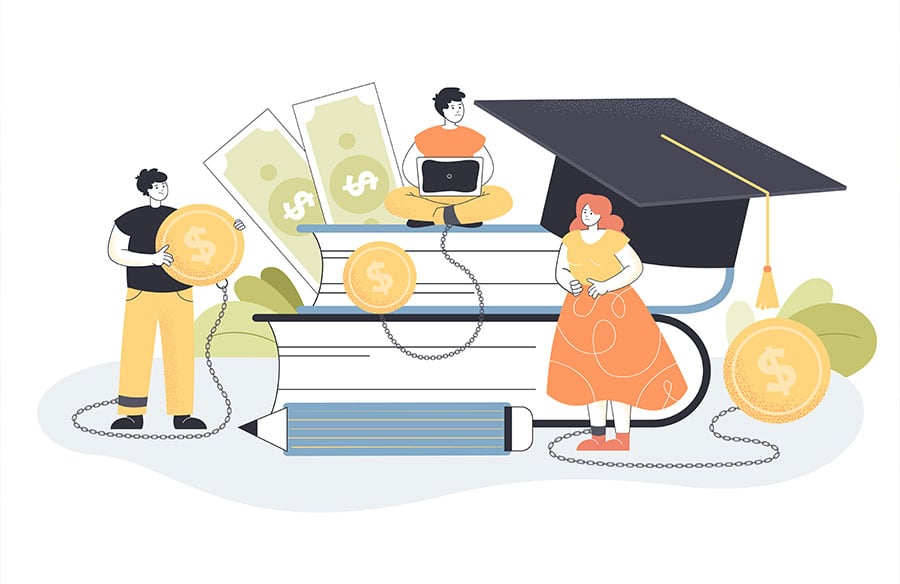
Student loans have, in recent times, become an essential component of increasing tuition and a channel through which millions of students in the United States draw funds to enable them to pursue college degrees they would otherwise not be able to afford. But with tuition ever on the increase, student loans have in turn been raising several issues hinged on the difficulties of repayment, refinancing, and consolidation. This paper shall explore the historical development of student loans; how student loans have been changing form over time; and the current strategies of managing student loans effectively.
History of Student Loans
The history of the concept of student loans in the U.S. is not new; it harks back to the mid-20th century. In the 1950s, the federal government began to take part in providing financial aid to students on quite a large scale, which was very strongly driven expressly by Cold War events. The NDEA of 1958 was one of the first pieces of legislation to establish federal loans for students and coincided in large part with the Soviet Union’s launching of Sputnik, which raised concerns that the United States could not compete in science and technology.
The modern structure of the student loan program began in 1965 with the Higher Education Act, which had the purpose to strengthen the educational resources of colleges and universities and provide financial assistance for students attending postsecondary and higher education institutions. Title IV set the foundation for the federal student loan program at that time, which has grown and morphed into new forms over the decades. These federal loans were previously leased and financed through private banks, under the cover of the federal government.
The turning point came in 2010 with the Health Care and Education Reconciliation Act, which shifted payment protection for all federal student loans to the direct loan program. In that manner, the federal government became the sole lender and struck the private sector away from acting as intermediaries. During that move, the government argued the changes would save billions that it had been using to subsidize private lenders.
Refinancing Student Loans
Recently, student loan refinancing has become a popular strategy of borrowers taking matters into their hands as the student debt crisis continues to worsen. Refinancing is when a borrower receives a new loan at a lower interest rate and pays off one or more previous student loans. The main purpose of refinancing can be either to decrease the monthly amount paid or to lower the interest rate, thus eventually saving the borrower several thousand dollars through the life of the loan.
These are private lenders that refinance federal or private student loans for borrowers. In doing this, however, there is a give-and-take situation: borrowers give up many of the protections and benefits associated with federal loans, such as income-driven repayment plans, deferment, forbearance, and Public Service Loan Forgiveness.
For refinancing, borrowers have to satisfy many requirements that vary across lenders but normally will involve one or more of the following: credit score, income, employment status, and level of indebtedness, gauged through the debt-to-income ratio. Those with a strong credit profile and stable incomes are more likely to receive low interest rates. Refinancing can be especially worthwhile for a borrower with high-interest private loans or who no longer needs the benefits and protections of their federal loans.
Consolidating Student Loans
Consolidation, therefore, is the other strategy that borrowers use in controlling the many student loans that they may have gotten. Consolidation of a federal student loan includes the process of combining more than one federal student loan into one Direct Consolidation Loan. Such a process facilitates payment, where a borrower is supposed to send only one payment each month rather than to the different loan servicers.
Consolidation also can extend the repayment term to 30 years, depending on the total amount owed, which may lower the amount that must be paid each month. The cost of this feature is more interest paid over time because loan term length may be longer. Unlike refinancing, consolidating your loans doesn’t have to mean a lower interest rate; the new rate is a weighted average rate of interest on the loans being consolidated, rounded up to the nearest long term with increments of one-eighth of a percent.
This may be an especially good option for borrowers looking to qualify for the federal loan forgiveness programs or seeking a way out of default. In any case, refinancing requires consideration of what one may lose in return. Consolidation means giving up benefits associated with the individual loans being consolidated, such as interest rate discounts or principal rebates.
Which is Better: Refinancing or Consolidation?
Which of the factors dependent on the type of loan-that is, being a federal or a private loan-determine whether to refinance or consolidate a student loan includes, among other factors, the financial state of the borrower and his long-term goals. Refinancing might be better for those with private loans at high interest or who have great credit and want to lower the interest rates. By contrast, consolidation is better for those who want to have simpler payments and still want to keep federal loan protections and benefits.
The options mentioned in this paper must be carefully assessed by weighing refinancing and consolidation by borrowers regarding benefits and loss that might arise from both alternatives. Also, the borrowers could seek an advisor such as a financial or a student loan expert in order for them to get advice personalized to their situations.
Conclusion
Student loans have played a major role in widening access to higher education; that means student borrowers wake up today into a complicated debt management position. A history of student loans and the refinancing and consolidation opportunities the borrower may have today form a very important basis for better predictions of future repayment decisions. These allow the borrower to, in turn, make an informed decision toward financial goals and alleviate the struggle of student debt to a great extent.







