

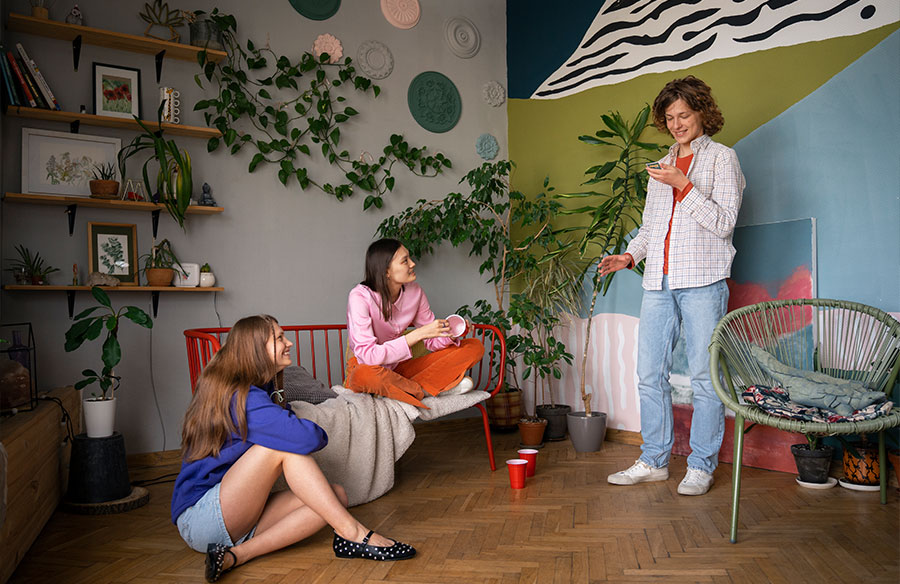
As our awareness and knowledge of health and wellness evolves, one of the interesting ideas that has come to the forefront is wellness architecture. Our living and working spaces are no longer intended merely to provide safety, privacy, comfort and shelter against the elements. They also need to actively promote good health, peace and relaxation. These environments must ensure physical, mental, spiritual, emotional and social health of the occupants.
With this concept taking root across the globe, World Architecture Day 2022 focused on the theme of architecture for wellness. Studies show that we spend a major part of our lives indoors, and move outdoors only to commute, exercise or for social or other essential purposes. This means that our indoor spaces have to be purpose-built to mirror this reality.
Is Wellness Design A New Concept?
Absolutely not! Building structures keeping our health in mind is a concept that has been around for centuries. This awareness happened when human beings realized that living in crowded, congested conditions without fresh air and light were directly involved in the spread of diseases. While financial status does play a huge role in deciding the area, materials and design, there is no doubt that wellness design is here to stay. The recent Covid-19 pandemic brought this fact drastically home to us.
The ancient Greeks and Romans built their townships keeping the weather and light conditions uppermost. The Chinese incorporated the ideas of feng shui to balance the elements of air and water in their buildings. In India, traditional vastu-shastra dictated direction, placement and arrangement of living and working spaces.
Fundamentals of Wellness Architecture
Wellness architecture is based on common sense. It employs design principles to help create spaces that incorporate natural light, air and sounds. These spaces evoke certain emotional responses in occupants that increase relaxation and promote health.
These spaces promote physical activity and free movement, without unnecessary clutter and obstacles. They are usually minimalist, with lighter furniture and they employ a soothing color palette. Often, they provide a seamless blend of outdoors and indoors, with the addition of plants, water bodies and mood lighting.
A major component of wellness architecture is the use of natural materials, with a minimum of synthetic or chemical elements. Safety is another important feature in these spaces, with privacy as one of the essential concerns.
How To Design A Health and Wellness Living Space
Up till now, comfort in the form of temperature or humidity control played a leading role in designing living spaces. Skylights to allow the flow of natural light, adequate ventilation to provide fresh air and colors to enable emotional expression are what we commonly understand as wellness architecture. You can get more information on health and wellness here.
Today these elements are important, but the concept goes above and beyond these ideas. While health and wellness are the cornerstone of wellness design, prevention of ill-health, elimination of stress and providing access to healthy nutrition, exercise and entertainment are new ideas that have entered this field.
Wellness design is now a multi-disciplinary process, with the incorporation of physics, psychology, technology and environmental responsibility. There are numerous studies that emphasize the importance of natural light in architectural design. Light improves our mood and gives us the natural balance between day and night, prevents seasonal affective disorder (SAD) and this helps to regulate our sleep and wake cycle. It also helps you to feel more energetic and become more productive.
Good quality air is another must-have in wellness architecture. While we have all become acutely aware of outdoor pollution, few of us realize that our indoor spaces are polluted with volatile organic compounds (VOC) found in paint, textiles, insulation, upholstery and soft furnishings and even in building materials. The use of natural materials, organic and water based paint, and sustainable, local building materials, responsibly sourced wood, stone and bamboo, non-toxic and anti-microbial materials are gaining huge popularity in this field. Wellness spaces must also have features that prevent the ingress of pests and microbes.
Wellness design tries to understand the role of emotions in how we react to our living spaces. A new area of study that uses these principles is salutogenic design where occupants of a space are able to manage their understanding of the use of this space more mindfully and meaningfully.
For health and wellness design to be more effective it has to be adaptable and flexible. Our living spaces need to change with our evolving requirements, tastes and preferences. They need to adapt to different circumstances in our life, such as marriage, children, divorce or death. Our living spaces need to quickly morph into community areas when we have guests, or to become more private when we need to be quiet or relax and this is where multipurpose design comes in.







