

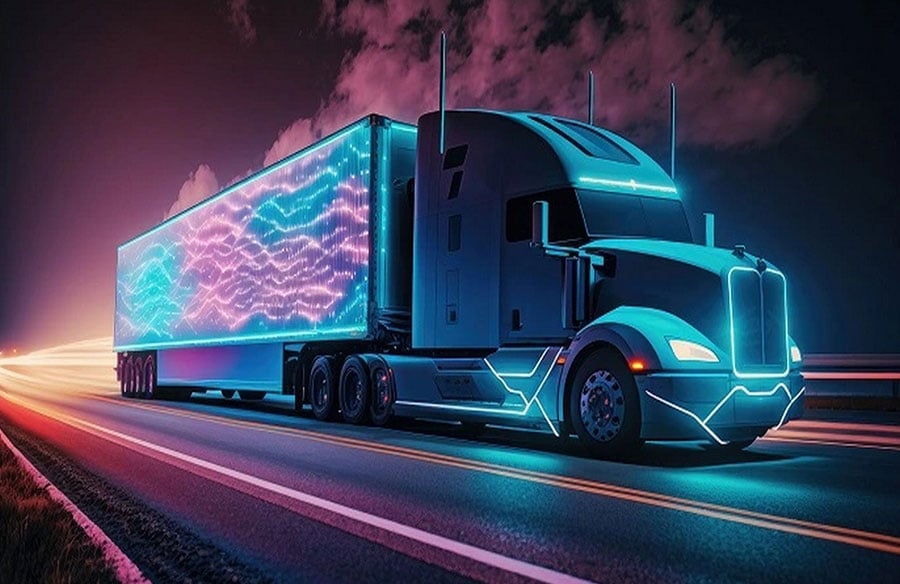
What really stands in the way of fully automated trucking becoming a reality on U.S. highways? While the concept of autonomous trucks transforming the transportation industry is no longer a distant vision, several significant hurdles still remain.
From technological limitations to regulatory complexities and safety concerns, the path to full automation is fraught with challenges that must be addressed before these vehicles can be reliably integrated into the nation’s roadways. Let’s take a look at some of the key obstacles, the progress made so far, and what the future holds for automated trucking in the U.S.
Technological Hurdles
A critical technological challenge for automated trucking is the accuracy and reliability of sensor systems, such as LiDAR, cameras, and radar. These sensors must detect and interpret a wide range of objects and conditions in real-time, even in adverse environments like heavy rain, snow, or fog.
Advanced autonomous vehicle sensors have a high detection rate under optimal conditions, but this can drop significantly in poor weather, highlighting the need for further advancements to ensure consistent performance across all driving conditions.
Cybersecurity is another major concern. Automated trucks, which rely on complex software and hardware systems, are potential targets for cyberattacks. A successful breach could lead to catastrophic outcomes, such as loss of control over the vehicle or manipulation of its navigation systems.
Legislative and Regulatory Challenges
There is no unified federal standard for autonomous vehicles in the U.S., leading to a patchwork of state regulations that vary widely. For instance, while states like Arizona and Texas have permissive laws allowing extensive testing and deployment of autonomous trucks, others impose stricter restrictions, creating inconsistency and uncertainty for manufacturers and operators. This lack of standardization complicates interstate commerce, as trucks must comply with different regulations when crossing state lines.
Liability and insurance issues further complicate the regulatory environment. Determining who is responsible in the event of an accident involving an autonomous truck remains a gray area, with manufacturers, software developers, and vehicle operators all potentially liable. This uncertainty poses significant risks, leading to hesitancy in adopting the technology at scale.
Safety Concerns
While autonomous systems have made significant strides, they still face challenges in handling complex driving scenarios, such as sudden obstacles, erratic behavior from human drivers, and unpredictable weather.
Current autonomous vehicle systems could prevent a portion of crashes, primarily those involving driver error. However, more complex incidents requiring nuanced judgment and quick decision-making still remain quite difficult for AI systems to manage effectively.
Public perception and trust are also critical safety factors that must be addressed. Truck accidents are among the most severe traffic incidents, notes an Indiana truck accident attorney, but automation holds significant potential to reduce these risks. However, despite the potential for automated trucks to reduce accidents caused by human error, many people remain skeptical of the technology’s reliability.
A significant portion of Americans are still uncomfortable with the idea of sharing the road with autonomous trucks, citing concerns over system failures and the potential for catastrophic accidents. Building public trust will require not only technological improvements but also transparent safety testing, clear communication of the benefits and risks, and possibly new regulatory standards to reassure the public of the technology’s safety.
Infrastructure Requirements
The successful deployment of automated trucking hinges on significant infrastructure upgrades, particularly in smart roadways and connectivity. Automated trucks rely on vehicle-to-everything (V2X) communication systems to interact with traffic signals, other vehicles, and road infrastructure. However, the current U.S. road network is not equipped to fully support these technologies.
Only a small portion of the nation’s highways are outfitted with the necessary V2X infrastructure, such as connected traffic signals and sensor-equipped roads. Upgrading the road network to support automated trucking will require substantial investment, particularly in rural areas where connectivity is often lacking.
Another critical infrastructure requirement is the development of a widespread network of charging or refueling stations, particularly if electric or hydrogen-powered autonomous trucks become the norm. The current infrastructure is inadequate for a large-scale rollout of these vehicles. For instance, there are limited public fast-charging stations suitable for heavy-duty vehicles across the U.S., and the availability of hydrogen refueling stations is even more sparse.
Progress Made So Far
Significant progress has been made in the development and testing of automated trucking technologies. Companies like Waymo, TuSimple, and Aurora have been conducting extensive trials on U.S. highways. For instance, TuSimple completed extensive miles of road testing, demonstrating the viability of autonomous trucks in a variety of conditions.
These tests have shown promising results, with TuSimple reporting that its trucks have achieved a notable fuel efficiency improvement compared to human-driven counterparts. Some companies like Waymo have begun offering autonomous freight services without a safety driver in some states, marking a significant milestone in the commercial deployment of the technology.
On the legislative front, some states have started to create frameworks to accommodate and regulate autonomous trucking. Arizona, Texas, and Florida have been particularly proactive, implementing regulations that allow for the testing and deployment of autonomous trucks on public roads.
Many states have enacted laws specifically addressing autonomous vehicles (as of 2024), including provisions for heavy-duty trucks. The U.S. Department of Transportation has been working on updating federal guidelines to better address the specific needs of automated trucking, though a comprehensive nationwide framework has yet to be established.
Future Outlook
The future of automated trucking in the U.S. is promising but will likely unfold in phases rather than as a sudden shift. Experts predict that full automation, where trucks can operate entirely without human intervention, may still be a decade or more away.
While partially automated trucks (Level 4 automation) could become commercially viable by the late 2020s, achieving full automation (Level 5) will require further advancements in AI, sensor technology, and regulatory frameworks. Estimates suggest that by 2030, a significant portion of long-haul trucking could be automated, significantly transforming the industry but still falling short of complete autonomy.
To overcome current obstacles, a collaborative approach will be essential. Continued investment in research and development, particularly in areas like AI decision-making, cybersecurity, and infrastructure, will be crucial. A unified federal regulatory framework will need to be established to standardize operations across state lines and address liability concerns. Globally, the U.S. may also look to other countries for lessons on integrating automated trucking, particularly those in Europe and Asia that are making rapid strides in this area.
Conclusion
Is the U.S. ready for fully automated trucking? While substantial progress has been made, significant challenges still remain in the realms of technology, regulation, safety, and infrastructure. The road to full automation will require continued innovation, investment, and a coordinated effort between industry, government, and society.
As the technology matures, its potential to transform the transportation industry is immense, but realizing this potential will depend on overcoming these obstacles. The future of automated trucking is within reach, but it will be shaped by the decisions and advancements made in the coming years.







