

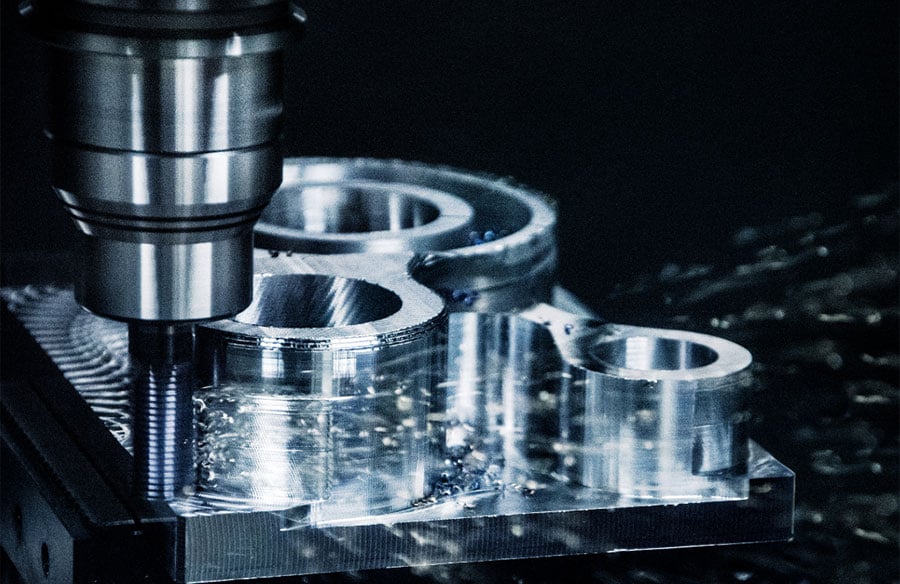
In the realm of modern manufacturing, precision is paramount. The ability to create components with exact dimensions, intricate details, and impeccable quality is the cornerstone of many industries, from aerospace to automotive, medical devices to electronics. Central to this ability is CNC (Computer Numerical Control) machining, a technology that has revolutionized manufacturing processes over the past few decades. The role of precision in CNC machining cannot be overstated, as it directly impacts the functionality, durability, and safety of the final products.
The Journey of CNC Machining: From Concept to Reality
CNC machining has come a long way since its inception in the mid-20th century. Originally developed to improve the efficiency of traditional machining methods, CNC technology has evolved into an indispensable tool for manufacturers worldwide. The concept of CNC machining is straightforward yet revolutionary: it uses computer programs to control machine tools, allowing for automated, precise, and repeatable operations.
Over the years, advancements in CNC technology have focused on enhancing precision. Early CNC machines were accurate, but they were limited by the technology of the time. As computer processing power increased, so did the capabilities of CNC machines. Modern CNC machines can achieve tolerances as tight as a few micrometers, a level of precision that was unimaginable just a few decades ago.
Factors Influencing CNC Machining Precision
The precision of CNC machining is influenced by a variety of factors, each of which plays a crucial role in determining the quality of the final product. Understanding these factors is essential for anyone involved in the manufacturing industry, from engineers to machine operators.
Machine Quality and Maintenance
The foundation of any precise machining operation is the quality of the CNC machine itself. High-end CNC machines are designed with precision in mind, featuring robust construction, advanced motors, and sophisticated control systems. However, even the best machines require regular maintenance to maintain their precision. Components such as spindles, guideways, and ball screws must be inspected and serviced regularly to prevent wear and tear from affecting accuracy.
Tooling and Tool Wear
The tools used in CNC machining, including drills, mills, and lathes, have a significant impact on precision. High-quality, sharp tools can produce clean cuts and smooth finishes, while worn or damaged tools can lead to inaccuracies and defects. Monitoring tool wear and replacing tools when necessary is crucial for maintaining precision. Advances in tooling technology, such as coated tools and carbide inserts, have also contributed to the improved precision of CNC machining.
Material Properties
The material being machined also affects the precision of the process. Different materials have different properties, such as hardness, ductility, and thermal expansion, which can influence how they behave under cutting forces. For example, harder materials may require slower cutting speeds and more robust tooling to achieve the desired precision. Understanding the material’s properties and adjusting the machining parameters accordingly is essential for achieving accurate results.
Temperature Control
Temperature fluctuations during machining can lead to thermal expansion or contraction of both the workpiece and the machine itself, resulting in dimensional inaccuracies. Controlling the temperature in the machining environment, using coolant systems, and accounting for thermal effects in the machining program are all strategies used to mitigate the impact of temperature on precision.
Programming and Software
The accuracy of the CNC machining process is also dependent on the quality of the programming. Advanced CAD/CAM (Computer-Aided Design/Computer-Aided Manufacturing) software allows for precise programming of tool paths, cutting parameters, and other critical aspects of the machining process. Additionally, simulation software can be used to detect and correct potential issues before the machining process begins, further enhancing precision.
Yonglihao Machinery: Setting the Benchmark in CNC Machining Precision
Yonglihao Machinery is a prime example of a company that has embraced the importance of precision in CNC machining. With decades of experience in the industry, Yonglihao Machinery has become a leader in providing high-quality, precision-machined components to a wide range of industries. The company’s commitment to excellence is evident in its investment in state-of-the-art CNC machines, rigorous quality control processes, and continuous improvement initiatives.
At Yonglihao Machinery, precision is not just a goal; it is a way of life. The company understands that its customers depend on its ability to deliver components that meet the most stringent specifications, and it goes to great lengths to ensure that every product leaving its facility is manufactured to the highest standards of accuracy.
The Future of CNC Machining Precision
The future of CNC machining precision is bright, with ongoing advancements in technology poised to push the boundaries of what is possible. Innovations such as additive manufacturing (3D printing), artificial intelligence, and machine learning are expected to complement traditional CNC machining processes, further enhancing precision and expanding the range of applications.
Additive manufacturing, in particular, offers exciting possibilities for achieving complex geometries and reducing material waste, while AI and machine learning can optimize machining parameters in real-time, adapting to variations in material properties, tool wear, and environmental conditions. These technologies, when integrated with CNC machining, have the potential to revolutionize the manufacturing landscape once again.
Conclusion: The Importance of Precision in CNC Machining
In conclusion, precision in CNC machining is a critical factor that influences the quality, functionality, and reliability of manufactured components. Companies like Yonglihao Machinery exemplify the commitment to precision that is necessary to succeed in today’s competitive manufacturing environment. As technology continues to evolve, the pursuit of greater precision will remain a driving force behind advancements in CNC machining, ensuring that manufacturers can meet the ever-increasing demands of their customers.
For businesses looking to leverage the latest in CNC machining technology, partnering with a provider that understands the importance of precision is essential. Whether you require high-precision components for aerospace applications or intricate parts for medical devices, choosing the right CNC machining service can make all the difference.
To learn more about how our precision CNC machining online can help you achieve the highest levels of accuracy for your projects, visit our website and discover the advantages of working with a team of experts dedicated to excellence.







