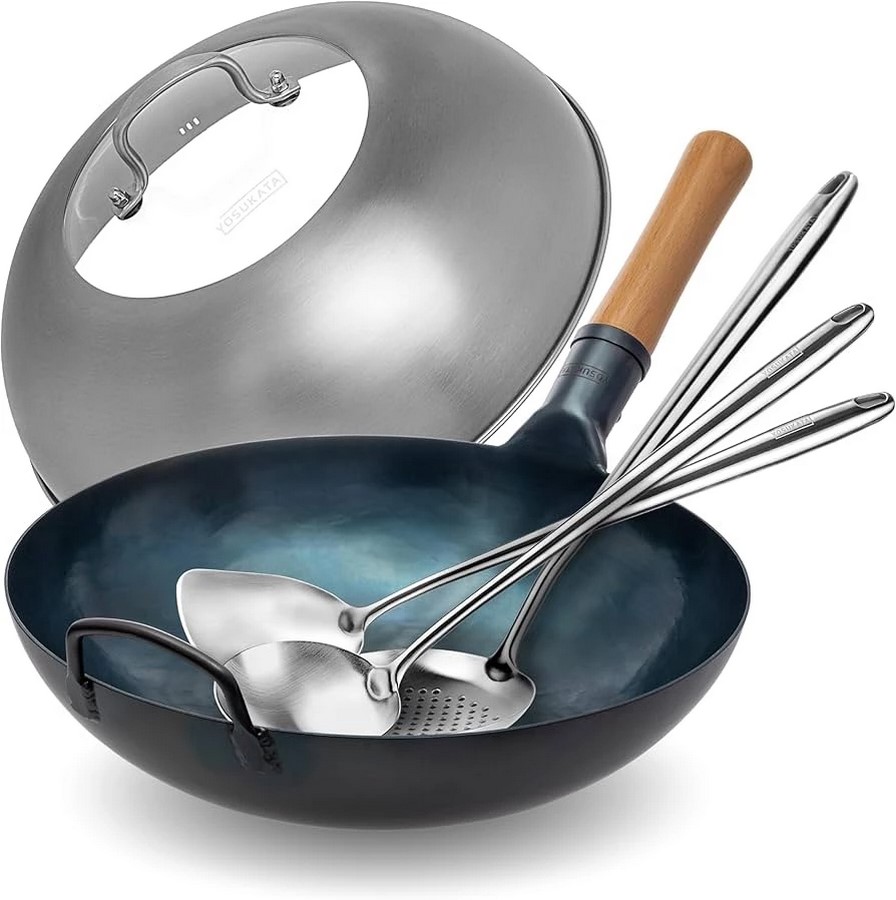
The traditional carbon steel wok has long been a staple in Asian kitchens, prized for its versatility and ability to impart a unique flavor to dishes. However, as culinary techniques evolve and consumer preferences shift towards convenience and efficiency, manufacturers have …
The traditional carbon steel wok has long been a staple in Asian kitchens, prized for its versatility and ability to impart a unique flavor to dishes. However, as culinary techniques evolve and consumer preferences shift towards convenience and efficiency, manufacturers have started innovating in the design of these iconic cookware pieces.
For centuries, the carbon wok has been the cornerstone of Asian cuisine, known for its excellent heat retention and ability to cook food quickly and evenly. Recently, advancements in materials and design have propelled this traditional cookware into the realm of modern culinary innovation. This article delves into the cutting-edge developments that are reshaping the landscape of carbon steel woks, offering consumers new options that combine tradition with contemporary functionality.
Material Advancements
One of the most significant innovations in carbon steel woks is the introduction of new alloys and treatments that enhance durability and non-stick properties. Traditional carbon steel woks require seasoning to develop a natural non-stick patina, but modern advancements have produced alloys that are inherently more resistant to sticking, reducing the need for extensive seasoning. Manufacturers are also experimenting with carbon steel blends that incorporate elements like titanium or ceramic, offering improved durability and heat distribution properties.
Handle and Shape Improvements
Ergonomic design has become a focal point in the evolution of carbon steel woks. Historically, woks featured long, thin handles that required careful maneuvering over open flames. Today, woks are available with ergonomic handles that are heat-resistant and designed for a comfortable grip. Some models even integrate heat-resistant coatings or insulated materials to further enhance user comfort and safety. In addition to handle improvements, there have been innovations in wok shape, with some models featuring wider bases or flat bottoms to accommodate modern cooktops such as induction stoves.
Multi-functional Designs
The versatility of carbon steel woks has been further expanded through multi-functional designs that cater to diverse cooking techniques. Traditionally, woks were primarily used for stir-frying, but contemporary designs incorporate features that facilitate other cooking methods such as steaming, deep-frying, and even smoking. Multi-layered constructions and detachable accessories allow cooks to adapt their wok for different culinary tasks, making it a versatile tool in both professional kitchens and home settings.
Environmental Considerations
As sustainability becomes a growing concern among consumers, manufacturers are exploring eco-friendly materials and manufacturing processes for carbon steel woks. Some companies have adopted recycled carbon steel or sourced materials from sustainable suppliers to reduce environmental impact. Innovations in manufacturing techniques have also focused on minimizing energy consumption and waste during production, ensuring that modern woks are not only efficient in the kitchen but also environmentally responsible choices for conscientious consumers.
Rethinking The Future (RTF) is a Global Platform for Architecture and Design. RTF through more than 100 countries around the world provides an interactive platform of highest standard acknowledging the projects among creative and influential industry professionals.
We use cookies to ensure that we give you the best experience on our website. If you continue to use this site we will assume that you are happy with it.