

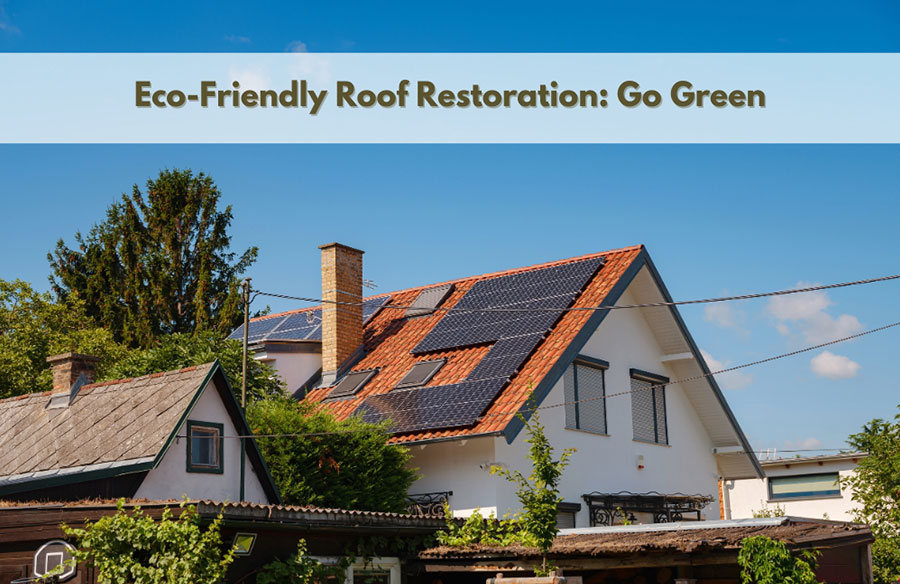
My house is my refuge where the atmosphere must feel good. Thus, it is important to prevent it from the elements. That is when essential house roof restoration steps in – it is the basic upkeep that will make sure that your roof will be strong and weatherproof for a long time. Why should this only stop at roof restoration when you can instead take one step ahead and integrate environmental awareness and responsibility? That’s the neat stuff of ecological roof restoration, and it is a new trend in roof restoration amongst Aussies.
What is eco-friendly roof restoration?
Picture eco-friendly roof restoration as a green surgery for your roof. Ass A good example of such an approach is instead of yanking off the old shingles and throwing them away in a landfill, this method uses sustainable materials and practices that limit the environmental impacts. It’s not the termination of the established life of the current roof, but rather it is the concept of prolonging the lifespan of your roof and being responsible in the use of the resources you have.
Benefits of eco-friendly roof restoration
Going green with your roof restoration isn’t just good for Mother Earth, it can benefit you in several ways:
- Reduce environmental impact: This is the core of the issue. The eco-friendly approach in roof restoration incorporates the use of recycled materials like metals and plastics that would probably go to waste. Mostly these materials require less energy to produce than virgin materials, hence, your carbon footprint will be minimised. Plus, some eco-friendly options, like cool roof coatings, can help reflect sunlight and reduce heat absorption, leading to less reliance on air conditioning and a lower carbon footprint.
- Financial advantages: Usually, durable eco-friendly materials are required which are known to last for a longer period compared to usual materials. This is equivalent to fewer repairs and replacements in the future, which in the end, means that you will be saving your money. Apart from that, certain states in Australia can offer tax credits or rebates in return for exchanging your roof with the best sustainable option. It is also recommended to enquire with your municipal office if there are allocation of perks. Eventually, a sustainable roof may even increase the value of your property, thus, making it more marketable to potential buyers.
- Improved home performance: Eco-friendly restoration of roofs is not only about making you feel proud but also about making your house a home and cool place. Consequently, recycled metal roofs – an example of such – incorporate more advanced features in terms of reflecting heat which in turn prevents the overheating of your home in summer and the rapid increase of your energy payments. Coating your roof with cool surfaces, as mentioned before, also helps to save energy. As such green roofs could counteract the runoff of rainwater, further easing the load on stormwater infrastructure.
Popular eco-friendly roof restoration materials
There are a variety of eco-friendly materials available for roof restoration, each with its advantages:
- Recycled materials: Metal roofing made of recycled steel or aluminium is an option that people often choose. Its lightweight structure, resistance to damage, and strong heat reflectivity are its greatest advantages. Plastic that has been recycled can be used for some shingle roof products and in place of traditional ones provides a viable economical solution.
- Cool roof coatings: These reflection coatings applied to existing roofs can significantly cut down heat absorption. Hence, we will have cooled homes with less energy usage consequently.
- Green roofs (optional): Although rarer options, the green roofs, or the living roofs as they are also known, are some form of a very original way to introduce an element of nature into your rooftop. The roofs are fitted with vegetation that helps to retain the heat within your house, reduce the rainfall-runoff and even provide a habitat to the local wildlife.
Considering eco-friendly roof restoration
Before embarking on your eco-friendly roof restoration journey, there are a few things to consider:
- Climate and weather conditions: Different materials perform better in different climates. For example, cool roof coatings might be a great choice for hot and sunny areas, while metal roofs might be a better option for regions prone to strong winds.
- Type of roof you currently have: The type of roof you already have will play a role in determining which eco-friendly options are suitable. For instance, some cool roof coatings may not adhere well to all existing roof surfaces.
- Budgetary considerations: While some eco-friendly materials offer long-term cost savings, the initial investment might be slightly higher than traditional options.
- Consulting a professional: Eco-friendly roof restoration is a specialised area. Consulting with qualified roofing contractors experienced in sustainable solutions is crucial. They can assess your roof, recommend the best eco-friendly options for your specific needs, and ensure the job is done correctly.
Conclusion
Hence, the next time you see some signs from your roof due to wearing and tearing, the idea of a traditional repair is not the one you should go for. Accept the future of house roof restoration and see eco-friendly alternatives. Through the use of eco-friendly materials and methods, you will ensure that your roof has another chance at life as well as contribute to a cleaner environment. Along the line, you might save money also. It’s a breed for your home and the planet. Keep in mind that a healthy roof starts with a healthy approach, and eco-friendly restoration is the right way to go green for your rooftop.







