

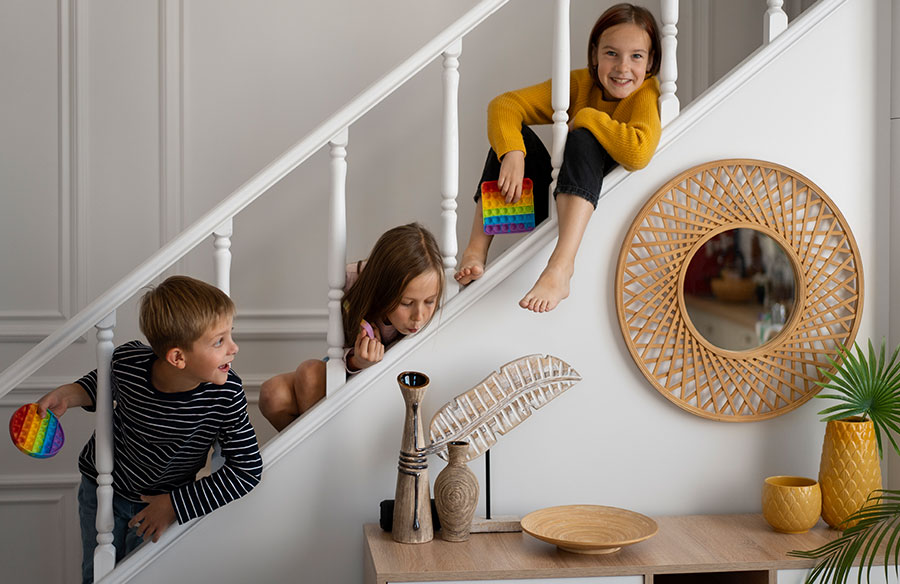
Creating a safe environment at home is essential for the well-being of children, who are naturally curious and often unaware of the dangers around them. As children explore, every corner and crevice presents a potential risk, making it crucial for parents and guardians to take proactive steps in childproofing their living spaces.
This blog post will guide you through various strategies to ensure your home is a secure haven for your children. We’ll cover a range of preventative measures that can protect your little ones from common household hazards. Join us as we explore practical tips to make your home safer for children.
General Home Safety Tips
Ensuring the safety of your home extends beyond simple cleanliness and organisation; it involves strategic preparation to guard against potential accidents. One critical step is securing heavy furniture and appliances. Use furniture straps to anchor items like bookshelves, TVs, and dressers to walls, preventing them from tipping over onto curious toddlers who might try to climb them.
Window guards are another essential safety feature, particularly in multi-storey homes. These guards prevent children from falling out of open windows, a common hazard during warmer months. Similarly, installing safety gates at the top and bottom of stairs can prevent dangerous falls, and these gates should be sturdy and difficult for little hands to open.
Lastly, remember to keep all low-lying cabinets and drawers locked or fitted with child-proof latches. This prevents children from accessing potentially dangerous tools, small objects they could choke on, or toxic substances. Regularly checking these fixtures for wear and tear is also vital to maintain their effectiveness.
Kitchen Safety
The kitchen is often the heart of the home but also one of the most hazardous areas for young children. To create a safe kitchen environment, start by securing all cabinets and drawers with child-proof locks. This prevents little ones from accessing sharp objects like knives, breakable items like glassware, and poisonous substances including cleaning agents.
It’s also wise to establish a child-free zone around the cooking area. Use physical barriers or visual markers to keep children at a safe distance from hot surfaces, boiling pots, and other cooking hazards. This not only protects them from burns but also prevents accidents caused by pulling on pot handles or touching hot appliances.
Lastly, always store hazardous items—such as matches, lighters, and plastic bags—out of children’s reach and sight. Regularly check these areas to ensure they remain secure and that safety measures are in place and effective.
Bathroom Safety
Bathrooms, with their combination of water, electrical appliances, and potentially toxic substances, can be particularly dangerous for children. To mitigate these risks, consider installing toilet locks to prevent curious toddlers from opening toilet lids, which can be a drowning hazard. Non-slip mats inside and outside the tub can also reduce the risk of slips and falls, which are common in wet bathroom environments.
Regulating water temperature is another crucial safety measure. Set your water heater to no higher than 50°C to prevent scalding accidents, which can occur quickly and with devastating consequences. Test bath water with your hand before allowing a child to enter, ensuring it’s comfortably warm and not hot.
Furthermore, keep all medications, razors, cosmetics, and other potential hazards in a locked cabinet or out of reach. This helps prevent accidental poisonings, cuts, or other injuries, safeguarding your child in what should be a safe space for care and hygiene.
Electrical Safety
Electrical safety is a crucial aspect of childproofing any home, especially given the myriad of gadgets and appliances that fill our lives. Basic electrical safety begins with covering all accessible electrical outlets with safety plugs or covers. This simple step prevents curious fingers from poking into potentially dangerous sockets. Additionally, ensure that all electrical cords are kept out of reach, securely fastened and hidden behind furniture where possible to avoid tripping hazards or the temptation for a child to pull on them.
Another key element of basic electrical safety is the use of appliances that are designed to be child-resistant. Look for items with safety features such as automatic shut-off, secure battery compartments, and covers that shield hot surfaces. Regular inspections of these appliances for frayed wires or damaged plugs can prevent electrical shocks and fires.
Lastly, educate older children about the dangers of electricity and the importance of not inserting objects into outlets or touching appliances with wet hands. Also, ensure all electronic devices, including batteries and chargers, are stored and used in safe areas, away from a child’s reach, to prevent burns or electrocution from damaged or overheated components. Regular updates to your home’s electrical safety can significantly reduce risks and provide peace of mind.
Bedroom Safety
In the bedroom, ensuring safety for children involves careful consideration of furniture and accessories. Install window guards to prevent falls and ensure that no cords from blinds or curtains are within reach, as these can pose serious strangulation hazards. Additionally, secure any furniture that could tip over, like bookcases or dressers, to the wall.
It’s also vital to inspect children’s toys regularly for safety. Ensure they are age-appropriate and check for small, detachable parts that could become choking hazards. Soft toys should be kept away from sleeping areas to reduce the risk of suffocation in younger children.
Outdoor Safety
Outdoor areas can offer a world of exploration for children but require careful planning to ensure they are safe. Start by securing the perimeter of your home, especially if you have a pool. Fences should be high and gates securely locked to prevent unsupervised access to potentially dangerous areas.
Additionally, keep all garden tools, chemicals, and any sharp objects locked away in a shed or storage box. Regularly check the play areas for hazards like protruding nails, broken equipment, or unstable surfaces. Safe storage and vigilant maintenance are key to creating a secure outdoor environment where children can play and learn.
Secure Your Home Today!
Regularly reviewing and updating home safety measures can profoundly impact your child’s well-being. By implementing these straightforward yet effective strategies, from electrical safety to securing outdoor areas, you ensure that your home remains a safe sanctuary as your child grows and explores.







